














INEC derecognises Mark, Aregbesola, parties revolt
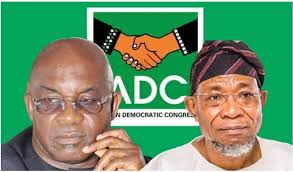
The Independent National Electoral Commission has triggered a fresh political storm after removing the names of Senator David Mark and former Osun State governor Rauf Aregbesola from its portal as national chairman and national secretary of the African Democratic Congress. The decision, which has now pushed the phrase INEC derecognises Mark, Aregbesola, parties revolt into the heart of Nigeria’s opposition politics, was announced by INEC through its National Commissioner and Chairman of the Information and Voter Education Committee, Mohammed Haruna. The commission said its action was based on a Court of Appeal ruling ordering parties in the dispute to maintain the status quo ante bellum pending the determination of the substantive case before the Federal High Court, Abuja.
That legal detail matters, because without it the story can easily be misread as a straightforward political purge. INEC’s position is more technical than that, at least on paper. The commission said it had received conflicting demands from rival camps inside the ADC, one urging it not to recognise Nafiu Bala Gombe as acting chairman because of the pending suit, and another asking it to enforce the appellate judgment by ceasing recognition of David Mark and Aregbesola. After reviewing the processes, INEC said it resolved to remove the Mark-led National Working Committee from its portal and suspend engagement with all factions until the court decides the matter.
This is why INEC derecognises Mark, Aregbesola, parties revolt is a more serious story than a routine party quarrel. It is about recognition, legitimacy, and timing. The ADC has recently gained unusual national attention as a possible opposition platform ahead of the 2027 cycle, and any move touching its recognised leadership immediately becomes politically explosive. In the Punch report, the ADC, the PDP, and allies of Peter Obi all reacted sharply, portraying the commission’s action as a threat to democratic competition and suggesting that the ruling APC is seeking to weaken viable opposition structures.
Still, precision is important here. A disciplined reading of INEC derecognises Mark, Aregbesola, parties revolt shows that INEC did not endorse the rival Gombe faction as the new leadership. In fact, the commission said it refused the plaintiff’s request to allow Gombe take over the party’s affairs pending the case. It also said it would not receive communications from any group on ADC matters and would not monitor any party gathering by any faction until the Federal High Court rules. That means what INEC has really done is freeze the space, not settle it.
The ADC, however, says even that freeze is a distortion of the court order. Party spokesman Bolaji Abdullahi argued that maintaining the status quo should mean reverting to the position before Gombe went to court, which, according to him, was the David Mark-led leadership already recognised by INEC. In a separate report, Abdullahi said the commission’s interpretation was contradictory and raised concerns about impartiality. That disagreement is central to understanding why INEC derecognises Mark, Aregbesola, parties revolt is now being framed by opposition voices as both a legal dispute and a political test.
The wording of the court order is now doing heavy political work. INEC quoted the appellate court as directing the parties to maintain the status quo ante bellum and refrain from taking any step capable of foisting a fait accompli on the trial court. The commission said that, because the Mark-led names were uploaded on September 9, 2025 after the dispute had already crystallised, the safest compliance step was to remove them from the portal and avoid recognising any competing authority. The ADC rejects that logic and insists that the commission is reading the judgment in a way that benefits those trying to destabilise the party.
https://ogelenews.ng/inec-derecognises-mark-aregbesola-parties-revolt
That is where the politics becomes harder to ignore. In reactions reported by Punch, the PDP described the development as part of a wider pattern in which the ruling party allegedly interferes in opposition formations. Yunusa Tanko, identified in the report as National Coordinator of the Obidient Movement, also warned that INEC’s decision could trigger serious political consequences if citizens come to see the commission as partisan. These reactions may be partisan in tone, but they help explain the scale of the backlash behind INEC derecognises Mark, Aregbesola, parties revolt.
There is also a deeper institutional question beneath the headline. Election bodies are expected to follow court orders, but they are also expected to maintain public trust. When INEC takes a step that affects the recognised leadership of a fast-rising opposition party, it is not enough for the action to be technically defensible. It must also be intelligible and appear even-handed. That is why INEC’s insistence that it will deal with neither the Mark camp nor the Gombe camp is politically important. It is the commission’s attempt to show neutrality while the courts decide the leadership fight.
Even so, neutrality on paper does not end political suspicion. For the ADC, the immediate fear is paralysis. If INEC will not receive communications from any faction or monitor any party gathering, then the party’s ability to organise nationally is effectively constrained until the Federal High Court speaks. In the same Punch coverage, the rival Gombe faction welcomed INEC’s decision as lawful and consistent with due process, saying the commission was right to maintain the status quo ante bellum. That contrast shows the core battle clearly: one side sees a freeze; the other sees an opening.
So the best reading of INEC derecognises Mark, Aregbesola, parties revolt is not melodrama and not official spin. It is this: a disputed opposition party is now caught in a legal holding pattern, INEC says it is complying with a preservation order, the Mark camp says the commission has misread that order, and rival political actors are already turning the dispute into a larger argument about whether opposition space in Nigeria is being narrowed before 2027. Until the Federal High Court delivers a substantive ruling, this will remain less a settled outcome than a dangerous suspension.
https://punchng.com/inec-derecognises-mark-aregbesola-parties-revolt/

INEC derecognises Mark, Aregbesola, parties revolt