

















Iran escalates attacks
Iran escalates attacks across the Gulf as the regional war triggered by U.S. and Israeli strikes on Tehran spills further into aviation, shipping and energy infrastructure, placing some of the Middle East’s most important commercial routes under severe pressure. Reuters reported that the conflict widened after U.S. and Israeli forces struck targets in Iran, prompting retaliatory Iranian strikes around the Gulf and rattling global markets.
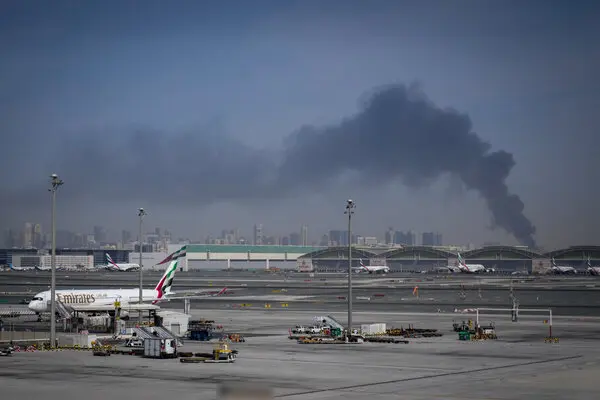
At the center of the latest fallout is Dubai, where one of the world’s busiest aviation hubs has faced heavy disruption. Reuters reported that Dubai’s major airports were operating at only a fraction of normal capacity during the crisis, with thousands of passengers stranded as air corridors were closed or restricted across the region. The agency described the disruption as one of the most serious shocks to Middle East air travel in recent years.
The aviation crisis deepened as Iran escalates attacks beyond direct military targets and into the wider strategic environment surrounding Gulf transport and trade. AP reported that Iranian missiles and drones hit the United Arab Emirates, shaking Dubai’s image as a safe global transit and business center. That reporting underscored how the war has moved beyond battlefield calculations into civilian infrastructure and international commerce.
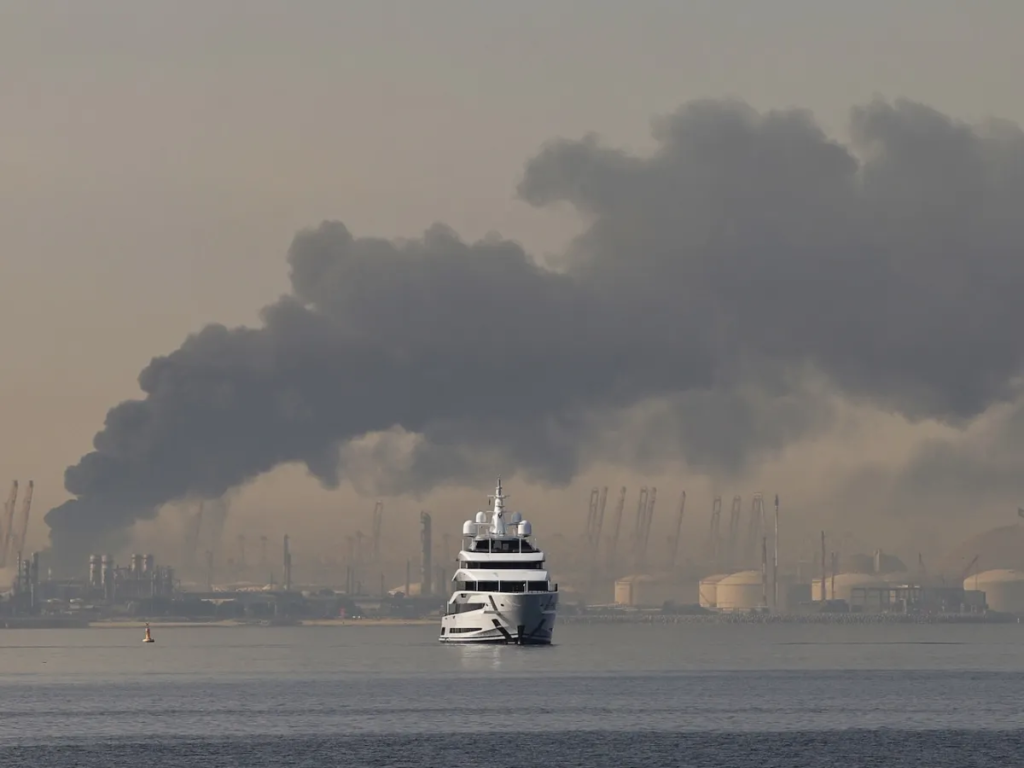
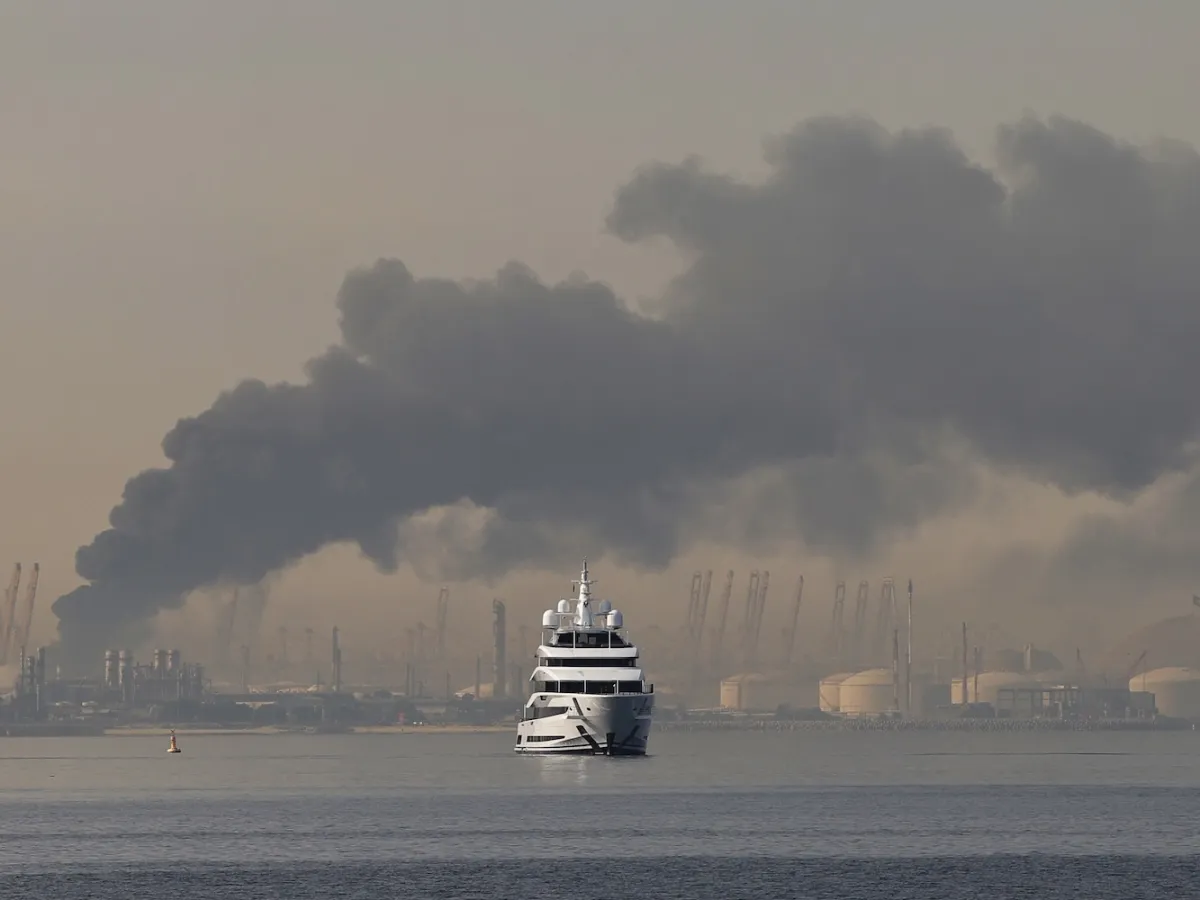
But the pressure is not limited to the skies. The waters of the Gulf and the Strait of Hormuz have become another danger zone as Iran escalates attacks and commercial shipping comes under fire. AP reported that a projectile struck a container ship early Wednesday off the UAE coast in the Strait of Hormuz, with British maritime authorities saying the extent of the damage was being assessed by the crew. That incident added to already rising alarm among shipping operators navigating one of the world’s most sensitive energy corridors.
Reuters has also reported a deeper maritime crisis, saying multiple vessels, including tankers and cargo ships, have been damaged by projectiles since the conflict intensified, while more than 200 ships were stranded as disruption around Hormuz worsened. That matters globally because the Strait of Hormuz handles roughly a fifth of the world’s oil and liquefied natural gas flows, making any prolonged instability there a direct threat to energy prices and supply chains.
https://ogelenews.ng/iran-escalates-attacks
As Iran escalates attacks, the military and economic logic behind its strategy is becoming clearer. Reuters reported that Tehran has launched more than 1,000 drones and hundreds of missiles at U.S.-allied Gulf states since the war widened, aiming to disrupt the Strait of Hormuz and inflict pressure on transport and energy systems that matter not just to the region but to the global economy. Reuters also noted expert concerns that Iran’s drone manufacturing capacity could sustain disruptive operations for months, even if its missile stockpiles come under strain.
The consequences are being felt far beyond the Gulf. Airlines have been forced to suspend, reroute or reduce services. Reuters reported that more than 19,000 flights had been canceled across the region since the conflict began, with Dubai International among the most badly affected hubs. Governments have had to organize repatriation operations for stranded nationals, while carriers from Europe, Asia and the Middle East have scrambled to find safer corridors.
Energy markets are also reacting sharply as Iran escalates attacks on the arteries of oil and trade. Reuters reported that Brent crude jumped as fears spread over supply disruption, while European gas prices surged amid concern that any prolonged closure or partial shutdown around Hormuz would hit global flows. AP separately reported that the U.S. says it destroyed 16 mine-laying vessels as Tehran threatens Gulf oil exports, highlighting the extent to which the maritime front has become central to the war.
What makes the story especially serious is that this is no longer a narrow exchange of fire. Reuters described it as the most consequential military operation in the Middle East in more than two decades, with the war now affecting airports, ports, commercial shipping, oil routes and foreign evacuation plans. The conflict has become a regional systems crisis, and Dubai’s disruption is one of its clearest symbols.
For global audiences, the significance is plain. When Iran escalates attacks in the Gulf, the damage is not measured only in military terms. It is measured in canceled flights, stranded travelers, rising freight insurance, threatened oil exports and shaken investor confidence. Dubai’s airports and the ships hit around Hormuz are not just local stories. They are warning signs from the nerve center of global trade.
And for policymakers watching from Washington, Brussels, Riyadh, Abu Dhabi and beyond, the message is even starker. If Iran escalates attacks further, the next phase of this crisis may be defined less by headline-grabbing missile footage and more by the slow, punishing disruption of supply chains, aviation networks and energy markets that bind the world together.
Why this version is stronger
This version is better because it does four things the basic story usually misses.
It explains the cause of the attacks, which is the widening retaliation after U.S. and Israeli strikes on Iran.
It separates the aviation angle from the shipping angle, so the reader can follow both clearly.
It adds the global economic stakes, especially oil, LNG and flight disruption.
And it reads like reported journalism, not a rushed war bulletin.
https://punchng.com/dubai-airport-struck-ships-hit-as-iran-escalates-attacks