















Iran receives US 15-point plan to end Mideast war
Iran has received a U.S. 15-point proposal aimed at ending the widening Middle East war, according to Pakistani officials and Reuters reporting, but Tehran’s public response has been sceptical and dismissive, underlining how fragile and uncertain any diplomatic path remains. The reported plan was conveyed through Pakistan, with discussion that Pakistan or Turkey could host talks if the parties agree.
That is the central fact behind the headline, Iran receives US 15-point plan to end Mideast war. But the more important truth is that this is not yet a peace deal. It is a proposal moving through intermediaries in the middle of an active war. Reuters reported on March 25 that a senior Iranian official confirmed Pakistan had conveyed the U.S. proposal and said Turkey or Pakistan could host talks, even as an Iranian military spokesperson told state media that Washington was “negotiating with itself.”
That contradiction matters. In conflict reporting, especially at moments of intense violence, governments often test ideas quietly while denying them loudly. So when Iran receives US 15-point plan to end Mideast war, the real story is not only the document itself. It is the gap between what intermediaries say is happening and what public officials are willing to admit. Pakistan appears to be playing a central back-channel role, while the United States is signalling that it wants an off-ramp from a war that has already rattled energy markets and widened regional instability.
Reuters reported that President Donald Trump said on March 24 that Tehran wanted a deal to end the conflict, while Pakistani mediation was being discussed as a way to turn battlefield pressure into talks. Associated Press reporting the same day described the U.S. proposal as a ceasefire framework that included sanctions relief, nuclear oversight, missile limits and maritime access, though not every outlet has independently confirmed the full text of the plan. That is why any precise list of all 15 points should be treated carefully unless directly sourced.
Still, the broad shape of the proposal is becoming clearer across multiple reports. Coverage from AP, Al Jazeera and other outlets says the reported framework includes a temporary ceasefire while terms are negotiated, plus demands tied to Iran’s nuclear programme, missile capabilities and regional conduct. Reuters-linked reporting also indicates the United States wants a negotiated end to the war while keeping pressure on Tehran over weapons and regional security.
This is what gives the story Iran receives US 15-point plan to end Mideast war its real significance. The proposal appears to be trying to do two difficult things at once: stop a war that is already spreading economic shock through the region, and lock Iran into security concessions that Tehran has historically resisted. That is a very ambitious diplomatic package for a battlefield moment this volatile. Reports say the conflict began on February 28 and has since expanded into a wider regional emergency, with pressure on shipping, oil and gas infrastructure, and broader fears for the global economy.
Tehran, however, is not behaving like a government on the verge of easy compromise. Reuters reported on March 25 that an Iranian military spokesperson dismissed the idea of negotiations and said the United States was effectively talking to itself. The Kremlin also said it had received no information from Iran on the reported U.S. plan and could not evaluate the credibility of the media reports. Those reactions do not kill the diplomacy, but they do show that the pathway to any settlement is still narrow and contested.
https://ogelenews.ng/iran-receives-us-15-point-plan-to-end-mideast-war
There is another reason to be cautious. When Iran receives US 15-point plan to end Mideast war, that does not mean Iran has accepted the plan, agreed to talks, or endorsed the U.S. framing of the conflict. In fact, Reuters reported that Iranian officials were still discussing possible venues and that diplomacy was being pushed by outside actors including Pakistan and Turkey. That is much closer to exploratory signalling than to a concluded negotiation.
For Washington, though, the move makes strategic sense. A mediated proposal allows the U.S. to present itself as ready for diplomacy while keeping military and political pressure in place. AP reported that the plan touched on sanctions relief and nuclear oversight, showing that Washington is not offering only threats but also inducements. Yet the same reporting suggests the terms would ask for major Iranian concessions on missiles, enrichment or regional posture, which helps explain why Tehran is pushing back in public.
This is why the headline Iran receives US 15-point plan to end Mideast war should not be written as triumph. It should be written as a possible opening in a conflict still driven by distrust. The war has already raised fears over the Strait of Hormuz, oil output and broader regional escalation. Reuters and AP both describe a climate where diplomacy is being discussed at the same time missiles are still being fired and military pressure remains active.
For the wider Middle East, the stakes are obvious. Any credible ceasefire path could calm energy markets, reduce the risk of a broader regional war, and give international mediators room to work. But a failed proposal could have the opposite effect, hardening positions and making future diplomacy even harder. Al Jazeera reported that regional actors including Pakistan, Egypt and Turkey were pressing for a meeting, which suggests concern well beyond Washington and Tehran.
For ordinary readers, the cleanest way to understand the moment is this: Iran receives US 15-point plan to end Mideast war, but the region is still far from peace. A proposal has moved. Intermediaries are active. Possible hosts for talks have been mentioned. Yet Iran is publicly dismissive, Russia says it has no confirming information from Tehran, and fighting conditions still shape every calculation.
That is why the smarter frame is not certainty but tension. Diplomacy is trying to enter the room, but war is still sitting at the head of the table. Whether this 15-point plan becomes the start of de-escalation or just another document lost to mistrust will depend on what happens next in Tehran, Washington and the capitals now trying to mediate between them. For now, Iran receives US 15-point plan to end Mideast war is a major development, but not yet a breakthrough.
https://apnews.com/article/2ebb9e98647b14715946975ab5b95d9c?utm_source
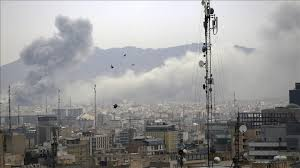
Iran receives US 15-point plan to end Mideast war