
















Iran war puts Vance in delicate position
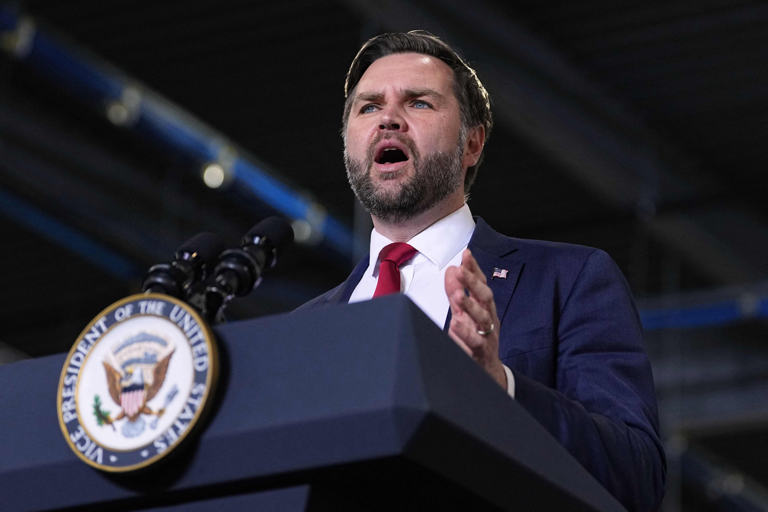
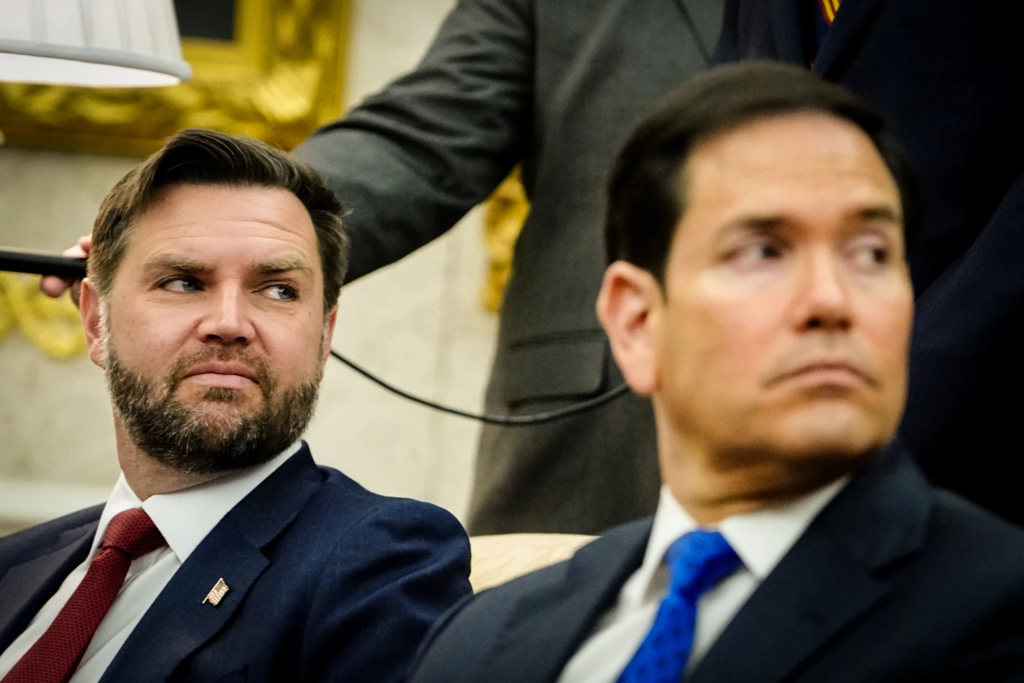
The Iran war puts Vance in delicate position at a moment when the U.S. vice president is trying to remain both loyal to President Donald Trump and credible to a Republican base that includes many voters wary of another open-ended Middle East conflict. What makes the moment especially difficult is that Vance’s political identity has long been associated with restraint abroad, yet he now serves in an administration prosecuting one of the most dangerous regional wars in years. 
The central problem is not hard to see. Trump has made the Iran campaign his war. Reuters reported that the conflict began nearly two weeks ago with coordinated U.S. and Israeli strikes aimed at dismantling Iran’s military capabilities and nuclear programme, and that Trump has since said the war could end whenever he wants because there is “practically nothing left” to target. At the same time, Reuters also reported that the conflict has already drawn congressional backlash, military casualties, and fears of wider regional escalation. That is the backdrop against which the Iran war puts Vance in delicate position. 
Vance’s discomfort is not entirely hidden. AP reported this week that Trump said his vice president had been “less enthusiastic” about launching strikes on Iran and was “philosophically” different, even though the president tried to downplay any serious split. Reuters had earlier quoted Vance saying Trump still preferred a diplomatic solution with Iran before the war escalated, and later quoted him saying the United States saw evidence Tehran was trying to rebuild its nuclear weapons capability. Together, those statements show a politician moving from diplomacy-first language toward public defense of the administration’s harder line. That is why the Iran war puts Vance in delicate position. 
There is also a political memory problem here. Vance rose in Republican politics partly by reflecting the party’s post-Iraq skepticism toward foreign entanglements. That posture helped separate him from older Republican interventionism and made him attractive to voters who wanted a more nationalist, less missionary foreign policy. But wars tend to test slogans. Once missiles are flying and American prestige is on the line, restraint-minded politicians are forced to choose between caution and solidarity. In this case, the Iran war puts Vance in delicate position because either choice carries risk: too much distance from Trump looks disloyal, too much enthusiasm risks alienating anti-interventionist conservatives. 
The timing matters as much as the substance. Reuters reported last year that Trump publicly cast Vance as a possible successor, while Vance himself insisted he was not focused on 2028. Reuters also reported that as RNC finance chair, Vance would deepen ties with major Republican donors, giving him a stronger political network ahead of the 2026 midterms and any later national ambitions. So even if Vance is not openly running, the political class is already measuring him against the future. In that environment, the Iran war puts Vance in delicate position because every statement now doubles as a test of presidential temperament. 
Another complication is that Trump’s Republican coalition is not united on foreign policy, even when it rallies around him institutionally. Reuters reported that the House voted 219 to 212 against a war powers resolution that would have forced Trump to seek congressional authorization, showing that most House Republicans backed the president. But backing Trump in a vote is not the same thing as sharing one settled worldview on intervention. Some Republicans remain hawkish, some are instinctively nationalist, and others are supportive only so long as the war stays limited and quick. The Iran war puts Vance in delicate position because he has to speak to all three audiences at once. 
https://ogelenews.ng/iran-war-puts-vance-in-delicate-postion
That balancing act is becoming harder as the war grows costlier. Reuters reported that Democratic senators fear Trump could yet send U.S. ground troops into Iran and said the administration has not provided enough clarity on strategy, duration, or the risk created by Russian support for Tehran. Reuters separately reported that the U.S. military has continued intense operations, with the Pentagon promising some of the heaviest strikes of the campaign. These are not conditions in which a vice president can easily remain ambiguous. The Iran war puts Vance in delicate position because ambiguity starts to look like either weakness or evasion when the stakes rise. 
There is also a broader electoral question hanging over all this. Modern Republican primaries reward strength, but they do not always define strength the same way. For some voters, strength means backing military action against an enemy like Iran. For others, it means resisting the Washington habit of drifting into long, expensive wars with unclear endpoints. Vance’s challenge is that his own rise has depended in part on the second definition, while his current office requires visible allegiance to the first whenever Trump chooses escalation. That contradiction is the real reason the Iran war puts Vance in delicate position. 
The danger for Vance is not simply that he may anger one faction of the party. It is that he may begin to look overly shaped by events rather than anchored by a clear doctrine. If he sounds too cautious, hawks may doubt his resolve. If he sounds too bellicose, the anti-war wing may conclude that his earlier skepticism was situational rather than principled. And if he keeps speaking in carefully hedged formulations, both camps may see calculation instead of conviction. In that sense, the Iran war puts Vance in delicate position not just because of what he says, but because of what his changing tone may suggest about his future leadership. 
For now, Vance still has political room. Trump remains the dominant figure in the party, and most Republican officials are unlikely to break openly with a wartime president. But wars are unpredictable, and so is their political afterlife. If the Iran conflict remains limited, Vance may emerge as a loyal lieutenant who quietly registered caution without paying a price. If it drags on, widens, or produces a deeper U.S. commitment, then every early hesitation and every later justification will be scrutinized again. That is why the Iran war puts Vance in delicate position ahead of any 2028 conversation, whether he welcomes that conversation or not. 
https://apnews.com/article/trump-vance-split-2028-iran-foreign-wars-5cf505d10aa873e2e53b376261bd8bf6