








Kano killing
The Kano State Police Command has made a breakthrough in one of the most heinous crimes to shock Nigeria in recent memory, arresting three suspects in connection with the Kano killing that claimed the lives of a 35-year-old mother and her six children in Dorayi Chiranchi Quarters.
In a development that has left residents reeling, investigators revealed that the mastermind behind the Kano killing is none other than Umar Auwalu, 23, the nephew of the deceased housewife, Fatima Abubakar. The arrest, conducted during an intelligence-led sting operation between 10pm on January 17 and 4am on January 18, has exposed a criminal syndicate allegedly responsible for multiple violent attacks across the ancient city.
A Family Betrayed: The Dorayi Chiranchi Massacre
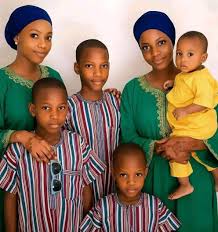
The Kano killing unfolded on Friday, January 17, 2026, when unknown assailants invaded the residence of Haruna Bashir at Dorayi Chiranchi Quarters, turning a family home into a scene of unspeakable horror. Fatima Abubakar and her six children—Maimuna, 17; Aisha, 16; Bashir, 13; Abubakar, 10; Faruk, 7; and little Abdussalam, barely 18 months old—were brutally attacked with dangerous weapons in what residents described as one of the most traumatic incidents ever witnessed in the community.
The Kano State Police Command received a distress call at approximately 12:10pm on that fateful Saturday. By the time officers arrived, the entire family had been slaughtered. Their bodies were evacuated to Murtala Muhammed Specialist Hospital, where medical personnel could only pronounce them dead on arrival.
The community is still in shock,” said Kabiru Ibrahim, a resident of Dorayi Chiranchi who spoke to journalists. “We are struggling to comprehend how an entire family could be wiped out in such a brutal manner. This Kano killing has traumatized everyone here.
https://ogelenews.ng/kano-killing-mother-six-children-nephew-arrested
The Investigation: A Race Against Time
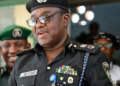
Acting on directives from Inspector-General of Police Kayode Adeolu Egbetokun, Commissioner of Police Ibrahim Adamu Bakori mobilized a crack team of investigators to pursue the perpetrators of the Kano killing. The operation, supervised by Deputy Commissioner of Police (Operations) Lawal Mani, employed sophisticated intelligence networks that had been tracking criminal activities across Kano metropolis.
The breakthrough came swiftly. Within hours of the Kano killing, police operatives had identified and arrested three principal suspects: Umar Auwalu of Sabuwar Gandu Quarters, Isyaku Yakubu (also known as “Chebe”), 40, of Sagagi Quarters, and Yakubu Abdulaziz (alias “Wawo”), 21, of Sabon Gida Sharada Quarters.
Police Public Relations Officer CSP Abdullahi Haruna Kiyawa, addressing journalists in Kano, confirmed that the principal suspect, Auwalu, had made a full confession. “The leader of the syndicate, Umar Auwalu, a nephew to the deceased housewife, confessed to the crime,” Kiyawa stated, his voice grave with the weight of revelation.
A Trail of Blood: Syndicate’s Reign of Terror
Perhaps most chilling about the Kano killing investigation is what detectives uncovered about the syndicate’s broader criminal activities. According to police sources, Auwalu admitted during interrogation that the same group had been involved in multiple violent attacks across Kano, including the killing and burning of two housewives at Tudun Yola Quarters in a separate incident that had previously baffled investigators.
“The principal suspect confessed to the crime and admitted that the same syndicate has been involved in a series of violent attacks and killings in parts of the Kano metropolis,” Kiyawa disclosed, painting a picture of a criminal network that had operated with impunity until the Dorayi Chiranchi massacre triggered an intensive manhunt.
Evidence recovered from the suspects tells a damning story. Police seized four pieces of clothing bearing suspected bloodstains, two mobile phones belonging to the deceased Fatima Abubakar, a cutlass, a club (locally known as “gora”), an undisclosed amount of money allegedly stolen from the crime scene, and various dangerous weapons that investigators believe were used in the Kano killing.
Leadership Response: Vows of Justice
The Kano killing has drawn condemnation from the highest levels of government and civil society. Governor Abba Kabir Yusuf, in a statement issued through his spokesperson Sunusi Tofa, described the incident as “barbaric, senseless and a grave assault on our shared humanity.”
“The killing of a mother and her innocent children is barbaric, senseless and a grave assault on our shared humanity,” the governor declared, extending condolences to the bereaved family and the people of Kano State. He immediately ordered security agencies to ensure swift justice, promising that his administration would not allow such crimes to go unpunished.
“We will ensure that the perpetrators are hunted down, arrested and prosecuted to the fullest extent of the law,” Governor Yusuf added, while directing the Kano State Neighbourhood Corps to intensify patrols and community surveillance, particularly in vulnerable areas.
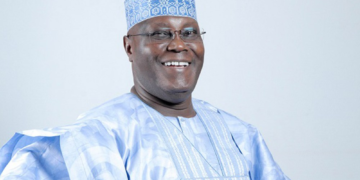
Former Vice President Atiku Abubakar also weighed in on the Kano killing, using his official social media platforms to express his horror at the tragedy. “I am heartbroken by the gruesome killing of a mother and her six children in Dorayi Chiranchi, Kano. This senseless violence against innocent Nigerians is unacceptable,” Atiku wrote, before questioning the effectiveness of Nigeria’s security architecture.
His statement touched on a broader concern resonating across Nigeria: “It is either the so-called marching orders to the security agencies are not being actioned or it is merely political talk.”
A Community in Mourning, A Nation Demanding Answers
The Kano killing has reopened difficult conversations about Nigeria’s deteriorating security situation. While this particular crime appears to be criminally motivated rather than linked to terrorism or insurgency, it underscores the vulnerability of ordinary citizens even within their own homes.
Senior Special Assistant to the President on Citizenship and Leadership, Hon. Nasir Bala Aminu Ja’oji, captured the national mood in his statement: “This attack is a deep wound to our collective conscience. Kano is renowned for its culture of humanity, tolerance, and brotherhood, and this barbaric act stands in total opposition to everything we represent as a people.”
As investigation into the Kano killing continues, police have assured the public that efforts are underway to uncover any additional accomplices and establish links to other unsolved crimes across the state. The case is expected to be fast-tracked through the judicial system, with prosecutors preparing to file charges that could include capital offenses.
For the residents of Dorayi Chiranchi, however, no amount of justice can restore what was lost on that terrible Friday afternoon—a young mother and six innocent children, their lives cut short in an act of violence that has shaken not just Kano, but the entire nation.
The Kano killing serves as yet another reminder of the urgent need for comprehensive security sector reform, community vigilance, and a renewed commitment to the sanctity of human life across Nigeria.
https://www.cfr.org/nigeria/nigeria-security-tracker