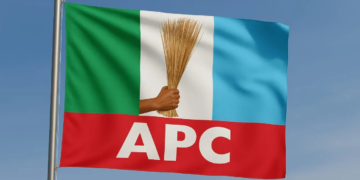
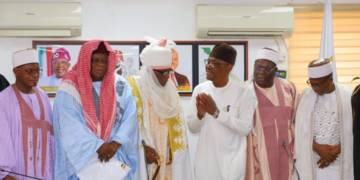













The unfolding Kwara APC consensus dilemma ahead of the 2027 general elections is fast becoming one of the most defining political battles in the North Central region, exposing cracks within the ruling All Progressives Congress (APC) in the state.
At the heart of the crisis is a long-standing strategy that once worked seamlessly for the party: consensus.
But as political ambitions rise and new power blocs emerge, that same strategy is now under intense strain.
How Consensus Built APC’s Strength in Kwara
For years, the APC in Kwara relied heavily on consensus arrangements to maintain unity and avoid costly internal battles.
Party stakeholders often agreed behind closed doors on candidates for key positions, a system that helped reduce factional disputes and ensured electoral victories.
This approach was evident in recent party congresses, where leaders across local governments emerged through consensus, reinforcing the party’s image of unity.
However, what once served as a strength is now at the center of the Kwara APC consensus dilemma.
Why Consensus Is Now a Problem
As 2027 approaches, multiple aspirants are positioning themselves for the governorship ticket, making consensus increasingly difficult to achieve.
According to reports, deep-rooted rivalries, zoning arguments, and competing interests among political actors are threatening the party’s cohesion.
The Kwara APC consensus dilemma is therefore no longer just about candidate selection. It is about control, influence, and the future direction of the party.
With more stakeholders demanding inclusion, the old model of top-down decisions is facing resistance.
The Role of Governor AbdulRazaq
A key figure in the Kwara APC consensus dilemma is Governor AbdulRahman AbdulRazaq, whose political influence will shape the party’s succession plan.
Analysts believe his position on zoning and candidate endorsement will be decisive.
However, any perceived favoritism could deepen divisions within the party.
This places the governor in a delicate position:
- Enforce consensus and risk backlash
- Allow open primaries and risk fragmentation
Either choice carries political consequences.
Emerging Power Blocs and Internal Tensions
The Kwara APC consensus dilemma is further complicated by the emergence of new political blocs within the party.
These groups are made up of:
- Loyalists of the current administration
- Independent political actors seeking influence
- Aspirants with grassroots structures
Each bloc is pushing for relevance in the 2027 equation.
This internal competition is gradually eroding the unity that once defined the APC in Kwara.
https://ogelenews.ng/kwara-apc-consensus-dilemma-2027
Zoning and Regional Balance
Zoning remains one of the most sensitive issues fueling the Kwara APC consensus dilemma.
Different senatorial districts are expected to demand the governorship slot, arguing for fairness and political balance.
Failure to address zoning concerns could lead to:
- Defections
- Parallel structures
- Weak party cohesion
In Nigerian politics, zoning is often the silent force that determines outcomes long before elections are held.
Opposition Waiting in the Wings
While the APC grapples with its internal challenges, opposition forces are quietly repositioning.
Former Senate President Bukola Saraki has already signaled that the Peoples Democratic Party (PDP) is preparing to reclaim Kwara, despite ruling out his own candidacy.
This adds another layer to the Kwara APC consensus dilemma, as internal division could weaken the party’s chances in the general election.
What Is at Stake for APC
The stakes in the Kwara APC consensus dilemma go beyond party politics.
They include:
- Retaining control of Kwara State
- Maintaining political dominance in the region
- Preventing opposition resurgence
If not carefully managed, internal disputes could hand a strategic advantage to rival parties.
Possible Scenarios Ahead of 2027
Political observers outline three likely outcomes:
- Successful Consensus
The party agrees on a candidate, maintaining unity but risking dissatisfaction among sidelined aspirants. - Open Primaries
A competitive process allows broader participation but may deepen divisions. - Fragmentation
Disputes escalate, leading to defections and weakened electoral strength.
Each scenario reflects the complexity of the Kwara APC consensus dilemma.
The Bigger Political Reality
At a deeper level, the Kwara APC consensus dilemma reflects a broader trend in Nigerian politics.
As political systems mature, elite consensus becomes harder to sustain.
More actors demand inclusion.
More voices challenge authority.
And internal democracy becomes unavoidable.
This transition, while necessary, often comes with instability.
BOTTOM LINE
The Kwara APC consensus dilemma is a test of political maturity. Whether the party can balance ambition, fairness, and unity will determine not just its future, but the shape of Kwara politics in 2027.
https://punchng.com/2027-inside-kwara-apcs-consensus-dilemma