
















Lekki sound engineer murder case
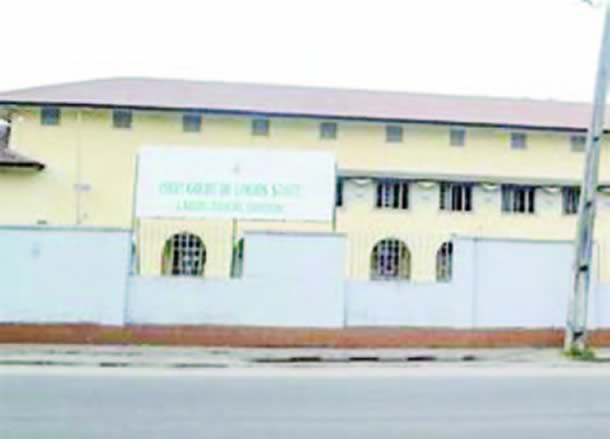
The Lagos State High Court sitting at Igbosere has fixed June 22, 2026, for judgment in the Lekki sound engineer murder case, nearly four years after sound engineer David Imoh was killed during a mob attack in Lekki Phase 1, Lagos.
Justice Ibironke Harrison fixed the date on Tuesday after lawyers for the Lagos State Government and the six defendants adopted their final written addresses. The case involves commercial motorcyclist Dahiru Ayuba and five others, who are standing trial over the death of Imoh and the alleged attack on two other persons during the May 12, 2022 incident.
The defendants are Dahiru Ayuba, Susan Moses, Chigozie Anthony, Christopher Dauda, Joseph Tella and Sunday Azi. They were arraigned on October 20, 2022, on a six-count charge bordering on conspiracy, murder, attempted murder and infliction of grievous harm, filed by the Lagos State Government. All six defendants pleaded not guilty to the charges.
The Lekki sound engineer murder case has remained one of the most closely watched mob violence trials in Lagos because of the public outrage that followed Imoh’s death. The incident reportedly occurred at NITEL Junction, Admiralty Way, Lekki Phase 1, after a dispute over a N100 transport fare balance involving a commercial motorcyclist.
At Tuesday’s proceedings, the court first dealt with applications by defence lawyers who sought extension of time to regularise their final written addresses, which had been filed out of time. Justice Harrison granted the applications, allowing the defence teams to formally adopt their processes before the court.
Counsel for the first defendant, A.O. Idowu, urged the court to dismiss the prosecution’s case and acquit his client. He relied on his final written address dated April 17, 2026.
For the second defendant, counsel Steven Eluwa also asked the court to discharge and acquit his client, arguing that the prosecution had not proved the case beyond reasonable doubt. He told the court that a reply on points of law dated May 4, 2026, had also been filed in response to the prosecution’s address.
The defence teams for the other accused persons made similar submissions. Sylvester Effiong, counsel for the third defendant, urged the court to resolve the issues in favour of his client. Olayinka Lawal, representing the fourth defendant, argued that evidence before the court did not place his client at the scene of the incident. He also challenged the prosecution’s position on alleged confessional statements and faulted the police handling of his client’s alibi.
Counsel for the fifth defendant, Yusuf Temilola-Nurudeen, submitted that none of the six prosecution witnesses directly implicated his client in the alleged offences. He also argued that the video evidence tendered by the prosecution did not feature the fifth defendant, Lekki sound engineer murder case.
https://ogelenews.ng/court-fixes-june-22-for-judgment-in-lekki-sound-eng…
The sixth defendant’s counsel, A.O. Olayinka, also urged the court to deem her written address as properly filed and to discharge and acquit her client.
However, the Lagos State Director of Public Prosecutions, Dr Bajide Martins, urged the court to convict the defendants. He maintained that the evidence presented by the prosecution established the defendants’ involvement in the attack.
The Lekki sound engineer murder case has now reached a decisive point. With final addresses adopted, the next sitting is no longer for argument but for judgment. On June 22, the court will determine whether the prosecution proved its case beyond reasonable doubt or whether the defendants should be discharged and acquitted.
The case also returns attention to the wider issue of mob violence in Nigeria. Amnesty International, in a 2024 report on mob violence and law enforcement failures, cited David Imoh’s killing as one of the cases that exposed the dangers of public violence, weak crowd control and delayed justice in Nigeria.
For the family of the deceased, the coming judgment will be a major moment in a painful legal journey that began in 2022. For the defendants, it will determine whether they are convicted or freed after nearly four years of criminal proceedings.
The Lekki sound engineer murder case also carries broader public importance because it tests the capacity of the justice system to respond to cases involving mob attacks. In many similar incidents, suspects are either not identified, investigations collapse, or trials drag for years without closure. This case has therefore become a test of accountability.
There is also an important legal lesson in the proceedings. The defence has repeatedly argued that the prosecution failed to prove the case beyond reasonable doubt, while the prosecution insists that its evidence is strong enough to ground conviction. That is the central question before Justice Harrison.
In criminal trials, suspicion is not enough. The court must examine whether the evidence links each defendant to the offences charged. This is especially important in group violence cases, where the prosecution must separate general presence from active participation and prove individual criminal responsibility.
That is why the Lekki sound engineer murder case will be watched closely by lawyers, rights advocates and members of the public. A conviction would mean the court accepted the prosecution’s evidence against the defendants. An acquittal would mean the court found the evidence insufficient under the law.
The outcome may also influence how law enforcement agencies investigate future mob violence cases. Proper identification of suspects, credible witness testimony, video evidence, forensic support and careful handling of alleged confessional statements are all crucial in cases of this nature.
For Lagos State, the matter is another reminder of the need to strengthen public safety and prevent mob attacks before they occur. Public anger, suspicion or disagreement must never replace lawful investigation and trial. No society can claim to uphold justice when violence becomes the first response to conflict.
The Lekki sound engineer murder case is therefore more than a courtroom update. It is a story about justice, public order and the rule of law.
As the June 22 judgment date approaches, the families affected, the defendants, the legal community and the public will wait to see how the court resolves one of Lagos’ most disturbing mob violence cases in recent years.
https://punchng.com/court-fixes-june-22-for-judgment-in-lekki-sound-engineer-murder-case

Lekki sound engineer murder case