














local government chairmen defect to APC
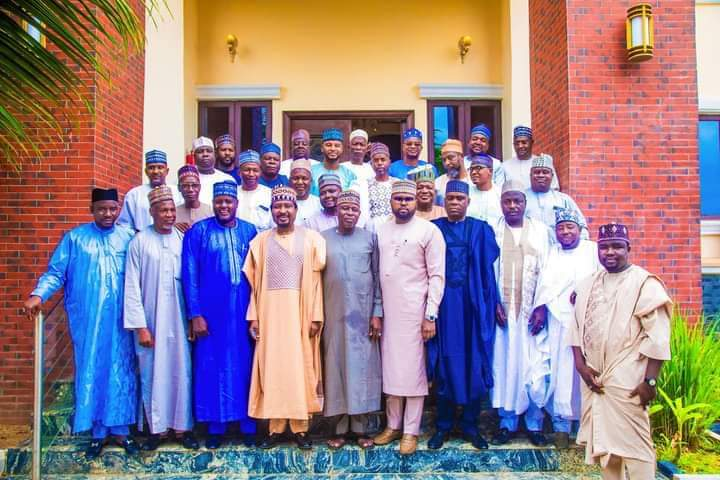
In an unprecedented display of political realignment that has fundamentally altered the grassroots power structure of Nigeria’s most populous state, all 44 local government chairmen in Kano State on Monday officially defected to the All Progressives Congress, delivering a crushing blow to the New Nigeria Peoples Party and cementing what political analysts are calling the most comprehensive political takeover in recent Nigerian history.
The mass defection of the local government chairmen to APC represents the complete dismantling of NNPP’s administrative control across every corner of Kano State, from the ancient city walls to the furthest rural communities. These chairmen, who control the vital grassroots political machinery that determines electoral outcomes in their respective local government areas, bring with them thousands of councillors, party officials, and community leaders, effectively transferring an entire political ecosystem from one party to another.
local government chairmen defect to APC: Complete Grassroots Takeover
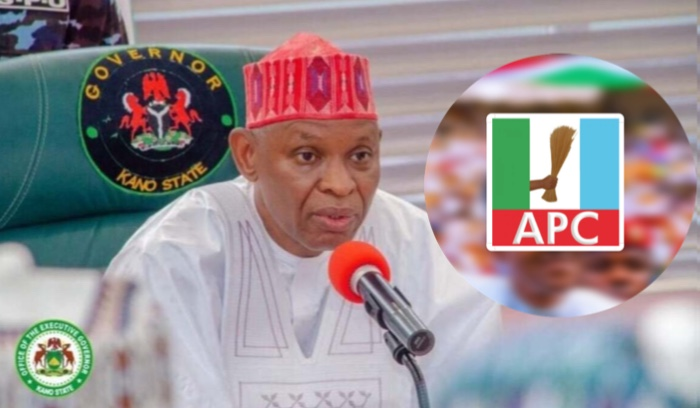
The decision by all 44 local government chairmen to defect to APC alongside Governor Abba Kabir Yusuf marks a political development of staggering proportions. These officials, who were elected on the NNPP platform during the 2023 local government elections, collectively oversee the administration of millions of Kano residents across urban, semi-urban, and rural areas, controlling everything from revenue collection to community development projects.
Political observers note that the local government chairmen represent the most critical component of Governor Yusuf’s defection package. While state and federal legislators provide political legitimacy and legislative support, it is the local government chairmen who control the day-to-day interaction between government and citizens, making their defection to APC perhaps more consequential than any other group of officials.
“When all 44 local government chairmen defect to APC, what you’re witnessing is not just a change of party affiliation but a complete transfer of political infrastructure,” explained Dr. Aminu Hassan, a political scientist at Bayero University Kano. “These chairmen control patronage networks, youth groups, women’s associations, and community leaders. They are the ones who mobilize voters during elections and maintain party presence at the grassroots level.”
Strategic Importance of Grassroots Control
The defection of local government chairmen to APC provides Governor Yusuf with unparalleled control over Kano’s political landscape ahead of the 2027 general elections. Each of the 44 local government areas in Kano State has its own unique political dynamics, ethnic compositions, and voting patterns. With all chairmen now aligned with the APC, the ruling party gains direct access to these diverse communities through officials who understand local politics intimately.
The timing of the mass defection is particularly significant. With APC state congresses scheduled for February 2026, the arrival of all 44 local government chairmen into the party gives Governor Yusuf enormous influence over the selection of party officials at the ward, local government, and state levels. These chairmen will participate in choosing party executives who will, in turn, determine candidate selection for various elective positions in 2027.
Sources within the governor’s camp confirmed that the local government chairmen had been extensively consulted before the defection decision was finalized. “The governor held several meetings with the chairmen individually and collectively,” revealed a senior government official who requested anonymity. “He needed their buy-in because without the local government chairmen, any defection to APC would be largely symbolic without grassroots substance.
Financial and Administrative Implications
The control of local government administration in Kano State comes with significant financial implications. These 44 local government areas collectively receive billions of naira monthly from the Federation Account Allocation Committee, funds that are used for local development projects, payment of staff salaries, and various community interventions. With all local government chairmen now in the APC, the party effectively controls this substantial financial stream.
Additionally, the local government chairmen oversee thousands of council staff, including teachers in local government schools, primary healthcare workers, environmental sanitation officers, and revenue collectors. These employees and their families represent a significant voting bloc, and their loyalty typically follows that of their employer – the local government chairman.
The defection of local government chairmen to APC also means that opposition parties in Kano will struggle to find credible candidates for local government elections. With all incumbent chairmen now in the ruling party, NNPP and other opposition parties must rebuild their grassroots structures entirely from scratch, a monumental task that could take years to accomplish.
Breaking Down the Numbers
Kano State’s 44 local government areas vary significantly in size, population, and political importance. They include major urban centers like Kano Municipal, Nassarawa, Fagge, and Dala, which collectively house millions of residents in the metropolitan area. These urban local governments are critical for electoral success due to their large voter populations and diverse ethnic compositions.
The state also includes strategic semi-urban local governments such as Gwarzo, Kiru, Madobi, and Bunkure, which serve as important agricultural and commercial hubs. These areas traditionally determine the balance of power in state-level elections, as they combine substantial voter numbers with tight-knit community structures that can be effectively mobilized.
Rural local governments, including Tsanyawa, Kunchi, Dawakin Kudu, and Bagwai, while having smaller individual populations, collectively represent a massive voting bloc. The local government chairmen in these areas wield enormous influence over their communities, and their defection to APC brings with them the traditional rulers, district heads, and village chiefs who respect the chairman’s political leadership.
When all 44 local government chairmen defect to APC, they bring with them an estimated 484 councillors who serve as members of local government legislative councils across the state. These councillors, elected from various electoral wards, add another layer of political depth to the defection, further extending APC’s reach into the smallest political units in the state.
Kwankwaso’s Grassroots Network Collapses
The mass defection of local government chairmen to APC represents the complete collapse of Senator Rabiu Musa Kwankwaso’s legendary grassroots political network in Kano. For decades, Kwankwaso’s political dominance in the state rested on his ability to maintain strong relationships with local government chairmen, who served as the backbone of the Kwankwasiyya movement’s organizational structure.
The Kwankwasiyya movement, known for its red cap symbolism and highly organized grassroots mobilization, relied heavily on local government chairmen to coordinate political activities, distribute patronage, and maintain party loyalty at the community level. With all 44 chairmen now in the APC, this once-formidable political machine has been effectively dismantled.
Political observers note that Kwankwaso’s failure to retain the local government chairmen, despite his decades-long relationship with many of them, demonstrates the overwhelming pull of federal power and access to resources that comes with aligning with the ruling party. Several chairmen who defected had previously been considered Kwankwaso’s loyal lieutenants, making their departure particularly painful for the NNPP leader.
“The defection of local government chairmen to APC is perhaps the most devastating blow to Kwankwaso’s political career,” noted Malam Ibrahim Sani, a veteran Kano political analyst. “These are not just political appointees; many of them are people Kwankwaso personally mentored and supported for years. Their decision to follow Governor Yusuf into the APC shows that political calculations have shifted fundamentally.
https://ogelenews.ng/local-government-chairmen-defect-to-apc
Opposition Parties Face Uphill Battle
The consolidation of all 44 local government areas under APC control presents enormous challenges for opposition parties hoping to compete effectively in Kano State. The Peoples Democratic Party, Labour Party, and what remains of the NNPP must now attempt to build grassroots political structures without the advantage of controlling any local government administration.
This task is made even more difficult by the fact that the local government chairmen control access to communities, markets, and traditional institutions. Opposition parties will struggle to organize rallies, distribute campaign materials, and mobilize voters in local government areas where the chairman actively works against them.
The mass defection of local government chairmen to APC also affects the ability of opposition parties to recruit credible candidates. Many potential candidates for state and federal positions typically come from local government backgrounds, having served as chairmen, councillors, or local government officials. With virtually all such officials now in the APC, the opposition talent pool in Kano has been severely depleted.
2027 Electoral Implications
Looking ahead to the 2027 general elections, the control of all 44 local government areas gives the APC an unprecedented advantage in Kano State. The local government chairmen will play crucial roles in voter registration drives, mobilization of supporters, and get-out-the-vote efforts on election day.
The chairmen’s control over local government staff provides the APC with an army of grassroots workers who can be deployed for campaign activities. From teachers who can mobilize parents and students, to healthcare workers who interact with community members daily, to revenue collectors who know every business owner in their jurisdiction, these local government employees represent a formidable political force.
Additionally, the financial resources available to local government chairmen can be directed toward political activities that benefit the APC. While such use of public resources for partisan purposes is technically prohibited, the reality of Nigerian politics is that local government chairmen have significant discretion in how they allocate certain expenditures, particularly those related to “community development” and “stakeholder engagement.”
Conclusion: A New Political Order
The defection of all 44 local government chairmen to APC marks the beginning of a new political order in Kano State. What was once Nigeria’s most prominent opposition stronghold has been transformed into an APC fortress, with the ruling party controlling every level of government from the state house to the most remote village council.
For Governor Yusuf, the united front presented by the local government chairmen strengthens his hand in negotiations with APC leadership regarding his political future. For Kwankwaso and the NNPP, the loss represents an existential crisis that will require years of rebuilding to overcome. And for the people of Kano, the consolidation of political power under one party raises important questions about democratic competition and political accountability.
As Nigeria moves toward the 2027 elections, all eyes will be on Kano as local government chairmen defect to APC to see whether the APC’s total dominance translates into electoral success, or whether opposition parties can somehow rebuild their grassroots networks in time to mount a credible challenge. One thing is certain: the decision by all 44 local government chairmen to defect to APC has permanently altered the political landscape of Nigeria’s most populous state.