
















Middle East conflict
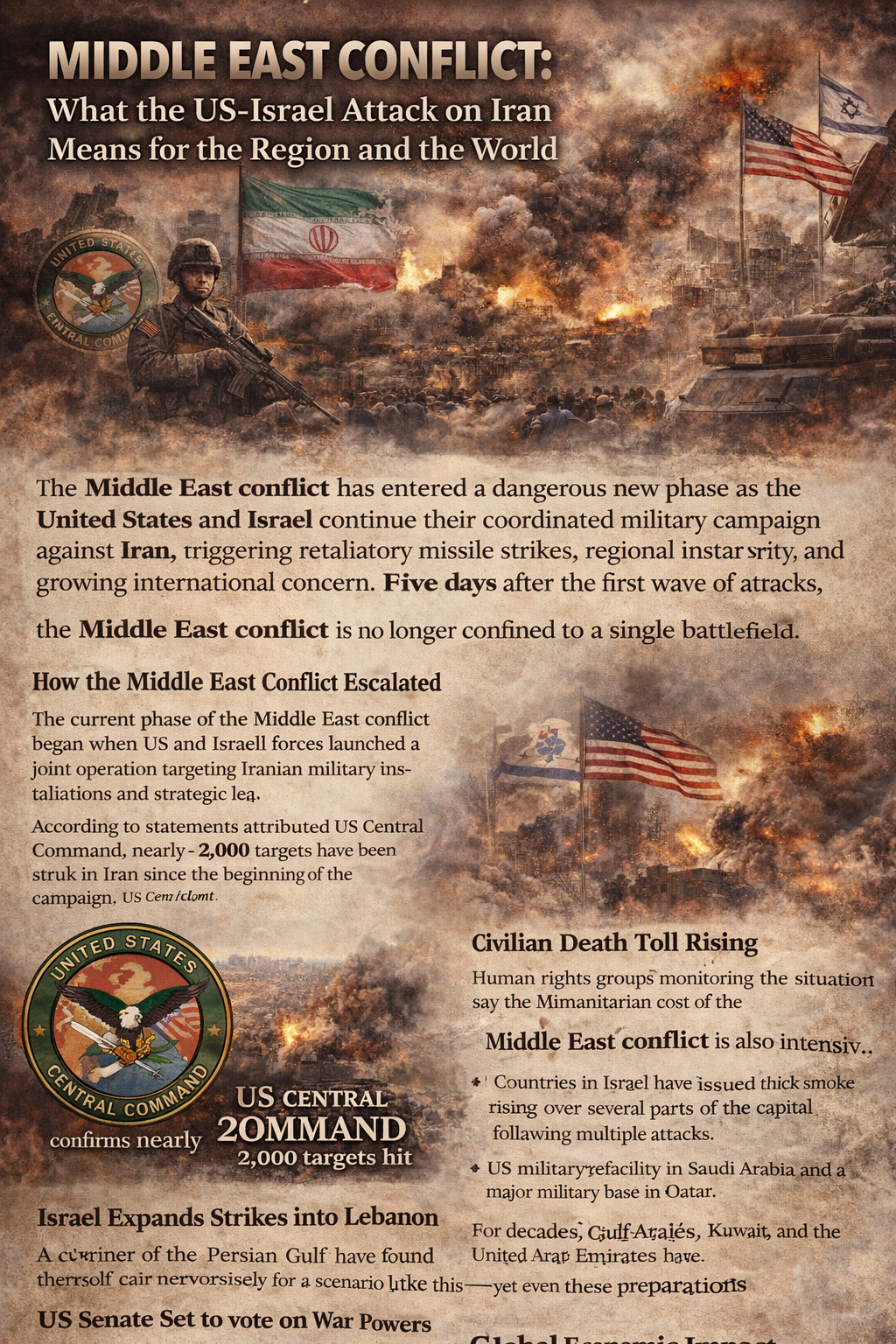
The Middle East conflict has entered a dangerous new phase as the United States and Israel continue their coordinated military campaign against Iran, triggering retaliatory missile strikes, regional instability, and growing international concern.
Five days after the first wave of attacks, the Middle East conflict is no longer confined to a single battlefield. Instead, it is spreading across multiple fronts—from Tehran to Lebanon and across the Persian Gulf—raising fears of a wider regional war that could reshape global security and energy markets.
Officials in Washington and Tel Aviv say the operation has severely weakened Iran’s military infrastructure. However, Iran’s retaliatory attacks and the rising civilian death toll suggest that the Middle East conflict remains far from over.
How the Middle East Conflict Escalated
The current phase of the Middle East conflict began when US and Israeli forces launched a joint operation targeting Iranian military installations and strategic leadership structures.
According to statements attributed to US Central Command, nearly 2,000 targets have been struck in Iran since the beginning of the campaign.
US President Donald Trump described the strikes as a decisive blow against Iran’s military capabilities, claiming that the country’s navy, air force, and missile infrastructure had been “knocked out.”
But analysts say the continuing retaliatory attacks from Tehran indicate that Iran retains enough military capability to sustain the Middle East conflict.
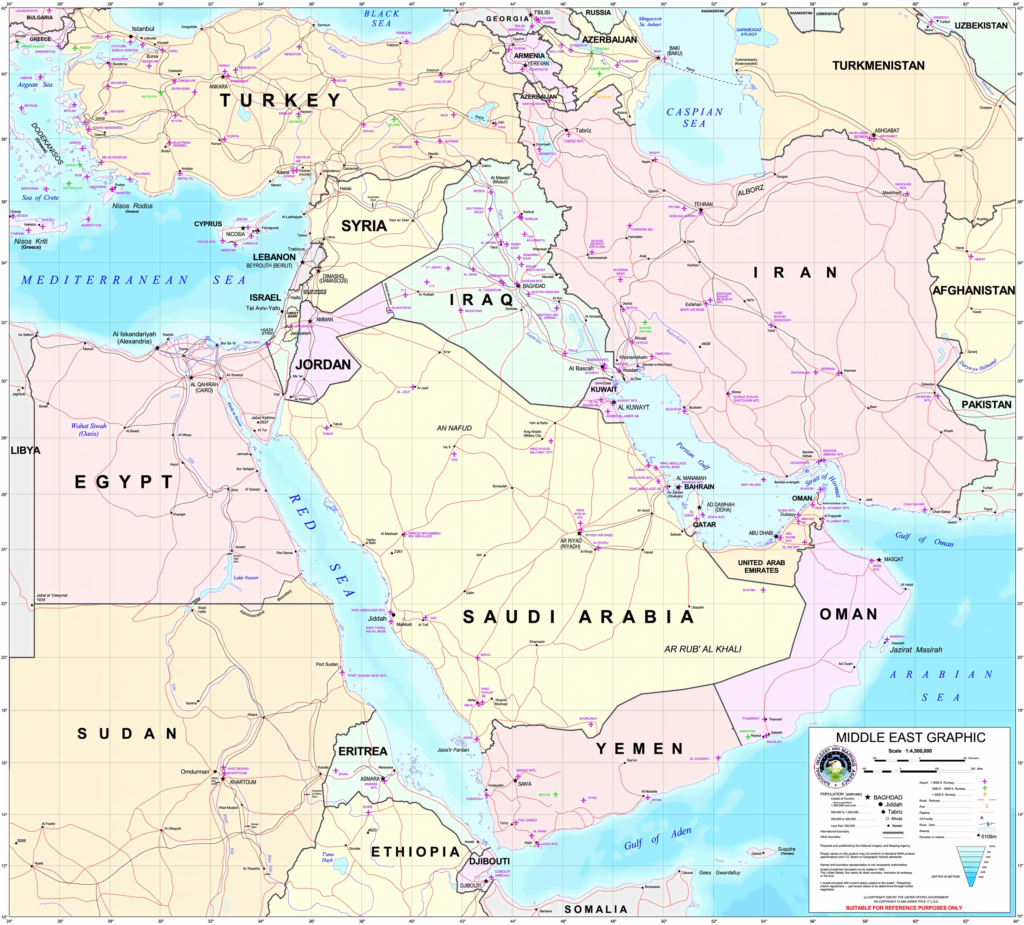
Missiles and drones launched from Iran have targeted American military facilities and allied positions across the region, including installations in Qatar and Saudi Arabia.
Civilian Death Toll Rising
Human rights groups monitoring the situation say the humanitarian cost of the Middle East conflict is rapidly escalating.
The US-based Human Rights Activists News Agency estimates that more than 1,000 people have been killed in Iran since the strikes began. Many of the casualties include civilians, according to preliminary reports.
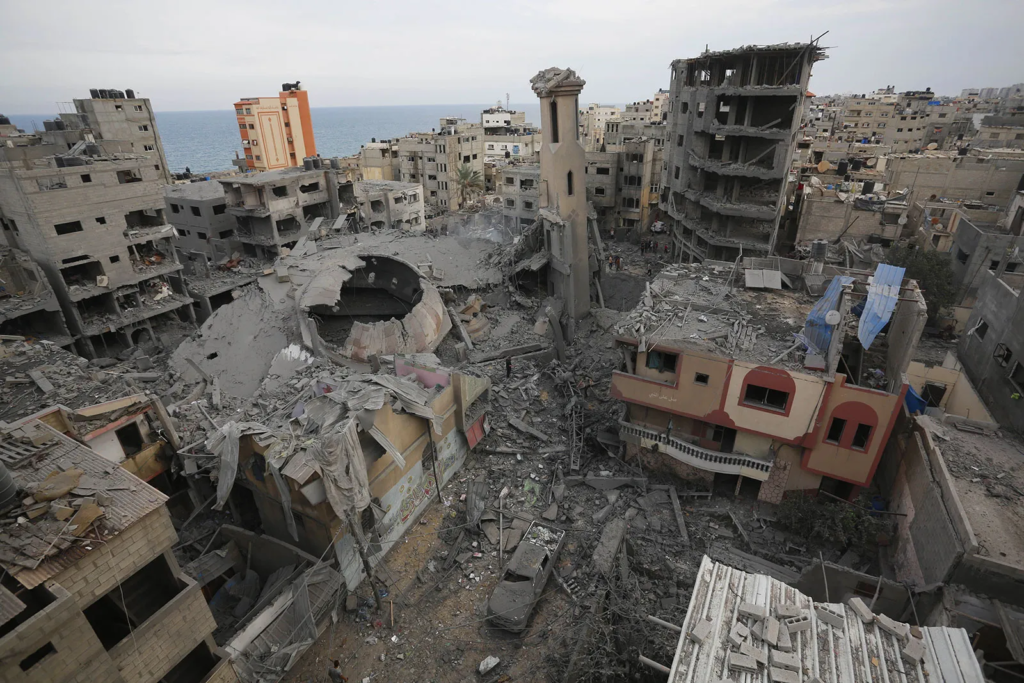
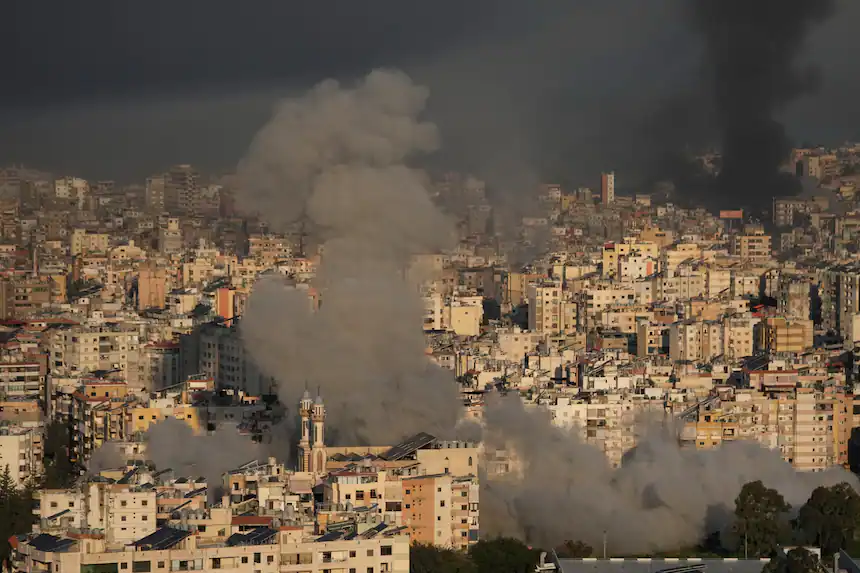
Images circulating from Tehran show thick smoke rising over several parts of the capital following continued airstrikes.
Observers warn that the longer the Middle East conflict continues, the higher the risk of a humanitarian crisis both inside Iran and across neighboring countries.
Power Vacuum After Death of Iran’s Supreme Leader
One of the most dramatic developments in the Middle East conflict was the reported killing of Iran’s Supreme Leader, Ayatollah Ali Khamenei, during the early stages of the strikes.
Iranian officials have reportedly begun consultations to determine a successor.
Among the names being discussed is Mojtaba Khamenei, the late leader’s son, although there is little clarity about the political process or the safety of potential candidates.
The leadership vacuum in Tehran adds another unpredictable dimension to the Middle East conflict, as Iran’s future political direction remains uncertain.
Israel Expands Strikes into Lebanon
The Middle East conflict is also intensifying beyond Iran’s borders.
Israel has launched airstrikes against Hezbollah targets in Lebanon, accusing the Iran-backed militant group of coordinating with Tehran in attacks against Israeli interests.
Authorities in Israel have issued evacuation warnings for dozens of villages in southern Lebanon as the strikes continue.
This expansion of hostilities raises fears that the Middle East conflict could spread into a full regional war involving multiple armed factions.
https://ogelenews.ng/middle-east-conflict
Gulf States Under Pressure
Countries across the Persian Gulf have found themselves caught in the crossfire of the Middle East conflict.
Saudi Arabia, Kuwait, and the United Arab Emirates have reported intercepting hundreds of missiles and drones believed to have been launched by Iran.
While their air defense systems have managed to stop many of the attacks, officials warn that prolonged hostilities could strain their defensive capabilities.
For decades, Gulf states have invested heavily in American defense systems precisely for a scenario like this—yet even these preparations may not fully shield them from the expanding Middle East conflict.
US Military and Diplomatic Presence Targeted
Several American diplomatic facilities and military installations have been struck as Iran retaliates.
Embassies in Saudi Arabia, Kuwait, and Lebanon have temporarily closed following security threats.
A US intelligence facility in Saudi Arabia and a major military base in Qatar were also targeted during the retaliatory strikes.
So far, six American service members have been confirmed killed.
Washington has begun withdrawing non-essential personnel from several Middle Eastern countries as the Middle East conflict escalates.
Travel Chaos and Stranded Citizens
The Middle East conflict has also disrupted global aviation.
Large portions of Middle Eastern airspace remain closed, forcing airlines to cancel thousands of flights.
Tourists, expatriates, and international workers have been stranded across several countries with limited evacuation options.
Both the United States and European governments are now scrambling to arrange emergency flights to bring citizens home.
Global Economic Impact
Beyond the battlefield, the Middle East conflict is sending shockwaves through global markets.
Oil and natural gas prices have surged amid fears that the conflict could disrupt exports from one of the world’s most important energy-producing regions.
The closure of the Strait of Hormuz, a critical shipping route for global oil trade, has raised alarms among economists and governments alike.
Financial markets have reacted nervously, with stocks falling as investors brace for prolonged geopolitical instability.
Why the United States and Israel Launched the Attack
Officials in Washington and Tel Aviv say the operation was intended to prevent Iran from developing nuclear weapons and to counter what they describe as imminent threats.
However, the United Nations’ nuclear watchdog has indicated that Iran was not close to developing an atomic weapon, challenging some of the claims used to justify the strikes.
American intelligence assessments have also suggested that Iran would likely need many more years to develop long-range nuclear missile capabilities.
This discrepancy has fueled political debate within the United States.
US Senate Set to Vote on War Powers
Back in Washington, lawmakers remain divided over the expanding Middle East conflict.
The US Senate is preparing to vote on a resolution requiring congressional approval for continued military action.
If passed, the measure could limit the president’s authority to continue the campaign without legislative oversight.
The House of Representatives is expected to hold a similar vote shortly afterward.
A Conflict with Global Consequences
The Middle East conflict now stands at a critical moment.
With military strikes continuing, diplomatic channels strained, and regional actors drawn into the confrontation, analysts warn that the situation could spiral further if de-escalation efforts fail.
For now, the world is watching closely.
Because what happens next in this Middle East conflict may shape the global balance of power for years to come.