

















Military repels ISWAP attack in Yobe
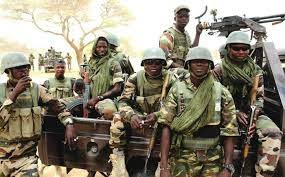
The Military repels ISWAP attack in Yobe story is one of the clearest signs yet that the battle for control in Nigeria’s North-East is entering another dangerous phase, with troops of Operation Hadin Kai beating back a coordinated insurgent assault on a military formation in Goniri, Yobe State, and killing more than 20 fighters in the process. The military said the attack happened during the night of March 8 into the early hours of March 9, when insurgents launched simultaneous assaults from multiple directions in what appeared to be an attempt to overwhelm the troops’ position. 
According to Operation Hadin Kai spokesman Lt. Col. Sani Uba, troops resisted the assault with coordinated defensive action while reinforcements and the air component provided support. Punch reported that the terrorists were forced to retreat after suffering significant casualties, leaving bodies behind. The Nation later put the toll at over 20 insurgents and said the dead included a senior commander, Abu Yusu, identified as the Munzir of Dursula. That makes the Military repels ISWAP attack in Yobe report more than a routine battlefield update. It was a substantial tactical setback for the attackers. 
The details of the encounter underline how serious the threat was. The Nation reported that surveillance assets detected the insurgents advancing from both Goniri village and the Ngamdu junction axis, suggesting an effort to encircle the position. The military said troops responded with superior firepower and tactical manoeuvres, while close air support helped blunt the offensive. In the official telling, the Military repels ISWAP attack in Yobe outcome was the result of layered defence, reinforcements and air-ground coordination rather than a simple firefight won by luck. 
Weapons recovery also adds weight to the operation. The Guardian, citing the same Operation Hadin Kai statement, reported that troops recovered two PKT machine guns, six AK-47 rifles, eight RPG bombs, four mortar bombs and assorted ammunition abandoned during the retreat. The Nation also reported that improvised explosive devices, bombs and more weapons were found, while follow-up patrols around Gwaigomari in the Timbuktu Triangle uncovered additional insurgent bodies. That means the Military repels ISWAP attack in Yobe story is also a weapons-denial story, which matters because insurgent groups often rely on raids to restock their arsenal. 
https://ogelenews.ng/military-repels-iswap-attack-in-yobe
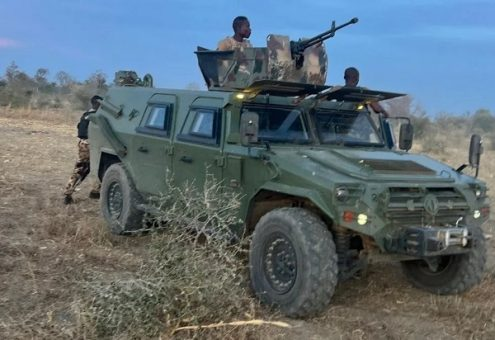
Still, this was not a flawless defence. Punch said some sections of the defensive perimeter at Goniri were briefly breached and that some structures and vehicles inside the base were damaged during the fighting. The Guardian reported similar damage at Goniri and Kukawa. So while the Military repels ISWAP attack in Yobe headline is accurate, the fuller picture is of a hard battle in which the attackers still demonstrated enough force to penetrate parts of the perimeter before being pushed back. 
That nuance matters because the wider security climate in the region is troubling. AP reported that jihadist groups, including Boko Haram and ISWAP, carried out at least six attacks over the weekend in Borno and Yobe and around Lake Chad, with analysts describing the scale and coordination as remarkable. AP also said the military acknowledged losing an officer and an unspecified number of soldiers in the latest wave of attacks. In other words, the Military repels ISWAP attack in Yobe development is a battlefield success happening inside a broader period of insurgent resurgence. 
That broader pattern has been visible in other recent incidents. Punch reported that multiple military positions in the North-East have come under renewed pressure, with officers and soldiers killed in separate attacks on bases in Ngoshe, Pulka, Banki Junction and Kukawa. Some of those raids ended with weapons looted and bases damaged. Against that backdrop, the Military repels ISWAP attack in Yobe report becomes politically and militarily significant because it offers one of the few recent examples of troops decisively stopping a large assault instead of being overrun. 
The Goniri battle also highlights an old truth about the insurgency: control of territory is only part of the contest. ISWAP and allied fighters have repeatedly tried to strike military locations not just to kill soldiers, but to seize weapons, destroy infrastructure and project resilience. AP quoted analysts saying these raids help the insurgents replenish their arsenal. That helps explain why the Military repels ISWAP attack in Yobe outcome matters beyond the body count. Denying the attackers access to arms and ammunition may be just as important as the immediate casualty figures. 
There is also a morale angle. Operation Hadin Kai said the location remains under firm troop control and that search-and-clearance operations are continuing in nearby communities where some fleeing insurgents may have sought refuge. The Nation added that injured troops were evacuated and said to be in stable condition. Those details matter because the Military repels ISWAP attack in Yobe story is likely to be used by the armed forces as proof that defensive coordination and air support can still blunt insurgent offensives even during a period of renewed attacks. 
But a veteran reading of the story must resist easy triumphalism. One successful repulsion does not erase the deeper security concerns raised by analysts and by the recent casualty toll in the region. AP reported that experts believe this wave of assaults shows improved insurgent coordination and continuing vulnerability of military positions. So while the Military repels ISWAP attack in Yobe headline is justified, the more honest conclusion is that Goniri was a tactical win in the middle of a strategic warning. 
For now, the clearest facts are these: troops held Goniri, the attackers were pushed back, weapons were recovered, more than 20 insurgents were reported killed, and follow-up operations are ongoing. In a week of grim headlines from the North-East, that gives the Nigerian military a badly needed battlefield success. But it also reminds the country that the war is still very much alive, and that every successful defence now sits alongside evidence of a more daring insurgent campaign. 
https://punchng.com/soldiers-repel-boko-haram-attack-on-military-base-in-yobe