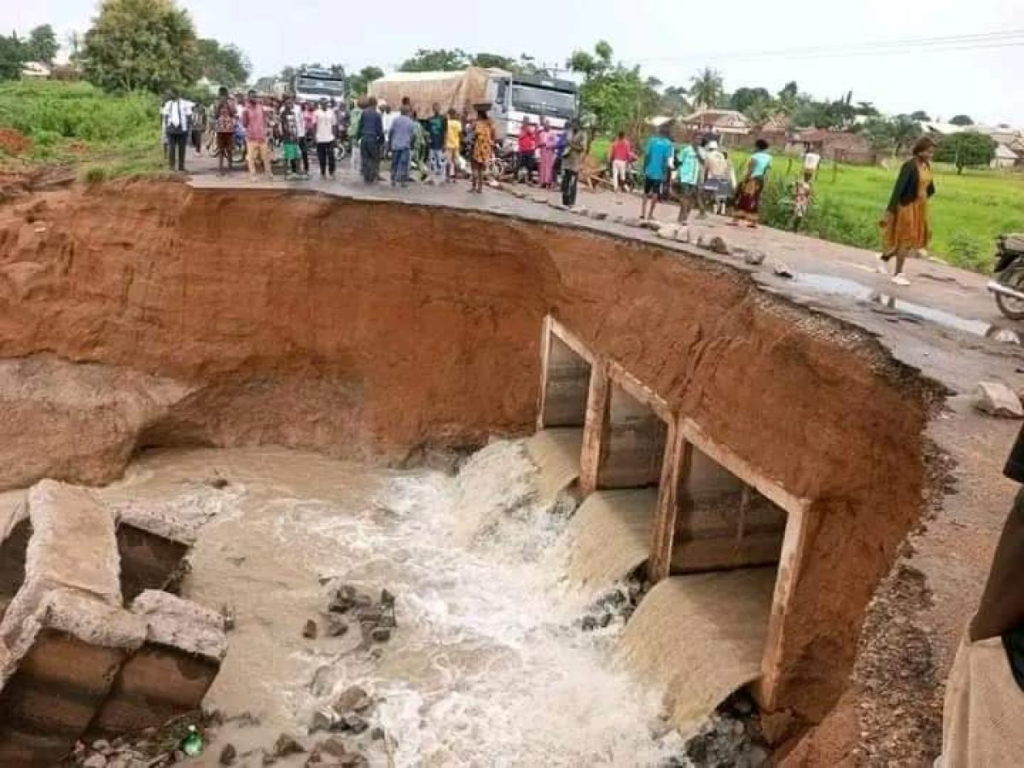















N38bn Benue road commissioned by Buhari collapsed
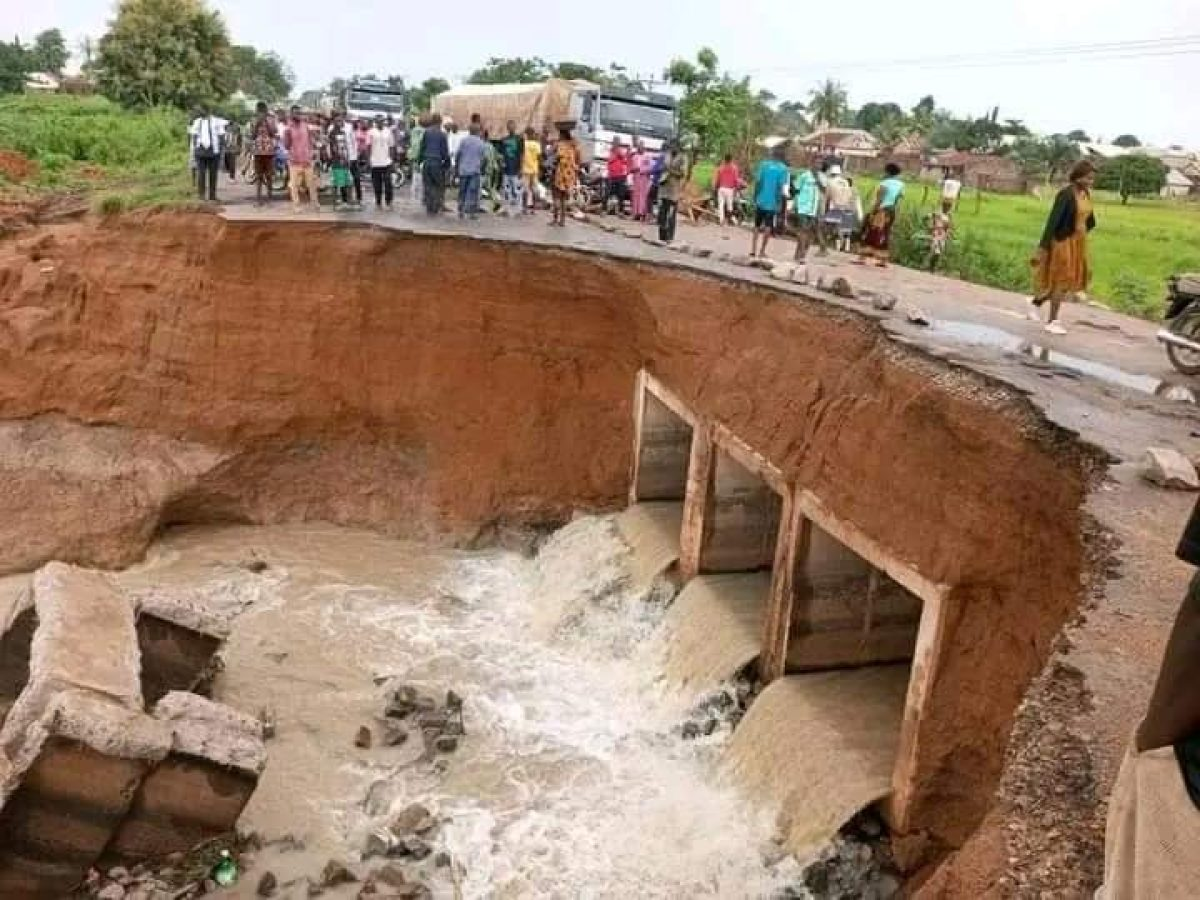
Barely three years after it was commissioned amid national fanfare, the ₦38bn Benue road commissioned by Buhari collapsed, triggering outrage among residents, commuters and public accountability advocates who now question the quality, oversight and sustainability of Nigeria’s public infrastructure projects.
The affected highway, the Nasarawa–Oweto–Otukpo Federal Road, was completed and commissioned under the administration of former President Muhammadu Buhari as part of the Federal Government’s strategic effort to improve connectivity between Benue State and neighbouring regions. But large sections of the road have now reportedly failed, raising serious concerns about construction standards and contractor accountability. 
The collapse of the ₦38bn Benue road commissioned by Buhari collapsed has reignited long-standing debates about Nigeria’s infrastructure governance, procurement transparency, and the recurring pattern of roads deteriorating shortly after commissioning.
Strategic Importance of the Nasarawa–Oweto–Otukpo Road
The Nasarawa–Oweto–Otukpo Road is not just another federal highway. It serves as a critical economic artery connecting Benue State, widely known as Nigeria’s “Food Basket,” with markets in Nasarawa, Abuja and other parts of the country.
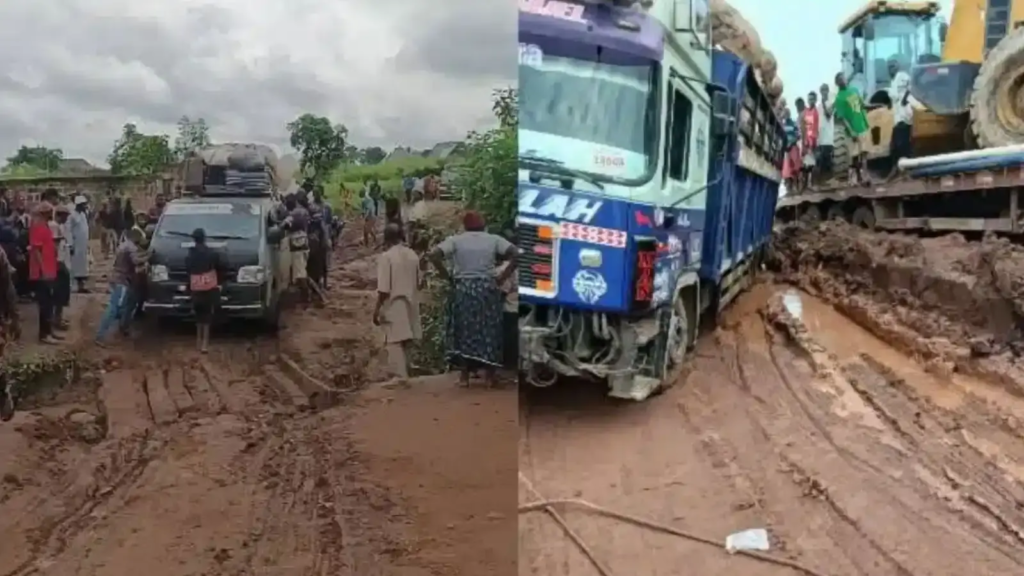
The road was expected to facilitate agricultural transport, enhance regional commerce, and improve accessibility for millions of residents. When the ₦38bn Benue road commissioned by Buhari collapsed, it effectively disrupted economic activity along the corridor.
For farmers and traders in Benue, the implications are immediate and severe.
“This road is essential to our survival,” said a local farmer in Otukpo. “Now that the road has collapsed, transportation costs have increased, and agricultural produce is being damaged before reaching markets.”
This underscores why the ₦38bn Benue road commissioned by Buhari collapsed is not merely an infrastructure failure, but an economic setback affecting livelihoods across multiple communities.
https://ogelenews.ng/n38bn-benue-road-commissioned-by-buhari-collapsed
Public Reaction and Outrage
Residents expressed shock and anger that such a major federal infrastructure project could deteriorate so quickly.
Many Nigerians view the collapse as symbolic of systemic failures in Nigeria’s public infrastructure management.
“How can a road worth ₦38 billion collapse in just three years?” asked a civil society activist in Makurdi. “This raises questions about project supervision, contractor competence, and corruption.”
The collapse of the ₦38bn Benue road commissioned by Buhari collapsed has intensified calls for an independent investigation into the project.
Public accountability groups are demanding answers to key questions:
• Who was the contractor?
• Were quality standards followed?
• Were inspections conducted properly?
• Were substandard materials used?
These questions reflect growing public frustration over infrastructure projects that fail prematurely.
Government Infrastructure Investment and Expectations
The Buhari administration invested heavily in infrastructure, positioning road construction as a cornerstone of its economic development agenda.
Federal Executive Council approvals for road projects across Nigeria included billions of naira allocated to enhance national connectivity and economic integration. 
Infrastructure development was intended to:
• Improve trade efficiency
• Reduce transportation costs
• Enhance rural connectivity
• Stimulate economic growth
The collapse of the ₦38bn Benue road commissioned by Buhari collapsed undermines these objectives and raises questions about long-term infrastructure sustainability.
Possible Causes of the Collapse
While a formal technical investigation is ongoing, infrastructure experts suggest several possible causes behind the collapse:
- Poor Construction Quality
Substandard materials or improper engineering practices can significantly reduce road lifespan.
- Weak Project Supervision
Inadequate oversight during construction can allow defects to go unnoticed.
- Poor Drainage Systems
Road failures in Nigeria are often linked to inadequate drainage, leading to erosion and structural weakening.
- Heavy Traffic Load
Overloaded trucks can accelerate road deterioration beyond design limits.
- Corruption and Procurement Irregularities
Mismanagement of public funds remains a recurring concern in infrastructure projects.
The collapse of the ₦38bn Benue road commissioned by Buhari collapsed illustrates how infrastructure failures often result from multiple systemic weaknesses rather than a single cause.
Economic and National Implications
Infrastructure plays a critical role in economic development.
When major roads collapse prematurely, the consequences include:
• Increased transportation costs
• Reduced agricultural productivity
• Slower economic growth
• Increased government spending on repairs
• Loss of public trust
Nigeria already faces a significant infrastructure deficit estimated in trillions of naira.
The collapse of the ₦38bn Benue road commissioned by Buhari collapsed highlights the urgent need for reform.
Historical Pattern of Road Infrastructure Failures
Nigeria has experienced similar infrastructure failures in the past.
Major roads, including strategic expressways, have deteriorated rapidly due to neglect, poor construction, or insufficient maintenance.
Infrastructure experts warn that unless systemic reforms are implemented, such failures will continue.
The collapse of the ₦38bn Benue road commissioned by Buhari collapsed is therefore part of a broader national challenge.
Calls for Investigation and Accountability
Civil society organisations, engineers, and public policy analysts are calling for an independent forensic audit of the project.
Key demands include:
• Contractor accountability
• Engineering audit
• Procurement review
• Structural assessment
• Legal consequences for negligence
Transparency advocates insist that without accountability, infrastructure failures will continue.
Government Response and Next Steps
Federal and state authorities are expected to investigate the collapse.
Possible responses include:
• Reconstruction of damaged sections
• Legal action against contractors
• Infrastructure policy reforms
• Strengthening supervision mechanisms
The collapse of the ₦38bn Benue road commissioned by Buhari collapsed presents an opportunity for Nigeria to reform infrastructure governance.
Infrastructure, Public Trust and National Development
Infrastructure quality reflects governance quality.
When major projects fail prematurely, public trust erodes.
The collapse of the ₦38bn Benue road commissioned by Buhari collapsed highlights the importance of:
• Transparency
• Accountability
• Engineering excellence
• Strong regulatory oversight
Nigeria’s development depends on durable infrastructure.
Without it, economic growth and national progress remain constrained.
Conclusion
The collapse of the ₦38bn Benue road commissioned by Buhari collapsed represents more than an infrastructure failure—it reflects systemic challenges in Nigeria’s infrastructure development framework.
As investigations unfold, Nigerians will watch closely to see whether accountability is enforced and whether reforms follow.
For many citizens, the issue is clear: infrastructure must serve the public, not fail it.
https://intelregion.com/news/n38bn-benue-road-commissioned-by-buhari-collapses-3-years-after
N38bn Benue road commissioned by Buhari collapsed