














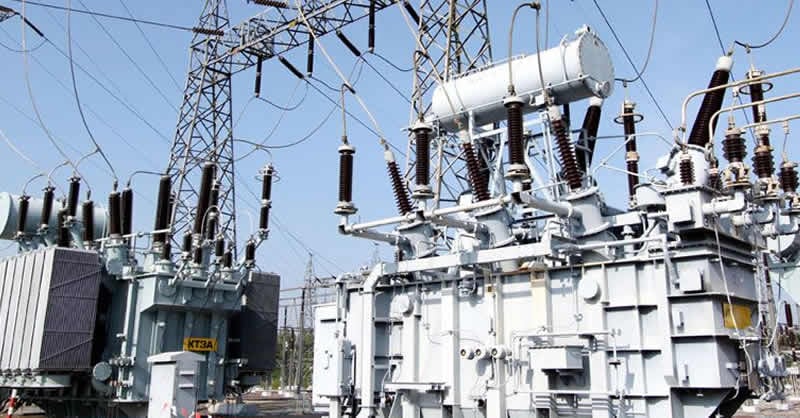
National grid collapses
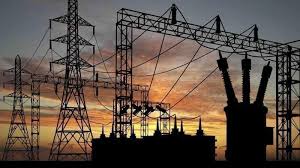
Nigeria’s fragile power infrastructure has suffered another major setback as the national grid collapses for the second time in four days, throwing large parts of the country into darkness and reigniting public anger over the persistent instability of electricity supply.
The latest system failure, confirmed by power distribution companies and industry operators on Tuesday, triggered widespread outages across several states, disrupting homes, businesses, hospitals, and critical services already struggling under rising energy costs.
This national grid collapse second time in four days has deepened concerns about the reliability of Nigeria’s power sector, coming just days after the previous grid failure that forced many electricity consumers to rely heavily on generators and alternative power sources.
What Happened This Time
Preliminary reports from the Transmission Company of Nigeria (TCN) indicate that the grid disturbance occurred following a sudden loss of generation and transmission imbalance, leading to a system-wide shutdown.
Electricity distribution companies across the country confirmed sharp drops in power supply shortly after the incident, with some areas experiencing total blackout within minutes.
Although full technical details are still being compiled, industry insiders say the national grid collapses second time in four days underscores deeper structural weaknesses in Nigeria’s ageing power infrastructure, including overstretched transmission lines, inadequate maintenance, and limited redundancy.
Growing Public Frustration
For many Nigerians, the repeated grid failures are no longer surprising but increasingly intolerable.
Small business owners, especially those dependent on electricity for production and refrigeration, described the latest blackout as “crippling,” noting that fuel costs for generators have become unbearable amid economic pressures.
“We just recovered from the last outage, now the national grid collapses second time in four days. How are businesses expected to survive?” a trader in Lagos asked.
Households across major cities such as Abuja, Lagos, Port Harcourt, Ibadan, and Benin City also reported extended outages, with some communities receiving little or no advance notice before power was lost.
Impact on the Economy and Essential Services
The repeated grid failures are having a measurable impact on Nigeria’s already strained economy. Manufacturing firms report rising production costs, while hospitals and healthcare facilities are forced to depend on diesel-powered generators to sustain life-saving equipment.
Experts warn that when the national grid collapses second time in four days, it erodes investor confidence, discourages industrial expansion, and worsens inflationary pressures as businesses pass rising energy costs to consumers.
Telecommunications providers, banks, and digital service companies also face operational risks during prolonged blackouts, increasing the likelihood of service disruptions.
Power Sector Experts Sound Alarm
Energy analysts say the frequency of system collapses highlights the urgent need for comprehensive reforms in Nigeria’s power sector.
According to industry observers, the national grid is operating close to its technical limits, with insufficient spinning reserves to absorb shocks when generation units trip or transmission lines fail.
“The fact that the national grid collapses second time in four days tells you that this is no longer an isolated incident. It’s a systemic problem,” a power sector consultant told Ogele News.
He added that while generation capacity has improved marginally in recent years, transmission and distribution infrastructure have not kept pace, leaving the system vulnerable.
https://ogelenews.ng/national-grid-collapses-second-time-in-four-days
Government Response and Promises
Officials in the power sector have acknowledged the recurring challenges, pledging to stabilise the grid through ongoing upgrades and investment in transmission infrastructure.
The Federal Ministry of Power has previously announced plans to expand grid capacity, integrate more renewable energy sources, and strengthen transmission lines across key corridors.
However, critics argue that progress has been slow and poorly coordinated, allowing failures to persist. The latest incident, where the national grid collapses second time in four days, has renewed calls for transparency, accountability, and accelerated reform.
A Pattern of Repeated Grid Failures
Nigeria has experienced multiple grid collapses over the past decade, with varying causes ranging from equipment failure and vandalism to sudden generation losses and weak grid management.
What worries analysts now is the increasing frequency of such failures within short intervals. The fact that the national grid collapses second time in four days raises questions about system resilience and emergency response protocols.
Energy economists warn that without urgent intervention, grid instability could worsen as electricity demand continues to rise alongside population growth and urbanisation.
Calls for Decentralised Power Solutions
In response to the recurring national grid collapses, stakeholders are once again advocating for decentralised power generation, including state-controlled electricity markets, renewable mini-grids, and embedded generation for industries.
They argue that reducing overreliance on a single national grid would improve reliability and cushion the impact when system failures occur.
“Every time the national grid collapses second time in four days, we are reminded why decentralised power is not optional but necessary,” an energy policy expert noted.
What Nigerians Can Expect Next
As of the time of filing this report, gradual restoration of power had begun in some regions, though full stability remained uncertain.
The Transmission Company of Nigeria is expected to issue a detailed technical report explaining the causes of the failure and measures being taken to prevent another collapse.
For millions of Nigerians, however, the bigger concern is whether meaningful reforms will follow or whether grid failures will continue to be treated as routine disruptions.
Conclusion
The latest blackout reinforces a troubling reality: Nigeria’s power sector remains fragile, and repeated failures are becoming normalised.
As the national grid collapses second time in four days, public patience is wearing thin, and pressure is mounting on authorities to deliver lasting solutions rather than temporary fixes.
Until structural weaknesses are addressed, Nigerians may continue to face darkness, rising costs, and uncertainty in a country where reliable electricity remains one of the most critical yet elusive public services.