















Niger Delta Youth Council oil asset security
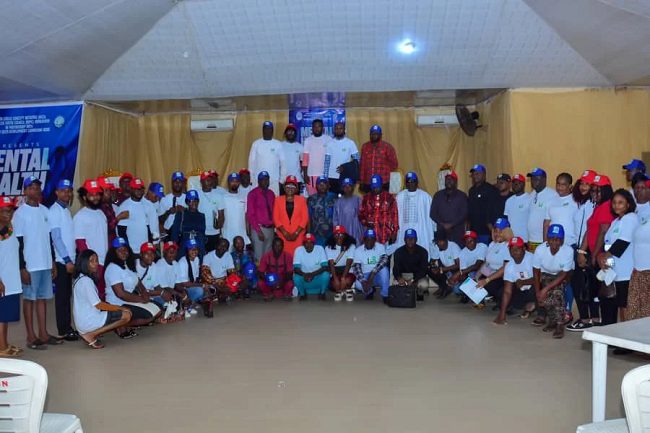
The Niger Delta Youth Council Worldwide has pledged to work closely with Pipeline Infrastructure Nigeria Limited (PINL) to protect oil and gas infrastructure across the Niger Delta, marking a notable shift toward community-based security cooperation in a region long troubled by sabotage, theft, and mistrust.
The commitment was announced during a recent engagement between youth leaders and representatives of PINL, where both sides underscored the urgency of securing pipelines, flow stations, and other critical installations that underpin Nigeria’s oil-dependent economy.
The move comes amid renewed national pressure to curb crude oil theft, reduce revenue losses, and stabilize production levels, particularly in oil-producing states across the Niger Delta.
A deliberate turn from confrontation to collaboration on the Niger Delta Youth Council oil asset security
For decades, insecurity in the Niger Delta has been driven by a complex mix of militancy, youth unemployment, environmental degradation, and criminal opportunism. Attacks on oil infrastructure have not only disrupted production but also deepened pollution, strained community relations, and eroded trust between residents, operators, and security agencies.
Niger Delta Youth Council oil asset security says its decision to partner with PINL reflects a conscious shift away from confrontation and toward structured collaboration.
According to Niger Delta Youth Council oil asset security council leaders, youths who live in host communities are uniquely positioned to support security efforts because they understand the terrain, local power dynamics, and emerging threats better than external forces alone.
“When pipelines are vandalized, it is our communities that suffer first,” a senior council official said. “Jobs are lost, development stalls, and the environment is damaged. Protecting these assets is not just a national duty; it is a local necessity.”
Focusing on external criminal networks
A central element of the proposed collaboration is tackling the activities of non-indigenous armed groups operating in parts of the Niger Delta. The youth council alleges that many recent incidents of vandalism and crude oil theft are driven by external criminal networks that exploit local grievances to justify sabotage.
By partnering with PINL, Niger Delta Youth Council oil asset security says it will help discourage collaboration with such groups, promote intelligence-sharing at the community level, and strengthen early-warning mechanisms within host areas.
PINL, which is contracted to secure sections of Nigeria’s pipeline network, welcomed the pledge, stressing that sustainable security cannot rely on force alone.
Company representatives noted that while technology and surveillance are important, community cooperation remains critical in a region where pipelines run through creeks, forests, and remote settlements.
Reframing youths as stakeholders
Beyond immediate security concerns, the partnership seeks to reshape how Niger Delta youths are perceived within the oil security ecosystem. Rather than being treated as threats or bystanders, the council wants young people recognised as stakeholders with a vested interest in stability and economic continuity.
Youth leaders argue that past security failures often stemmed from exclusion, where communities were policed but not consulted. In contrast, inclusion, they say, fosters ownership and accountability.
Security analysts largely agree. Community-based security frameworks, when properly structured and monitored, have proven effective in reducing sabotage and improving intelligence quality in fragile regions.
“If young people see oil infrastructure as something that directly affects their livelihoods and environment, the incentive to protect it increases,” a regional security expert observed.
Media, narrative, and the launch of Niger Delta Chronicle
Alongside the security pledge, the Niger Delta Youth Council unveiled a new publication, Niger Delta Chronicle, aimed at amplifying regional perspectives and shaping public discourse around development, youth empowerment, and peacebuilding.
According to the council, the publication will address issues such as environmental justice, economic inclusion, and governance, while countering what it describes as persistent negative portrayals of the Niger Delta in national narratives.
Media analysts note that communication plays a critical role in security dynamics. Mistrust often thrives where communities feel unheard or misrepresented.
“A credible regional platform can help reduce tension by giving communities a voice,” one analyst said. “Security is not only about patrols; it is also about trust and perception.”
What this means for the Niger Delta
The partnership between the Niger Delta Youth Council and PINL comes at a time when Nigeria is seeking to rebuild confidence in its oil sector. Persistent theft and vandalism have cost the country billions of dollars and weakened investor confidence.
If sustained, the collaboration could contribute to reduced pipeline damage, improved intelligence flow, and stronger relationships between host communities and security operators.
However, observers caution that success will depend on transparency, consistency, and tangible benefits for local populations. Youth leaders insist that security cooperation must be matched with development projects, employment opportunities, and meaningful environmental remediation.
A cautious but significant signal
For now, the pledge represents a willingness by Niger Delta youths to reposition themselves as part of the solution rather than perpetual suspects. By aligning with PINL and launching a media platform to influence regional discourse, the council is asserting a more constructive role in the future of the Niger Delta.
Whether this initiative delivers lasting change will depend on follow-through — and on whether collaboration truly replaces the cycles of mistrust that have long defined oil asset security in the region.
https://www.petroleumresources.gov.ng
https://ogelenews.ng/niger-delta-youth-council-oil-asset-security-pinl