
















Niger sugar project land offer
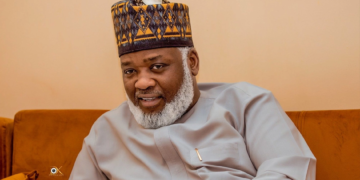
Niger State Governor Umar Bago has offered to provide land “in any part of the state” for a multi-million-dollar sugar production project, as the National Sugar Development Council (NSDC) and Lee Group advance plans for a large-scale sugar investment in the state. 
The offer, made at the Government House in Minna, signals Niger’s renewed push to expand agro-industrial development using its vast landmass and water resources, with the state positioning itself as a major hub for sugarcane cultivation and processing. 
In a statement referenced by multiple reports, Bago told the visiting delegation to pick land anywhere in Niger State and the government would make it available for the sugar project. 
What happened in Minna
The meeting brought together senior officials from the NSDC and representatives of the Lee Group, owners of GNAL Sugar, who visited Niger State as part of efforts to scale strategic investment in Nigeria’s sugar value chain. The NSDC delegation was led by its Executive Secretary/CEO, Kamar Bakrin. 
Bago used the meeting to reaffirm his administration’s readiness to partner with “serious investors” in agriculture, particularly sugar production. He described Niger as open for business and emphasized that the state has the land, water and political will required for long-term agro-industrial projects. 
For Niger, the message was blunt: Niger sugar project land offer is on the table, and the state wants the investment to move from talks to execution.
Why Niger is attracting sugar investors
The NSDC said the visit was intended to introduce Lee Group as an established investor in large-scale sugar production and to connect the firm with a state considered viable for sugarcane expansion because of its vast arable land and abundant water resources. 
The council’s recent national study identified about 1.2 million hectares of land across Nigeria as suitable for sugar development and listed Niger among 11 states considered most suitable for major sugar projects. 
This technical assessment strengthens the case behind the Niger sugar project land offer, because investors typically want to see proof of agronomic suitability before committing capital to an estate-and-mill model.
What NSDC and Lee Group said
Bakrin told the state government the council is selective about the type of investors it brings to host states, describing Lee Group as a serious conglomerate with a track record in sugar and industrial development. He also said the council’s role goes beyond policy, extending into practical facilitation of land access, infrastructure discussions and institutional support needed to deliver successful sugar projects. 
Lee Group’s Project Director, Lam Wing Ki Wilkins, said the company understands sugar production as a long-term investment and is prepared to work with the Niger State Government and NSDC to develop a sustainable project based on Niger’s natural advantages, particularly land and water. 
Taken together, both sides framed the arrangement as a partnership rather than a quick deal, which is consistent with how sugar estates typically operate: large land footprints, heavy infrastructure needs, multi-year cultivation cycles and big processing investment.
https://ogelenews.ng/niger-sugar-project-land-offer
Niger’s existing sugar footprint
Niger is already part of Nigeria’s sugar conversation. Reports noted that one of the country’s brownfield sugar entities, Golden Sugar Company (GSC) owned by Flour Mills of Nigeria Plc, is located in Sunti, Mokwa Local Government Area. 
That existing footprint matters because it shows Niger is not starting from zero. It also strengthens the logic of the Niger sugar project land offer: investors can point to existing sugar activity in the state and build a business case around it.
The scale factor: land, geography, and what it means
Niger State is Nigeria’s largest state by land area, covering about 76,363 km², roughly 10% of Nigeria’s total land mass, according to the figures cited in the reports. 
This matters because sugar projects require scale. A modern integrated sugar estate needs room for:
• large sugarcane farms (and outgrower schemes, where applicable)
• irrigation and water management systems
• haulage routes from farm to mill
• processing facilities, storage and distribution infrastructure
That is why the governor’s pitch kept returning to one point: Niger sugar project land offer is flexible, and the investor can choose the most suitable location.
A familiar NSDC approach
The Niger engagement follows a pattern. Reports recalled that in November 2025, NSDC similarly led Lee Group to Taraba State, where the Taraba governor also made land available for a multi-million-dollar sugar project. 
In other words, NSDC is doing what it has been publicly positioning itself to do: match credible investors with state governments willing to provide land and support conditions for sugar projects.
What to watch next
For citizens and the market, the next signs that the Niger sugar project land offer is moving beyond talk will include:
1. a disclosed project location (or shortlisted sites) within Niger
2. MoU/MoA terms on land size, timelines and social safeguards
3. environmental and water-use planning for irrigation-heavy cultivation
4. host community engagement and outgrower structure
5. early-stage infrastructure commitments, especially power access and road links
If those pieces appear quickly, it becomes easier to measure whether the project is truly “massive” or another announcement that stalls after headlines.
https://punchng.com/niger-gov-offers-nsdc-firm-land-for-sugar-project