













Nigerians must pay tax to demand accountability – NOA
Nigerians must pay tax to demand accountability – NOA, says the National Orientation Agency, which has argued that tax compliance is not only a civic duty but also one of the strongest foundations for citizens to legitimately question how government raises, spends and manages public resources. The statement, made in Abuja on Thursday, has reopened a long-running debate about the social contract in Nigeria: should citizens first pay more tax before demanding better governance, or should government first prove that it can be trusted with public money? 
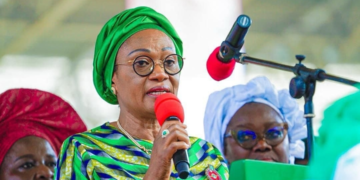
The position was stated by Abiodun Olayeni-Ali, a programme officer with the National Orientation Agency, during an interactive session at the maiden edition of Civic Talks organised by the Centre for Inclusive Social Development in Abuja. According to the report, she said Nigerians must fulfil their tax obligations before demanding accountability from government, adding that tax payment gives citizens both the moral and legal standing to question the use of public resources. 
That is the central claim behind the headline Nigerians must pay tax to demand accountability – NOA. It is not merely a revenue message. It is an attempt to redefine citizenship in practical terms, linking taxpaying directly to the right to demand transparency, responsiveness and accountability from those in power. 
What the NOA actually said
The strongest version of this story begins by clarifying what the NOA meant. The agency’s officer did not simply tell Nigerians to pay tax and remain silent. Her argument, as reported, was that citizens who fulfil their tax obligations are in a stronger position to hold government accountable for how public money is used. That distinction matters because the statement is really about civic leverage, not just tax collection. 
This is why Nigerians must pay tax to demand accountability – NOA has stirred interest. It touches a sensitive nerve in Nigeria’s democracy: many people want better roads, healthcare, schools and security, but many also distrust the way public funds are managed. The NOA is effectively saying that one route to stronger accountability is wider tax compliance, because taxation creates a more direct and measurable relationship between citizen and state. 
In political theory, this is a familiar idea. Taxation is often tied to representation and accountability because citizens who fund the state tend to feel more entitled to question how that money is used. The NOA’s statement brings that theory into Nigeria’s everyday political reality. 
Why the statement matters now
Timing is important here. Nigeria is not discussing tax in a vacuum. As of January 1, 2026, the country began operating a new tax regime, under which the Federal Inland Revenue Service was dissolved into the Nigerian Revenue Service. The reform aims to improve revenue administration and raise Nigeria’s tax-to-GDP ratio, which has long been considered low compared with peer African economies. 
That context makes the statement Nigerians must pay tax to demand accountability – NOA especially relevant. The country is already in a period of tax transition, public scepticism and economic pressure. Citizens are hearing more about tax reform, tax collection and revenue efficiency, while also dealing with questions about inflation, living costs and service delivery. 
So the NOA’s position is arriving at a moment when tax is no longer a distant technical issue. It is now a visible part of national conversation, and that makes any statement linking tax to accountability politically significant. 
https://ogelenews.ng/nigerians-must-pay-tax-to-demand-accountability
The bigger idea: tax and the social contract
At the heart of the story is the idea of the social contract. In simple terms, the social contract is the understanding that citizens obey laws, contribute to the system and support state institutions, while government in return protects lives, provides services and uses public power responsibly.
The NOA’s statement Nigerians must pay tax to demand accountability – NOA rests on this logic. If citizens want to demand transparency and responsive governance, the agency argues, they must also participate in sustaining the state through lawful obligations such as taxation. 
But this is exactly where the controversy begins. Many Nigerians believe the social contract in the country is already broken from the government side. They argue that asking citizens to pay more tax without first fixing corruption, leakages, poor service delivery and weak accountability reverses the proper order of responsibility. A BusinessDay column on the social contract captured this popular frustration, noting that many citizens insist government should first demonstrate responsibility and transparency before demanding more tax compliance. 
That tension gives the headline its force. Nigerians must pay tax to demand accountability – NOA is not just an administrative statement. It is a philosophical and political argument about who must move first in repairing trust between state and citizen. 
Why many Nigerians may resist that argument
The resistance is easy to understand. In a country where public frustration with governance is high, many people do not see tax as a clear route to accountability. They often see it as one more burden in an economy where service delivery remains weak.
That is why the statement Nigerians must pay tax to demand accountability – NOA may sound persuasive to policy advocates but provocative to ordinary citizens. For many people, the real question is not whether taxes are important. It is whether the government has earned the public trust required to ask for greater compliance. 
There is also the everyday economic problem. Tax discussions happen at a time when many households are already under pressure from transport costs, food inflation and broader economic strain. In that atmosphere, calls for stronger tax compliance can easily be interpreted as elite messaging unless they are matched by visible proof of prudent spending and real public benefit. That interpretation is an inference, but it is consistent with the broader public sentiment reflected in the social-contract debate cited above. 
What the NOA appears to be trying to do
The NOA’s statement should also be read as part of a wider civic-orientation campaign. Recent reporting shows the agency has increasingly been active on public education issues, including financial awareness, anti-Ponzi enlightenment and broader civic messaging. BusinessDay reported in February that the Securities and Exchange Commission planned to collaborate with the NOA to educate Nigerians about Ponzi schemes. 
Seen from that angle, Nigerians must pay tax to demand accountability – NOA looks like an effort to push citizens beyond grievance politics toward a more participatory model of civic responsibility. The agency appears to be saying that citizenship is not only about complaining after failure. It is also about fulfilling obligations that strengthen one’s claim to demand better governance. 
That may not settle the argument, but it does show the statement is part of a broader attempt to reshape public thinking about civic duty. 
The weakness in the NOA’s position
Still, the NOA’s claim has a weakness if left standing alone. Accountability should not depend only on whether citizens pay tax. Governments are accountable because they wield public power, control public resources and act in the name of the people. Even citizens outside the tax net still have the democratic right to question the state. That is a principle of citizenship, not merely a privilege of taxpayers. This is an inference based on democratic reasoning, not a direct quote from a source.
What the NOA’s statement does well is highlight the practical force of taxpaying in strengthening civic claims. What it risks doing poorly is sounding as if accountability is conditional on tax compliance alone. That is why the strongest reporting on Nigerians must pay tax to demand accountability – NOA should preserve both sides: tax payment deepens civic leverage, but public accountability remains a democratic duty of government regardless. 
The real political challenge
The challenge, then, is not merely to persuade Nigerians to pay more tax. It is to make tax compliance feel meaningful. That requires clear communication, visible service delivery, better public accounting and a stronger culture of consequences for misuse of public funds.
Leadership’s recent discussion of tax reality and public trust made the same point in another form: successful taxation depends on communication, accountability and meaningful engagement. Without that, tax appeals easily sound hollow. 
This is why Nigerians must pay tax to demand accountability – NOA is ultimately a two-part message, whether the agency intended it that way or not. Yes, citizens should meet civic obligations. But government must also create the trust environment in which those obligations feel justified. 
The clean takeaway
For now, the verified facts are clear. The National Orientation Agency, through programme officer Abiodun Olayeni-Ali, said in Abuja that Nigerians must meet their tax obligations before demanding accountability, arguing that tax compliance gives citizens the moral and legal standing to question government spending. The statement comes during a period of tax reform and renewed debate about the state-citizen social contract in Nigeria. 
That means the strongest veteran-journalist conclusion is this: Nigerians must pay tax to demand accountability – NOA is not just a revenue statement. It is a provocative intervention in Nigeria’s larger argument about trust, citizenship and whether the road to better governance begins with stronger tax compliance, stronger government accountability, or both at the same time. 
https://punchng.com/nigerians-must-pay-tax-to-demand-accountability-noa
Nigerians must pay tax to demand accountability – NOA