















NNPC ran refineries at monumental loss
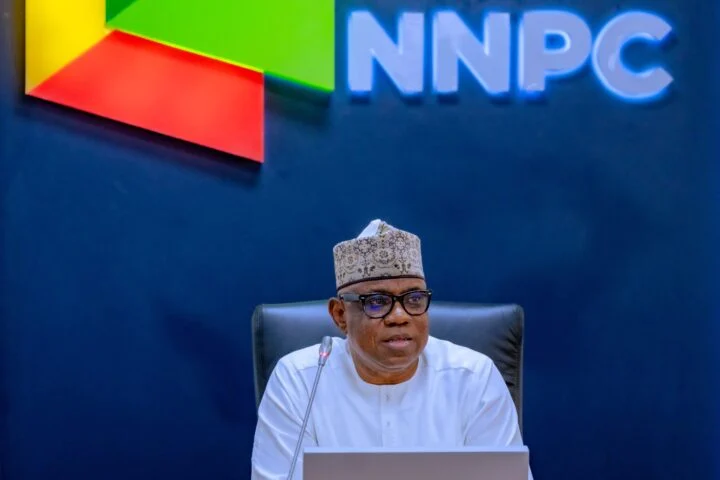
Abuja — The Group Chief Executive Officer of the Nigerian National Petroleum Company Limited (NNPC Ltd), Bashir Bayo Ojulari, has acknowledged what many Nigerians have suspected for years: that the country’s state-owned refineries were not merely underperforming, they were running at a “monumental loss”, with crude going in and value leaking out.
Speaking on Wednesday at the Nigeria International Energy Summit (NIES) 2026 in Abuja during a fireside chat titled “Securing Nigeria’s Energy Future,” Ojulari said the decision to halt operations was driven by one brutal reality. In his words, NNPC ran refineries at monumental loss, and continuing to operate them in that condition was “just wasting money.”
Ojulari’s remarks land in a country where refinery promises have become a recurring national heartbreak: huge rehabilitation budgets, long shutdowns, public fanfare, and then silence. He admitted the anger Nigerians feel is justified, pointing to the scale of money sunk into turnaround maintenance and restart attempts over the years, and the expectations that followed.
But it was his blunt description of the operating model that drew the sharpest lines.
According to Ojulari, NNPC was pumping crude cargo into the refineries every month, yet utilisation hovered around 50 to 55 per cent, leaving the company spending heavily on operations and contractors while the economics refused to improve. “When you look at the net, we were just leaking away value,” he said, adding that there was no clear “line of sight” to recovery, which made the losses harder to justify,NNPC ran refineries at monumental loss.
That admission is important because it shifts the debate from emotions to structure: Nigeria was not simply dealing with old equipment. The argument from the new NNPC leadership is that the entire setup was commercially broken.
Ojulari went further, describing the reopening of the Port Harcourt Refinery as a waste of resources, and openly conceding that NNPC currently lacks the capacity to run refineries profitably. He listed what he said any serious refinery operation requires: financing, a competent EPC (Engineering, Procurement and Construction) backbone, and world-class operational and maintenance capacity. In his assessment, those conditions were not in place.
The Port Harcourt Refinery story sits at the centre of that argument. Vanguard reported that the facility, rehabilitated at about $1.5 billion, was reopened in November 2024 after close to three years of rehabilitation, but was shut again in May 2025 following sustained losses.
This is where Ojulari’s “NNPC ran refineries at monumental loss” line becomes more than a headline. It becomes a policy statement: stop the bleeding first, then decide what to do with assets that have become symbols of waste.
He said his management team is now looking for reliable partners with proven refinery management experience. Not contractors, not short-term operators, but entities that actually run refineries as a business and can sustain profitability,NNPC ran refineries at monumental loss.
In the same conversation, Ojulari also framed the rise of the Dangote Petroleum Refinery as a major factor changing the pressure dynamics around government refineries. He described Dangote as a “critical stabiliser” in Nigeria’s fuel supply chain, even delivering the kind of quote that tends to travel fast in a hall full of energy players: Nigerians, he said, should be grateful the refinery exists because it gives the country “breathing space.”
That breathing space matters because it changes what government can do next. Instead of rushing to restart plants just to claim “local refining is back,” NNPC is signalling a slower, more commercial approach, including partner-led models.
https://ogelenews.ng/nnpc-ran-refineries-at-monumental-loss-ojulari
Yet Ojulari’s statement also reopens old questions Nigerians will demand answers to: How did the refineries keep consuming money at scale with crude supply going in? Who signed off on contractor-heavy operating arrangements without measurable recovery plans? What happened to the performance targets tied to rehabilitation spending? Those questions are likely to follow the NNPC leadership long after the applause in Abuja fades.
For context, similar concerns have trailed refinery operations before. Previous reports attributed significant monthly drain to refinery operations and maintenance, with figures repeatedly cited around hundreds of millions in monthly losses during certain periods,NNPC ran refineries at monumental loss.
Still, the weight of the current moment is that the GCEO is no longer speaking in euphemisms. He is saying directly that NNPC ran refineries at monumental loss and that continuing to operate them without a clear recovery path would have been irresponsible.
Now the country waits for the next phase: whether NNPC can secure credible partners, publish clearer performance outcomes, and prove that “stop the rot” is not another slogan, but a turning point.
In plain terms: if NNPC ran refineries at monumental loss, Nigerians will want to see the losses quantified, the decisions documented, and the new model explained in a way that survives public scrutiny.
https://punchng.com/just-in-nnpc-ran-refineries-at-monumental-loss-ojulari