












NNPC refineries
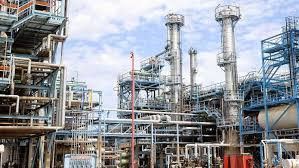
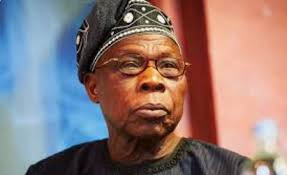
Former President Olusegun Obasanjo has again declared that NNPC refineries will never work effectively under the current government-controlled structure, reopening national debate over Nigeria’s long-running failure to revive its state-owned refining assets.
Obasanjo made the remark in a recent television interview, where he argued that the country’s refineries in Port Harcourt, Warri and Kaduna have remained trapped by poor management, corruption, outdated infrastructure and repeated rehabilitation efforts that have produced little public confidence.
His comments come at a sensitive time for the Nigerian National Petroleum Company Limited, NNPCL, which is still trying to secure experienced refinery operators and equity partners to revive the country’s troubled state-owned plants. Reuters reported in February 2026 that NNPCL was in talks with a Chinese petrochemical company over one of the refineries, after an internal review showed that the plants were running at huge losses with high operating costs and low processing volumes.
The latest statement by Obasanjo is not new. The former president has repeatedly maintained that NNPC refineries cannot deliver efficient results as long as government continues to hold them under the same ownership and management culture.
According to him, when he was president, he invited Shell to consider managing or taking equity in the refineries. Shell reportedly refused, citing deep concerns about the structure and risks around the facilities. Obasanjo has often used that experience to argue that if a company with Shell’s technical capacity refused the offer, Nigerians should understand the depth of the problem.
https://ogelenews.ng/nnpc-refineries-will-never-work-again-obasanjo-says
The former president also recalled that before he left office in 2007, his administration moved to sell majority stakes in some of the refineries to private investors, including interests linked to Aliko Dangote and Femi Otedola. That deal was later reversed under the administration of late President Umaru Musa Yar’Adua.
For Obasanjo, that reversal was a costly mistake. His position is that Nigeria missed an opportunity to move the NNPC refineries away from a structure that had already failed for decades.
The debate has returned because NNPCL itself appears to be moving closer to a partnership model. In October 2025, Reuters reported that NNPCL was seeking technical equity partners to revive three refineries with a combined capacity of 445,000 barrels per day. The report also noted that the facilities had remained non-operational despite significant investment, while former NNPC leadership had pursued rehabilitation contracts worth about $2.5 billion.
That background gives weight to Obasanjo’s criticism. Nigeria has spent years announcing turnaround maintenance, rehabilitation timelines and refinery restart dates. Yet the country has continued to rely heavily on imported petroleum products, even though it is one of Africa’s biggest crude oil producers.
The central question is no longer whether NNPC refineries can be repaired on paper. The real question is whether they can be run profitably, transparently and sustainably under a state-dominated structure.
NNPCL’s current Group Chief Executive Officer, Bayo Ojulari, has taken a different tone from past promises. He said the company is seeking proven refinery operators rather than merely relying on contractors. Reuters quoted him as saying NNPC was not selling the refineries outright but would relinquish part of its equity to partners to help the plants finance themselves and operate more sustainably.
That approach partly supports Obasanjo’s argument: the NNPC refineries may require more than another round of repairs. They may require a different ownership and operating model.
For many Nigerians, the issue is personal. When local refineries fail, the country depends more on imported fuel, foreign exchange pressure rises, pump prices become more vulnerable, and ordinary citizens face higher transport and living costs. That is why the fate of NNPC refineries remains one of the most important economic issues in the country.
The coming months will show whether NNPCL’s search for equity partners can produce a credible turnaround. But Obasanjo’s warning has again placed public attention on a painful question: how many more billions should Nigeria spend before accepting that the old refinery model has failed?
For now, the former president’s message is blunt. In his view, NNPC refineries will not work again unless Nigeria abandons the same system that kept them broken for years.
The government and NNPCL may still insist that revival is possible. But for citizens who have watched repeated promises collapse, Obasanjo’s statement speaks to a wider frustration: Nigeria has crude oil, but its public refineries have failed to deliver reliable fuel security.
Until the NNPC refineries operate consistently, produce at commercial scale and reduce dependence on imports, public doubt will remain. And that doubt is exactly what Obasanjo has now turned into a national conversation.