













Peter Obi political inconsistency
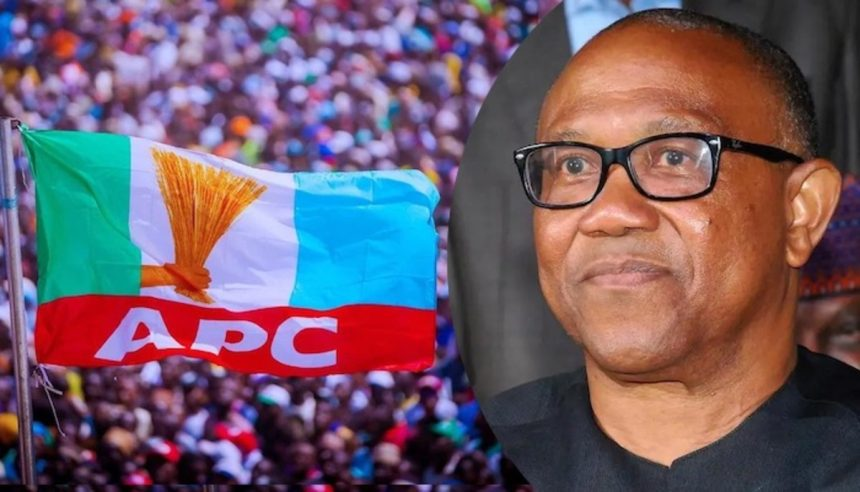
The Presidency has criticised former Anambra State governor and leading figure in the African Democratic Congress (ADC), Mr Peter Obi, accusing him of political inconsistency and what it described as a growing desperation for power ahead of Nigeria’s evolving political realignments.
The criticism came from the Special Adviser to the President on Information and Strategy, Mr Bayo Onanuga, who made the remarks in a post on the social media platform X. The statement has since triggered renewed debate over opposition politics, political alliances, and credibility in Nigeria’s post-2023 political landscape.
According to the Presidency, the Peter Obi political inconsistency allegation stems from a viral video in which the former governor appeared to associate with political figures he had previously criticised during past political campaigns.
Presidency Reacts to Viral Video
In his post, Onanuga referenced Obi’s past remarks in which he described certain political actors as part of what he famously called the “structure of criminality.” He argued that Obi’s recent posture, in which he appeared to refer to some of the same individuals as leaders, represents a sharp reversal of principles.
The presidential aide said the development raises serious concerns about Peter Obi political inconsistency, questioning whether the former governor’s political positions are driven by conviction or convenience.
“When a politician condemns a group in strong moral terms and later embraces the same group without explanation, it raises credibility issues,” Onanuga wrote.
https://ogelenews.ng/peter-obi-political-inconsistency
Questions of Credibility and Principles
The Presidency’s criticism places Peter Obi political inconsistency at the centre of a broader argument about political morality and ideological clarity in Nigeria. According to Onanuga, leadership demands consistency, especially from figures who built public support on moral and ethical claims.
He suggested that Obi’s evolving political alliances undermine the principles he once presented as non-negotiable, arguing that Nigerians deserve clarity from leaders who seek their trust.
Political observers note that Obi’s rise in national prominence was partly fueled by his strong rhetoric against entrenched political interests, making any perceived shift especially controversial.
Context of Nigeria’s Political Realignments
Nigeria’s political environment has undergone significant realignment since the 2023 general elections. Opposition figures have increasingly explored new alliances and platforms in response to shifting political realities.
Analysts say the Peter Obi political inconsistency accusation must be understood within this context, where survival, relevance, and coalition-building often blur ideological boundaries.
However, critics argue that while political strategy is expected, public figures must clearly explain shifts in position to avoid accusations of opportunism.
Silence from Obi’s Camp
As of the time of reporting, Peter Obi has not issued an official response to the Presidency’s claims. His supporters, however, have taken to social media to defend his actions, arguing that political engagement does not necessarily amount to endorsement.
They contend that dialogue across political divides is necessary for national unity and governance, and that interactions captured in viral videos should not be over-interpreted.
Still, the Presidency insists that Peter Obi political inconsistency is not about dialogue, but about contradiction between past rhetoric and present actions.
Presidency’s Broader Messaging
The statement by Onanuga fits into a wider communication strategy by the Presidency aimed at countering opposition narratives and questioning the moral authority of prominent critics of the government.
By highlighting Peter Obi political inconsistency, the Presidency appears intent on reframing Obi’s public image from that of a principled reformer to a conventional politician navigating power structures.
Political analysts say such exchanges reflect the increasingly combative tone of Nigeria’s political discourse, even outside election cycles.
Public Reactions and Debate
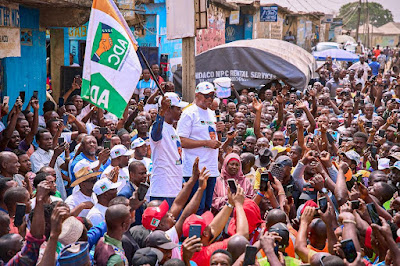
The Presidency’s remarks have sparked mixed reactions among Nigerians. Some see the criticism as valid scrutiny of a public figure who built a brand around integrity. Others view it as a political attack designed to weaken a popular opposition voice.
Civil society commentators warn that excessive personalization of political debates risks diverting attention from substantive policy discussions affecting citizens.
Nonetheless, the Peter Obi political inconsistency debate has reopened conversations about political integrity, alliance-building, and the limits of moral absolutism in governance.
A Familiar Pattern in Nigerian Politics
Nigeria’s political history is filled with examples of politicians who shifted alliances over time. What makes the current controversy notable, analysts say, is Obi’s earlier framing of politics as a moral contest rather than a pragmatic exercise.
This framing, they argue, is why allegations of Peter Obi political inconsistency resonate strongly with both supporters and critics.
Whether this controversy will have lasting political consequences remains unclear, but it underscores the challenges faced by politicians who campaign on moral high ground in fluid political environments.
What Comes Next
As political alignments continue to evolve, pressure may mount on Peter Obi to clarify his position and respond directly to the Presidency’s accusations. Silence, analysts warn, may allow the narrative of inconsistency to harden.
For the Presidency, the episode offers an opportunity to challenge opposition credibility while reinforcing its own political messaging.
For Nigerians, the unfolding debate serves as another reminder that political trust is fragile and that consistency, transparency, and accountability remain central to democratic leadership.
https://www.reuters.com/world/africa