



















relocating Makoko residents
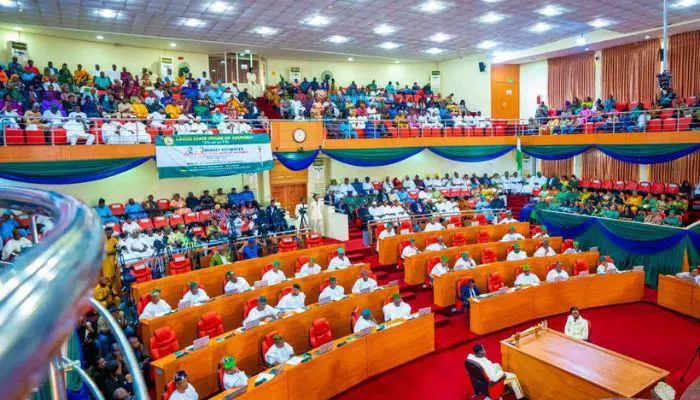
The Lagos State House of Assembly has recommended relocating Makoko residents to Epe as part of efforts to address environmental concerns and improve urban planning in the waterfront community.
The recommendation followed deliberations by lawmakers after reviewing conditions in Makoko, a densely populated informal settlement located along the Lagos Lagoon.
According to the Assembly, relocating Makoko residents to Epe could provide an opportunity to resettle affected families in a more structured environment while allowing authorities to address sanitation, safety and infrastructure challenges in the community.
Makoko has long been one of Lagos’ most visible informal settlements, known for its stilt houses built above water and its complex network of wooden walkways and canoes used for transportation.
For decades, the community has existed in a grey zone of urban governance, with authorities struggling to integrate it into formal city planning frameworks.
Why the Lagos Assembly Recommends Relocating Makoko Residents
Lawmakers say the decision to recommend relocating Makoko residents is tied to persistent environmental and public health concerns.
Officials noted that the settlement’s location on the lagoon makes it vulnerable to flooding, pollution and structural hazards.
During discussions at the Assembly, members argued that relocating Makoko residents could help address overcrowding while improving access to basic services such as healthcare, sanitation and education.
They also suggested that Epe, a rapidly developing area on the outskirts of Lagos, could offer more space for planned housing and infrastructure development.
Epe has in recent years emerged as one of Lagos’ key growth corridors, with several government and private sector investments in housing, roads and industrial projects.
Makoko’s Longstanding Urban Planning Challenge
Makoko is estimated to house tens of thousands of residents, though exact population figures remain difficult to determine due to the informal nature of the settlement.
The community is divided into two main areas: one located on land and another built largely on water.
Urban planners have long debated how best to address Makoko’s challenges, balancing the need for improved living conditions with the rights of residents who have lived there for generations.
In the past, proposals to redevelop the area have sparked controversy, particularly when residents feared displacement without adequate resettlement.
https://ogelenews.ng/relocating-makoko-residents
Concerns Over Relocation Proposal
While lawmakers say relocating Makoko residents could improve living conditions, the proposal has raised questions about how the relocation would be implemented.
Housing advocates argue that any relocation plan must guarantee affordable housing, access to livelihoods and adequate infrastructure for affected families.
Makoko residents depend heavily on fishing, petty trading and water-based transportation for their livelihoods.
Relocating them to Epe could therefore require significant support to ensure that economic opportunities remain available.
Observers note that relocation programmes can succeed only when communities are fully involved in planning and decision-making processes.
Without proper consultation and support, relocation efforts risk creating new social and economic challenges for displaced populations.
Lagos’ Rapid Urban Growth
The debate over relocating Makoko residents highlights the broader pressures facing Lagos, Africa’s largest city by population.
Rapid urban growth has led to the expansion of informal settlements across the metropolis, as housing demand continues to outpace supply.
Government officials have repeatedly emphasized the need for long-term urban planning strategies that balance development with social inclusion.
For Lagos authorities, the Makoko question represents one of the most complex examples of this challenge.
The Assembly’s recommendation to relocate Makoko residents to Epe may therefore form part of a broader conversation about how Lagos manages urban growth and housing shortages.
The Way Forward
For now, the Assembly’s recommendation is not a final decision but a proposal that would require further action from the executive arm of government.
Urban development experts say any relocation plan must be carefully designed to ensure that affected residents are provided with safe housing, infrastructure and sustainable livelihoods.
For many Makoko residents, the future of their community remains uncertain.
But the Assembly’s recommendation has once again brought national attention to one of Lagos’ most iconic and controversial waterfront settlements.
Whether relocation ultimately takes place will depend on the ability of policymakers to balance urban modernization with the protection of vulnerable communities.
https://punchng.com/lagos-assembly-recommends-relocating-makoko-residents-to-epe