

















Securing Nigeria’s waterways

Securing Nigeria’s waterways
For years, the waterways of Ondo State were places people avoided. They linked the oil-rich Niger Delta to the South West, but they also carried fear. Kidnapped victims passed through the creeks in silence. Armed gangs operated freely. Crude oil was stolen before it reached refineries. Fishermen worked with one eye on the water and one on escape. Investors stayed away, convinced the terrain was beyond control.
That assumption began to crack in 2012.
That was the year Senior High Chief Bibopere Ajube, an Ijaw son of the riverine communities, founded Gallery Security Services Limited in Agadagba-Obon, Arogbo Kingdom, Ese-Odo Local Government Area of Ondo State. At a time when most security operations were coordinated from distant cities, Ajube made a choice that would define everything that followed. He stayed.
He built God’s Own Estate, a permanent base in the heart of the waterways many had written off as ungovernable. It was not a symbolic gesture. It was a declaration of intent.
Thirteen years later, the record speaks clearly. Crime along the Ondo waterways has dropped to near zero. Kidnap victims have been rescued through coordinated operations. Armed robberies have been foiled before execution. Crude oil now moves safely through this corridor to Lagos, feeding the Dangote Refinery and supporting Nigeria’s energy supply chain. A stretch of the Gulf of Guinea once associated with danger has become markedly safer.
In November 2025, these outcomes were not celebrated quietly. They were publicly acknowledged during the 13th anniversary of Gallery Security Services at God’s Own Estate. The gathering itself was telling.
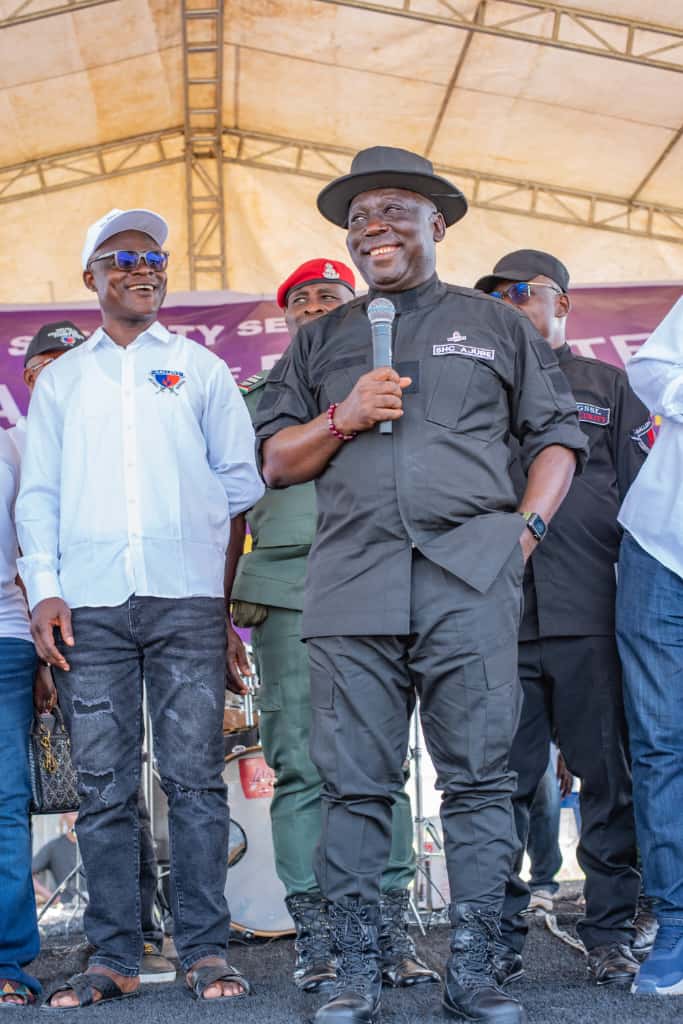
Former Ondo State Governor Dr. Olusegun Mimiko, who was in office when the company was founded, returned and offered a rare political endorsement grounded in experience rather than rhetoric. He had seen the early resistance, the skepticism, the slow work of building trust. His assessment was unambiguous: the model worked, and the waterways became safe.
Former Presidential Adviser on Niger Delta Affairs, Dr. Kingsley Kuku, attended as Guest Speaker, lending federal weight to a security approach often discussed but rarely sustained. Senior officers of the Nigerian Army, Police, DSS, NSCDC, and Immigration were also present, not as supervisors, but as partners acknowledging years of intelligence sharing and joint rescue operations.
https://ogelenews.ng/securing-nigerias-waterways
Traditional rulers from the Niger Delta and the South West, including leaders of Arogbo Kingdom, attended as well. In Ijaw culture, such presence is not ceremonial. It reflects acceptance earned through service and sacrifice.
What distinguishes the Ondo waterways story is not force, but method. Gallery Security Services did not simply patrol waterways. Its personnel lived within the communities they protected. They spoke the local languages. They understood family networks, community hierarchies, and the geography of the creeks. Intelligence flowed from relationships, not surveillance alone.
Ajube also understood that security collapses when communities are desperate. During the anniversary, over five hundred residents received free medical care at Bradama Skills International. For many, it was their first access to healthcare without cost. In riverine communities where illness can push families toward criminal compromise, such interventions quietly strengthen security more than any checkpoint.
The Youth in Coastal Defence Summit reflected the same thinking. Hundreds of young men from riverine communities were trained for legitimate security careers. They were given skills, structure, and dignity. Each trained youth represents one fewer potential recruit for piracy or kidnapping. Prevention, not reaction, became the strategy.
The journey has not been without loss. Gallery Security Services has lost personnel in the line of duty. At the anniversary, their names were spoken publicly, and posthumous awards were presented before government officials, military leaders, traditional rulers, and the communities they protected. More importantly, their families were not forgotten. The children of fallen personnel are supported through full educational scholarships, including private universities. In an industry where families are often abandoned after tragedy, this covenant has become one of the organisation’s defining commitments.
Beyond security, the economic implications are significant. Ondo waterways sit between oil production zones in the Niger Delta and refining hubs in Lagos. Securing this corridor ensures uninterrupted crude oil movement, protects national revenue, saves foreign exchange, and underpins Nigeria’s energy ambitions.
The lesson from Ondo is neither abstract nor theoretical. Coastal insecurity is not inevitable. When leadership is present, communities are treated as partners, and security is sustained rather than episodic, even the most difficult terrain can be stabilised.
Thirteen years ago, the waterways of Ondo State told a story of fear.
Today, they tell a different story.
Not because the geography changed, but because one man chose to stay, build trust, and see the work through.
https://dangote.com/our-businesses/refinery