

















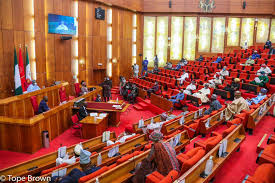
Senate to hike FG’s share of federation revenue
Nigeria’s Senate has begun a controversial effort to amend the country’s 1999 Constitution to increase the Federal Government’s share of federation revenue, a push that has reignited debates over fiscal federalism, national responsibility, and equity among tiers of government. 
The move, initiated with the first reading of an alteration bill in plenary, proposes to adjust the revenue-sharing formula that governs how funds from the Federation Account are distributed among the Federal Government, the 36 states, and the 774 local governments. Under the current structure, the Federal Government receives roughly 52.68 per cent, states share 26.72 per cent, and local councils take 20.60 per cent of distributable revenue. 
The proposal has been justified by sponsors on the basis that the Federal Government’s financial obligations — especially for national infrastructure and internal security — have grown beyond what the existing allocations can support. But critics warn that increasing the federal share could deepen fiscal inequality and fuel mistrust between Abuja and subnational governments at a time when demands for development funds are already intense.
What the Senate Proposal Says
The proposal is contained in a bill titled the “Constitution of the Federal Republic of Nigeria, 1999 (Alteration) Bill, 2026”, sponsored by Senator Sunday Karimi (APC, Kogi West), which passed its first reading at plenary on Tuesday. 
Senator Karimi told journalists that the current revenue-sharing formula — which has stood for several years — no longer reflects the scale of national responsibilities now shouldered by the Federal Government. He cited persistent challenges such as deteriorating federal roads, rising security threats from banditry and terrorism, and the need for dependable funding for federal agencies as central to the case for change. 
“The current revenue-sharing formula is outdated and unsustainable because it places excessive financial pressure on the Federal Government amid rising infrastructure decay and insecurity nationwide,” Karimi said. “There is a need for adjustment in the revenue allocation coming to the Federal Government so that we can have a slight increase in what accrues to it, to enable the government meet its responsibilities.” 
This Senate initiative overlaps with broader public discourse about Nigeria’s revenue performance, which has been under pressure in recent fiscal cycles. Although aggregate Federation Account inflows have remained solid — with gross revenues distributed among the tiers exceeding ₦1.9 trillion in recent months — debates persist on whether the allocation formula is equitable or fit for purpose. 
Why the Federal Share Is Being Targeted
Proponents of the bill argue that the Federal Government carries disproportionate financial responsibilities relative to its revenue intake.
National Infrastructure Burden
A significant share of Nigeria’s road network, especially major federal thoroughfares known as Trunk A roads, falls under federal jurisdiction. Despite decades of contract awards for rehabilitation, many of these roads remain in poor condition, a failure that Karimi and other lawmakers attribute to revenue constraints under the current formula. Senate to hike FG’s share of federation revenue.
Security Spending Pressures
Internal security has emerged as one of the most demanding areas of federal expenditure. The fight against insurgency, banditry, and other forms of violent crime requires significant budgetary allocations and rapid operational funding, analysts say. An expanded federal share, proponents argue, would provide more fiscal room to support security agencies and troops combating these threats nationwide. 
Broader Economic Obligations
Beyond infrastructure and security, the Federal Government also finances national institutions, cross-border initiatives, large-scale social programmes, and global engagements, all of which demand sustained revenue flows. Supporters of the proposal say the present formula strains the centre’s capacity to fulfil these functions without imposing undue strain on public coffers. 
https://ogelenews.ng/senate-to-hike-fgs-share-of-federation-revenue
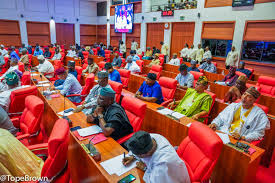
The Debate Over Fiscal Federalism
The controversy over revenue allocation extends beyond a single bill. It taps into a wider, ongoing debate over fiscal federalism in Nigeria — how best to balance the financial needs of the centre with those of subnational governments.
Under the current formula, states and local governments are allocated over 47 per cent of federation revenue combined. Critics of the Senate proposal argue that this structure already leaves states struggling to meet their own obligations, particularly with rising wage bills, service delivery needs, and commitments to local development.
Civil society groups and organised labour have previously criticised states for allegedly failing to convert higher allocations into visible improvements in citizen welfare, even amid rising federation inflows. Some have argued that the focus should be on accountability and efficiency rather than simply shifting the allocation percentages. 
Opposition figures and fiscal experts warn that increasing the Federal Government’s share without addressing structural inefficiencies and revenue mobilisation challenges could deepen intergovernmental competition rather than enhance national development.
Senate to hike FG’s share of federation revenue.
Reform Prospects and Stakeholder Reactions
The bill’s first reading is only the first step in a long legislative process that would require second reading, committee review, and eventual ratification by a two-thirds majority of state assemblies before becoming law. The process of constitutional amendment in Nigeria is rigorous, and any move to alter the revenue-sharing formula is likely to spark intense debate within the National Assembly and among state executives.
Support for the Proposal
Supporters of the proposal argue that without greater federal shares, long-term national challenges will become increasingly difficult to address under fiscal constraints.
Criticism and Caution
Opposition voices have called for caution. Some analysts say that instead of changing allocation percentages, structural reforms that boost domestic revenue mobilisation, strengthen state economies, and enhance accountability would offer more sustainable solutions.
Others point to data showing that the cost of revenue collection and distribution itself is high, suggesting that reforms to reduce collection costs and inefficiencies — not just shifting revenue shares — could improve overall fiscal outcomes. 
Implications for Governance and Public Services
If the Senate’s proposal succeeds, the implications would ripple across Nigeria’s federal system:
• Federal Budget Expansion: More revenue for the Federal Government could translate into higher spending on national priorities such as security, infrastructure, health, and education.
• State Constraints: States and local governments could see reductions in their expected revenue shares, potentially impacting services such as primary education, healthcare delivery, agriculture support, and local infrastructure.
• Budget Negotiations: Fiscal negotiations among the three tiers of government could become more complex, raising questions about equitable resource distribution and the relative roles of federal and subnational authorities.
• Political Considerations: Revenue allocation is not just an economic issue — it is deeply political. Any changes could influence power dynamics, intergovernmental relations, and perceptions of fairness across Nigeria’s diverse regions.
What Comes Next
The constitutional amendment bill will now proceed through the legislative process, including:
1. Second Reading in the Senate, where the philosophy and rationale of the change will be debated.
2. Committee Referrals for detailed scrutiny and stakeholder input.
3. Report Stage and Adoption by both chambers of the National Assembly.
4. State Assembly Ratification, where two-thirds of Nigeria’s 36 states would need to approve the changes.
If opposition builds among states or governors, the ratification stage could pose a major hurdle, even if the National Assembly approves the measure.
The Bottom Line
The Senate’s proposal to increase the Federal Government’s share of federation revenue represents a significant moment in Nigeria’s fiscal discourse. While its backers frame the move as a necessary adjustment to meet expansive national obligations, critics see risks in reducing resources available for state and local governance. How the nation balances equity, responsibility, and effective allocation will shape Nigeria’s fiscal future at a time of competing demands and constrained resources.
https://punchng.com/senate-moves-to-increase-fgs-share-of-federation-revenue
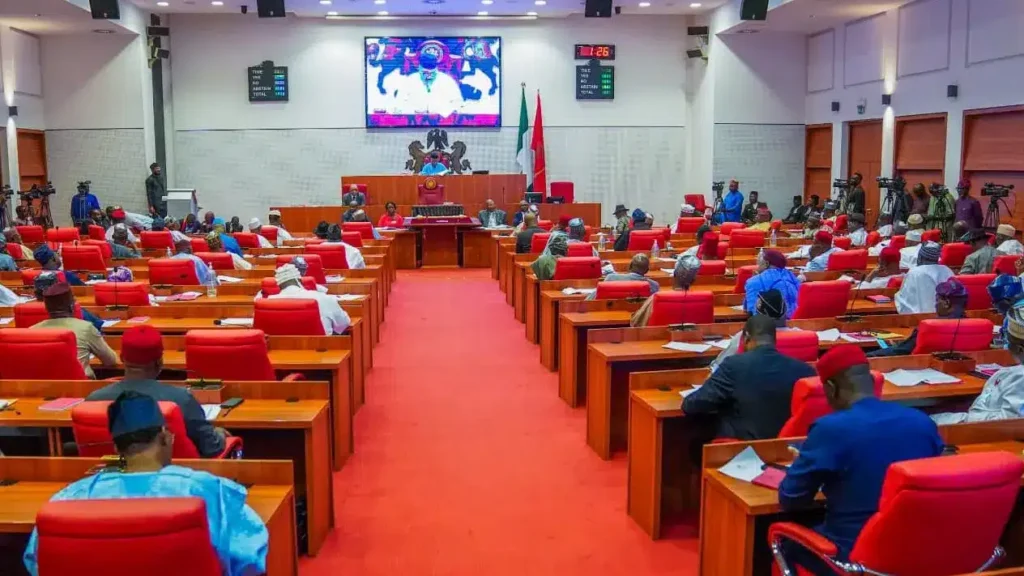
Senate to hike FG’s share of federation revenue