













Sokoto-Badagry superhighway
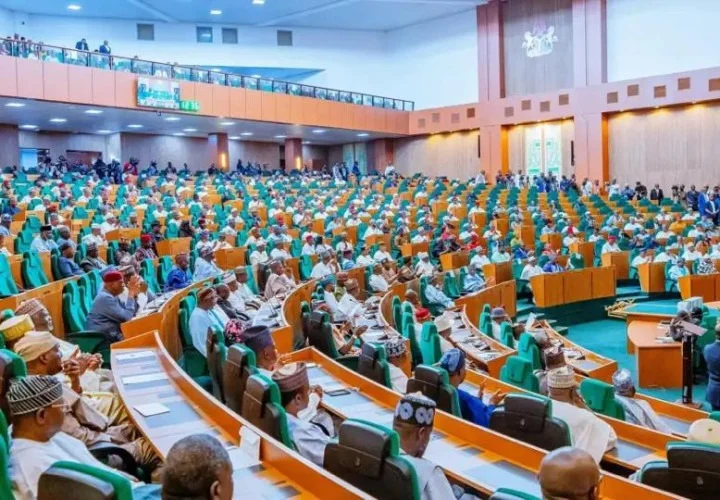
The House of Representatives has approved President Bola Tinubu’s request to secure a $516.33m external loan for the construction of sections of the Sokoto-Badagry superhighway, one of the major road projects under the administration’s infrastructure agenda.
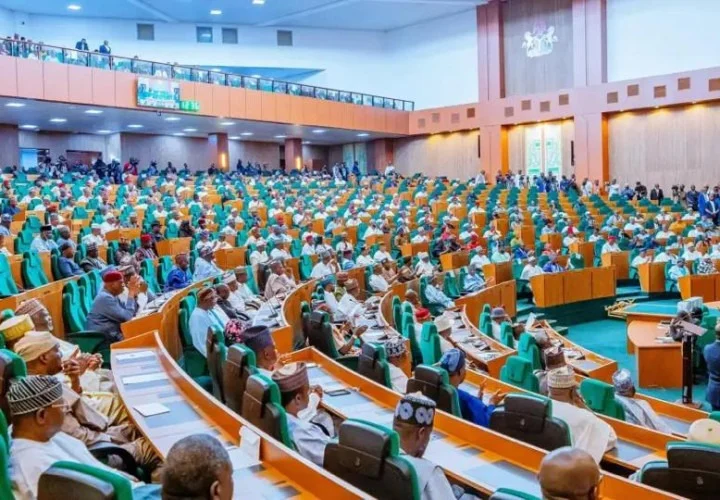
The approval was granted on Tuesday, April 28, 2026, during plenary after lawmakers considered the request in the Committee of Supply. The loan is expected to be sourced through Deutsche Bank AG and used to finance Section I, Phase 1A and 1B of the Sokoto-Badagry superhighway, covering about 120 kilometres.
The total amount approved by the House is $516,333,007. Lawmakers also approved its inclusion in the Federal Government’s rolling borrowing plan, making it part of Nigeria’s broader debt framework.
President Tinubu had earlier written to the National Assembly seeking approval for the facility, describing the Sokoto-Badagry superhighway as a major national corridor designed to link Nigeria’s far northwest to the southwest coastline.
According to the details presented to lawmakers, the full project is expected to stretch about 1,000 kilometres from Illela in Sokoto State to Badagry in Lagos State. The route is projected to pass through Sokoto, Kebbi, Niger, Kwara, Oyo, Ogun and Lagos states.
The Presidency said the Sokoto-Badagry superhighway will improve north-south connectivity, reduce travel time, cut logistics costs and support the movement of goods from production zones to markets and ports. It also said the project would strengthen trade, food security and national integration.
The financing structure shows that the loan has a nine-year tenor, including a grace period of up to three years. BusinessDay reported that the interest rate is benchmarked at CME SOFR plus 5.35 percent per annum, while earlier reports on the Senate request placed the rate at not more than CME SOFR plus 5.3 percent per annum.
The facility is also expected to receive partial guarantee support from the Islamic Corporation for the Insurance of Investment and Export Credit, the insurance arm of the Islamic Development Bank. This guarantee is intended to reduce lender risk and improve the financing structure.
https://ogelenews.ng/reps-approve-tinubus-516-33m-loan-for-sokoto-badagr…
Beyond the foreign loan, the Federal Government is expected to provide counterpart funding of about N265.54bn. The counterpart funding will cover land acquisition, compensation payments and related infrastructure needs.
The Sokoto-Badagry superhighway is being promoted by the Tinubu administration as an economic corridor, not merely a road project. The government says the highway will open up agricultural, commercial and industrial zones across several states and create a faster route for transporting goods to ports and markets.
However, the approval also raises serious questions about Nigeria’s borrowing strategy. While infrastructure is important, a $516.33m external loan adds to the country’s debt obligations at a time when debt servicing remains a major pressure on public finances.
This is why legislative oversight will be important. BusinessDay reported that the House tied the approval to conditions, including strict monitoring of implementation and quarterly reports from the Ministry of Finance, the Debt Management Office and the Ministry of Works on fund disbursement and project progress.
For ordinary Nigerians, the promise of the Sokoto-Badagry superhighway is simple: shorter travel time, safer movement, cheaper logistics and better access between farms, cities, industries and ports. If properly executed, the road could help reduce the cost of moving food and other goods across long distances.
But the challenge is implementation. Nigeria has a long history of major infrastructure announcements that later suffer delays, cost overruns, funding gaps or weak accountability. For the Sokoto-Badagry superhighway to justify a foreign loan of this size, Nigerians will expect transparent procurement, visible construction progress and clear reporting on how the money is spent.
The project’s design also reportedly includes provision for future rail integration and utility corridors. That means the central median of the highway could later support rail or other infrastructure, if the plan is properly preserved during construction.
The approval by the House of Representatives is a major step, but it is not the end of the public interest questions around the project. Nigerians will want to know when construction will begin, which contractors will handle the work, how compensation will be managed for affected communities, and how the government intends to repay the loan without placing further pressure on citizens.
For now, the Tinubu administration has secured backing from the House for the $516.33m external loan. The next real test will be whether the Sokoto-Badagry superhighway becomes a completed national asset or another expensive promise trapped in Nigeria’s long list of unfinished public projects.
https://punchng.com/reps-approve-tinubus-516-33m-loan-for-sokoto-badagry-superhighway