


















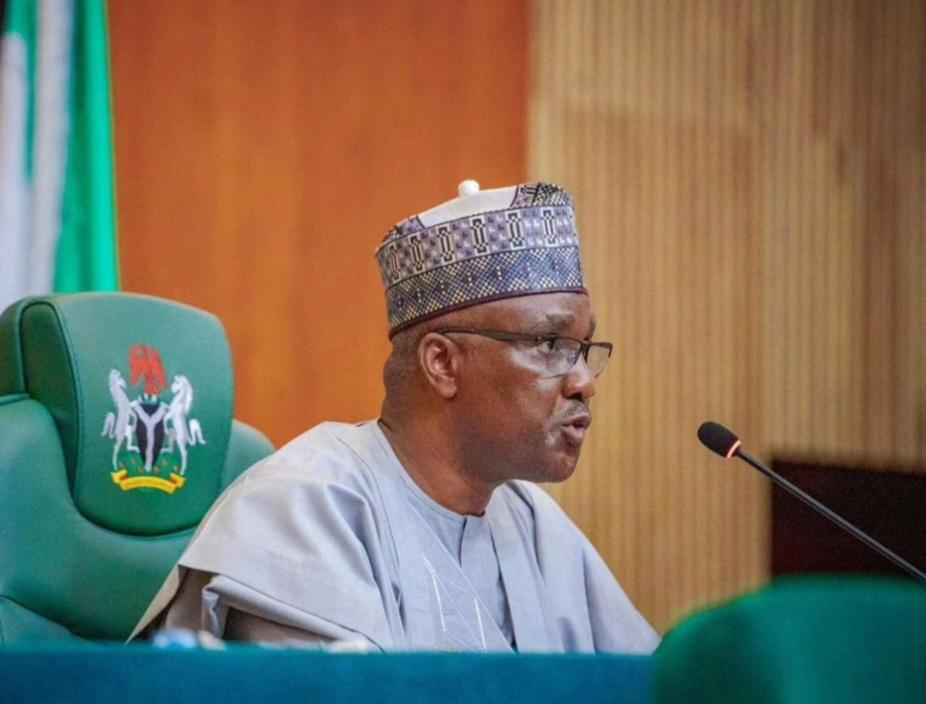
Speaker Abbas mourns victims of Borno bomb blasts
Speaker Abbas mourns victims of Borno bomb blasts after a wave of deadly explosions ripped through Maiduguri, the Borno State capital, killing at least 23 people and injuring 108 others in one of the city’s worst attacks in recent years. The Speaker of the House of Representatives, Tajudeen Abbas, expressed grief over the bloodshed and extended condolences to the families of those who lost loved ones in the coordinated blasts. 
The bombings struck on the evening of Monday, March 16, 2026, at some of Maiduguri’s busiest civilian locations. Police said the affected sites included the Monday Market, the University of Maiduguri Teaching Hospital gate, and the Post Office Flyover area, while Reuters and AP reports also pointed to wider panic across the city as the explosions sent residents fleeing and emergency responders scrambling into action. 
That is the grim backdrop to the development that Speaker Abbas mourns victims of Borno bomb blasts. His reaction was not issued in response to a minor incident, but to a large-scale attack that reopened painful memories of Maiduguri’s darkest years under repeated jihadist assaults. In his message, Abbas expressed sorrow over the killings and injuries, and identified with the victims and the government and people of Borno State at a time of fear and grief. 
The significance of this cannot be overstated. Maiduguri is the capital of Borno State and the city most closely associated with the rise and spread of the Boko Haram insurgency. For years, it stood at the centre of Nigeria’s battle against Islamist violence. So when Speaker Abbas mourns victims of Borno bomb blasts, the reaction is tied not just to immediate loss of life, but to the larger anxiety that the city could be facing a dangerous resurgence of coordinated terror attacks. 
Police said preliminary investigations suggested the March 16 attacks were carried out by suspected suicide bombers. Reuters reported that no group had immediately claimed responsibility, though suspicion quickly fell on Boko Haram or the Islamic State West Africa Province, both of which have stepped up activity in the broader region. AP similarly reported that the attacks came after an attempted militant assault on the outskirts of Maiduguri earlier the same day, raising fears of a deliberate and coordinated campaign. 
This matters because Speaker Abbas mourns victims of Borno bomb blasts in a security climate already under strain. Recent weeks have seen renewed insurgent attacks on military bases and rural communities in Borno and the wider North-East. International reporting has pointed to rising militant boldness, heavier casualties, and a pattern of destabilising attacks during Ramadan. That larger picture gives the Maiduguri blasts national significance beyond the immediate casualty figures. 
The human cost is central to the story. AP reported that hospitals in Maiduguri were overwhelmed by injured victims, with medical workers and volunteers struggling to respond as the wounded poured in. Reuters described scenes of blood, debris, and panic in affected areas, underlining the brutality of the attack. These are the images behind the moment that Speaker Abbas mourns victims of Borno bomb blasts. They explain why the statement resonates beyond political formality. 
https://ogelenews.ng/speaker-abbas-mourns-victims-of-borno-bomb
Abbas was not the only senior official to react. President Tinubu condemned the bombings as acts of terrorism and ordered top security officials to oversee the response in Maiduguri. Governor Zulum also denounced the attacks, describing them as barbaric and urging residents to remain calm while staying vigilant. Taken together, those reactions show that the bombings were treated not as a localised disturbance, but as a major security event with national implications. 
Still, a veteran report must keep its footing in verified fact. It is confirmed that Speaker Abbas mourns victims of Borno bomb blasts. It is confirmed that police have reported 23 people dead and 108 injured. It is also confirmed that the attacks hit three major civilian locations in Maiduguri. What remains unconfirmed, at least publicly, is the final identity of the attackers, even though official and media reports strongly point to jihadist groups active in the region. 
The locations targeted tell their own story. The Monday Market is one of Maiduguri’s busiest commercial centres. The teaching hospital gate is a place of healing and passage. The Post Office Flyover area is a heavily trafficked part of the city. Hitting all three in one coordinated sequence suggests an effort to maximise civilian casualties, fear, and symbolic disruption. That is why the story should not be reduced to a single condolence statement. It is a major terrorism story first, and a political reaction story second. 
For Ogele News readers, the clearest frame is this: Speaker Abbas mourns victims of Borno bomb blasts after a deadly triple bombing shattered Maiduguri’s fragile calm and reopened the security question hanging over the North-East. His statement joins a wider national response, but the heart of the story remains the victims, the injured, the ongoing investigation, and the urgent challenge of preventing another such attack. 
For now, the hard facts remain sobering. On March 16, 2026, suspected suicide bombings struck key sites in Maiduguri. Police said 23 people were killed and 108 injured. Security was tightened across the city. Public officials, including Speaker Abbas, condemned the attack and called for vigilance. Beyond that, the next phase of the story will depend on what investigators uncover and how effectively the security response holds.
https://punchng.com/speaker-abbas-mourns-victims-of-borno-bomb-blasts