
















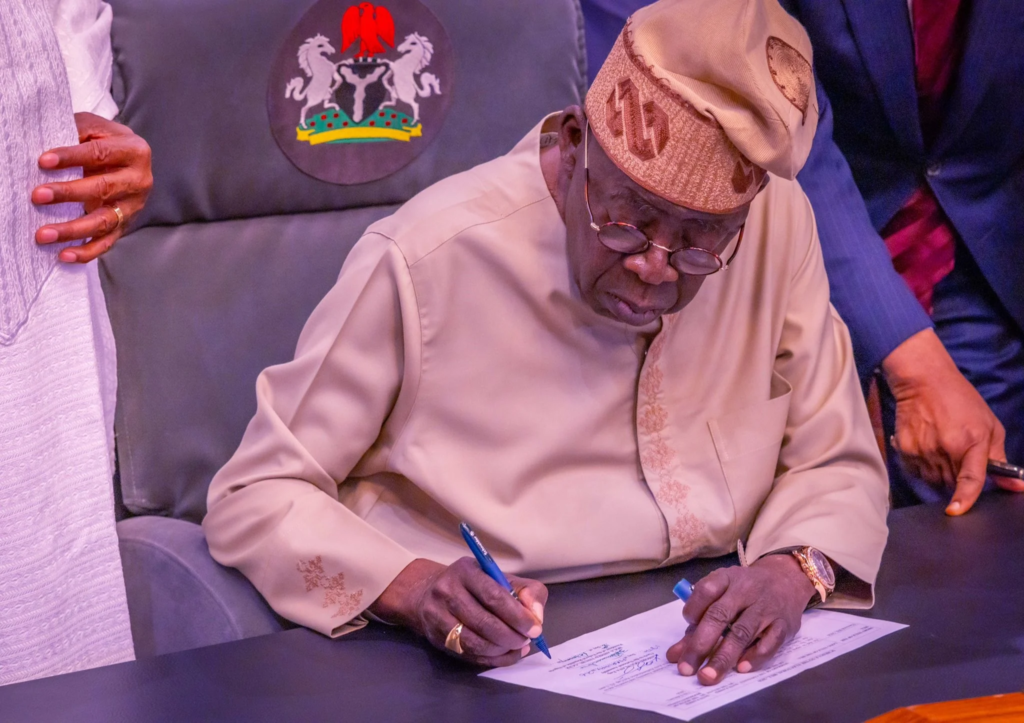
Tinubu approves three road projects in Niger
Tinubu approves three road projects in Niger following presidential clearance for the immediate reconstruction of three major federal highways in the state, covering a combined 306.5 kilometres, in what the Federal Ministry of Works describes as part of a wider push to strengthen national economic corridors and reduce the cost of moving people and goods.
A statement credited to Francis Nwaze, Senior Special Assistant (Media) to the Minister of Works, David Umahi, listed the roads as Mokwa–Bida Road (120km), Mokwa–Makera/Makeri Road (63km), and Bida–Lambata/Labata Road (123.5km).
Under the plan, the ministry says the projects will be reconstructed using reinforced concrete pavement “to ensure durability and long-term value.”
Put simply: Tinubu approves three road projects in Niger is about the roads that carry traders, students, farmers, and heavy-duty transport daily and the kind of rebuilding the government says will last longer.
The three roads and why they matter
The three routes are not obscure rural tracks. They are arteries connecting communities that feed into wider inter-state movement.
- Mokwa–Bida Road (120km)
- Mokwa–Makera/Makeri Road (63km)
- Bida–Lambata/Labata Road (123.5km)
Total: 306.5km
Niger State’s location makes this approval politically easy to announce and economically hard to ignore. It is a transit hub linking North-Central flows toward the North-West and parts of the South-West, and it also serves as a connector into other federal corridors Nigerians rely on for trade and travel.
That is why Tinubu approves three road projects in Niger has drawn attention beyond Minna.
The concrete decision: why the ministry keeps selling it
The Works Ministry has been consistent on one point: it wants major federal roads built or rebuilt with reinforced concrete pavement on selected corridors, arguing that it lasts longer and reduces maintenance headaches over time.
On its official platform, the ministry has promoted reinforced concrete road technology as having a lifespan of 50 to 100 years compared with conventional asphalt, framing it as a long-term infrastructure choice rather than quick repairs.
So when Tinubu approves three road projects in Niger, the policy signal is not just “we approved roads,” but “we approved concrete roads,” which is now the signature pitch coming from Umahi’s ministry.
https://ogelenews.ng/tinubu-approves-three-road-projects-in-niger
Umahi’s framing: “economic corridors,” not local favours
In the same announcement, the minister expressed appreciation to the President and described the approvals as strategically important to national economic corridors, saying they would boost connectivity, trade and development.
That “economic corridor” language is doing a lot of work here. It is the government’s way of telling critics: this is not about rewarding a state politically; it’s about fixing movement routes that support commerce and reduce the friction costs Nigerians pay in transport time, vehicle damage, and delays.
And it is also why Tinubu approves three road projects in Niger will be judged by execution, not announcement. Concrete pavement is expensive upfront. Nigerians will demand to see procurement clarity, timelines, and visible mobilisation on site.
The wider approvals mentioned alongside Niger
The same set of presidential approvals, as announced by the Works Ministry, also included the extension of the Bodo–Bonny Road in Rivers State to connect with the East–West Road, to be delivered as a dual carriageway with concrete pavement and solar-powered street lighting through competitive bidding.
It’s relevant because it shows the approvals are being communicated as a package: Niger roads plus a Niger-Delta coastal corridor expansion, both tied to the ministry’s concrete-pavement direction.
The real test: timelines, quality, and accountability
For residents and road users, this story will stop being a press statement the moment contractors begin real work. The practical questions remain:
- When will mobilisation start on each route?
- Will traffic management be handled safely around communities and markets?
- Will the concrete work meet standards, especially on drainage and shoulders?
- Will the project scope match what was announced, kilometre for kilometre?
Until then, Tinubu approves three road projects in Niger is a major approval on paper, and Nigerians have seen enough “paper approvals” to know the difference between policy intent and asphalt or concrete on the ground.
https://punchng.com/tinubu-approves-three-road-projects-in-niger