












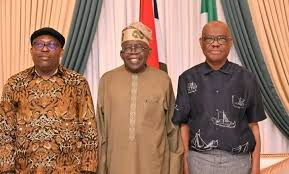
Tinubu, Fubara and Wike meet in Abuja
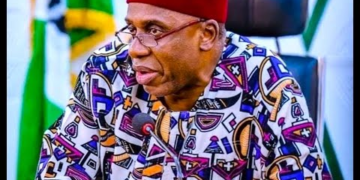
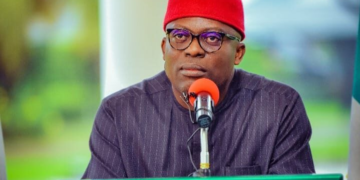
President Bola Ahmed Tinubu held a late-night meeting with Rivers State Governor Siminalayi Fubara, Federal Capital Territory (FCT) Minister Nyesom Wike and other political leaders in Abuja on Monday, in a renewed effort to calm months of political tensions that have threatened governance and stability in one of Nigeria’s most influential states. The closed-door talks, which took place at the Presidential Villa, brought the principal actors in the long-running dispute face to face as part of a presidential push to restore calm and foster cooperation among competing factions. 
The meeting was described by insiders as part of an ongoing dialogue aimed at reducing friction and preventing further escalation of the feud between Governor Fubara and his predecessor, Wike, who remains a powerful political force in Rivers State as Minister of the FCT. Earlier reports said that after the meeting, Fubara accompanied Wike to his residence in Guzape, Abuja, a gesture interpreted by observers as a possible sign of political rapprochement. 
A Long-Standing Rift
The political crisis in Rivers State dates back to shortly after Fubara’s election as governor in 2023. Initially seen as an ally and protégé of Wike, Fubara’s relationship with the influential elder statesman gradually deteriorated, leading to deep fractures within the state’s ruling party. Infighting among lawmakers, impeachment threats, legal battles and even a temporary state of emergency declared in March 2025 marked the public breakdown of the alliance between the two leaders. 
Wike, a prominent figure in national politics who served two terms as governor of Rivers State and later contested for the presidency, has since then wielded significant influence both within his home state and at the national level as Tinubu’s appointee to the FCT. Despite this political stature, his relationship with Fubara became strained over governance direction, control of party structures and personal leadership dynamics. 
The Villa Dialogue
Details of the discussions at the Presidential Villa were not disclosed publicly, but multiple sources reported that the meeting focused on lowering tensions and seeking a framework for cooperative governance in Rivers State — a politically and economically vital region in the Niger Delta. It was also said that the leaders discussed ways to de-escalate the succession of political volleys that have divided the state’s political class and sapped public confidence. 
Understandably, the stakes are high: Rivers State’s strategic importance, both for its vast oil resources and its large voting population, makes any prolonged leadership impasse a matter of national concern. Critics warned that continued instability could undermine governance, jeopardise public service delivery and shrink investor confidence in an economy already buffeted by broader national challenges. 
https://ogelenews.ng/tinubu-fubara-wike-meet-in-abuja
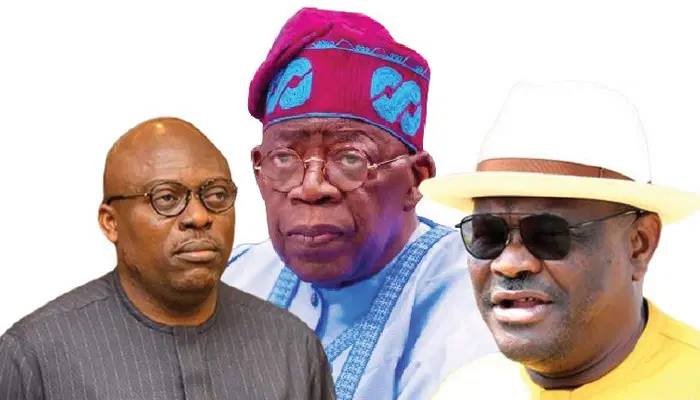
Political Gesture or Genuine Reconciliation?
After the meeting, sources reported that Fubara walked with Wike to his residence, an act some political analysts describe as symbolic. The gesture led to speculation that the two leaders are exploring ways to move beyond personal grievances and focus on stabilising political alliances within the state’s ruling class. Whether this signals a substantive change or a tactical pause in the rivalry remains to be seen. 
Nigerians familiar with the state’s politics are cautious. Similar meetings over the past year, including presidential interventions abroad and earlier Villa negotiations, have sometimes produced temporary pauses in discord without resolving the underlying disagreements. Critics of such interventions argue that political settlements often fail to address structural issues and instead paper over divisions until the next crisis. 
Pressure Points Behind the Crisis
Underlying the crux of the feud are competing ambitions, questions about political direction and control of key institutions. In the months following Fubara’s electoral victory, fissures within local party structures became more pronounced. Some lawmakers aligned with Wike sought to exert influence in legislative matters, while others loyal to Fubara pushed back, deepening divisions. This ultimately led to impeachment threats and a cycle of political manoeuvring that drew the president’s attention. 
While the immediate triggers of the tensions vary among stakeholders, a common theme is the power struggle that often defines intra-party relations in Nigeria, where individual personalities, political networks and regional interests intersect. For Rivers State, these dynamics have been particularly intense given the legacy of its political leaders and the significance of its resources. 
National Implications
President Tinubu’s intervention is being interpreted by many as an attempt not only to restore peace in Rivers but also to shore up unity within his ruling coalition, particularly as the country approaches future elections. A stable Rivers State political environment is seen as beneficial for broader national stability and for the ruling party’s prospects in the 2027 general elections. 
Analysts say that a sustained rapprochement, if it materialises, could signal a more collaborative phase for national and state politics. Alternatively, if tensions persist beneath the surface, future divisions could re-emerge, especially if competing interests remain unaligned. 
Public and Political Reactions
Public reactions to the news have been mixed. Civil society advocates welcomed presidential engagement but urged transparent communication and stakeholder inclusion in any peace process. Some community leaders in Rivers State expressed cautious optimism, suggesting that stability would encourage development and improve governance outcomes. Others remain sceptical, warning that surface gestures must be backed by clear commitments and measurable steps to build trust. 
Political commentators say that success in resolving the Rivers crisis depends on whether underlying disagreements over governance philosophy, leadership respect and political control can be reconciled, rather than merely negotiated in isolated meetings. 
Looking Ahead
For now, Tinubu, Fubara and Wike meet in Abuja stands as another chapter in a complex narrative of intra-party politics, leadership rivalry and presidential mediation. Whether this meeting translates into enduring peace and collaborative governance in Rivers State remains to be seen. Stakeholders and observers alike will be watching subsequent developments closely, mindful that the future political trajectory of the oil-rich state has implications far beyond its borders. 
https://punchng.com/fubara-wike-meet-with-tinubu-in-abuja
Tinubu, Fubara and Wike meet in Abuja