














Tinubu meets AFRICOM commander US delegation at Presidential Villa
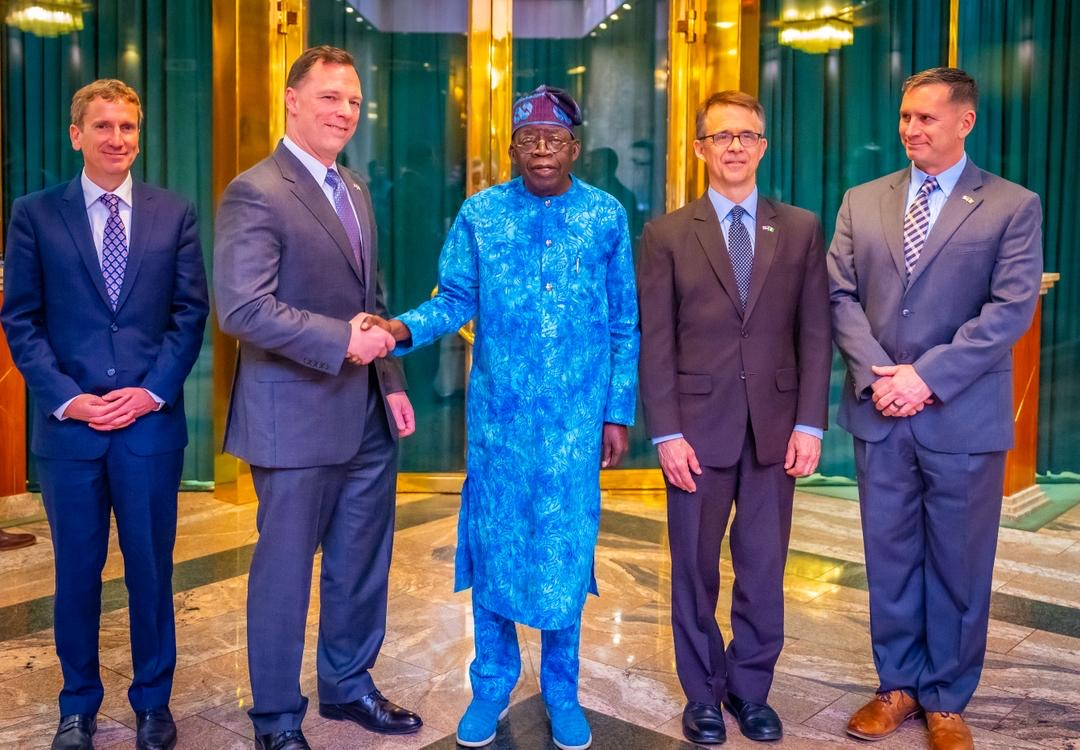
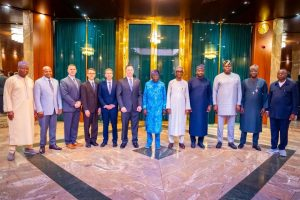
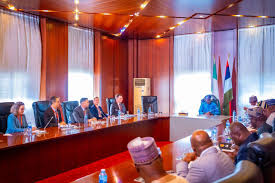
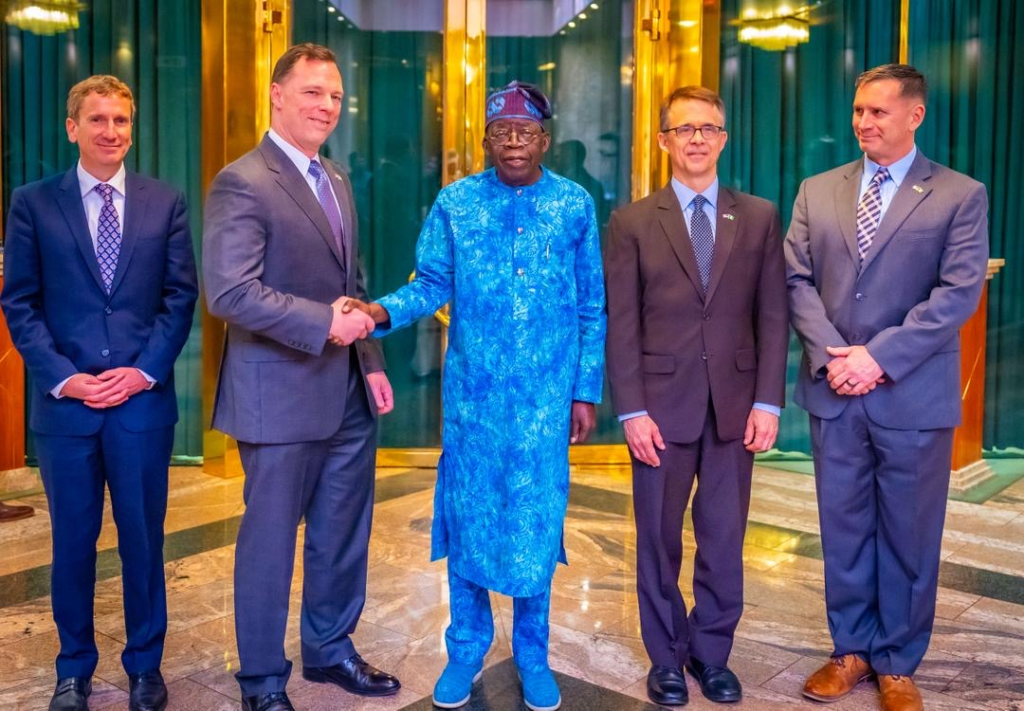
President Bola Ahmed Tinubu met with a high-level delegation from the United States Africa Command (AFRICOM) at the Presidential Villa in Abuja on Sunday, in what officials say was a significant step toward strengthening security cooperation between Nigeria and the United States. The meeting brought together top U.S. military and diplomatic officials, Nigeria’s senior defence leadership and national security officials for discussions on counter-terrorism, regional stability and strategic military collaboration. 
The U.S. delegation was led by General Dagvin R. M. Anderson, Commander of the United States Africa Command, widely referred to as AFRICOM, and included the Chargé d’Affaires of the U.S. Embassy in Nigeria, Keith Heffern, as well as the Senior Foreign Policy Adviser for AFRICOM, Ambassador Peter Vrooman, and Command Sergeant Major Garric M. Banfield, AFRICOM’s Command Senior Enlisted Leader. 
On the Nigerian side, the President was joined by National Security Adviser Mallam Nuhu Ribadu, the Minister of Defence, General Christopher Musa (rtd), key service chiefs from the Army, Navy and Air Force, as well as the heads of Nigeria’s intelligence agencies, including the Director-General of the National Intelligence Agency and the Director-General of the Department of State Services (DSS). 
The meeting at the Presidential Villa was confirmed in a statement shared by the President’s Special Assistant on Social Media, Dada Olusegun, underscoring the “mutual desire to deepen strategic security cooperation” between the two countries. While the full contents of the discussion were not immediately disclosed to the public, officials indicated that the engagement was part of a broader trajectory of cooperation aimed at tackling violent extremism, terrorism and transnational security threats across Nigeria and the West African sub-region. 
A Deepening Security Partnership
The meeting comes against the backdrop of heightened concerns over insecurity in Nigeria, where insurgent threats from groups such as Boko Haram, its Islamic State-linked splinter factions and other violent extremist organisations continue to challenge the country’s security architecture. Intelligence sharing, joint planning and enhanced military coordination were identified as key themes of the exchange. 
Officials from both sides emphasised that their partnership does not imply direct U.S. combat operations in Nigeria, but focuses instead on capacity building, intelligence cooperation and specialised support — including logistics and surveillance — designed to bolster Nigeria’s own counter-terrorism capabilities. The ongoing collaboration reflects a shared interest in addressing internal threats and stabilising insecurity that has spilled over across borders. 
According to U.S. and Nigerian sources, the visit also coincides with renewed discussions on expanding military cooperation frameworks and enhancing training programmes for Nigerian troops, particularly in areas where terrorist groups have exploited gaps in local security coverage. 
President Tinubu described the meeting as “a timely opportunity to reinforce the longstanding security partnership between Nigeria and the United States,” noting that both countries have pressing interests in reducing violent extremism, protecting communities, and promoting regional stability. “Our joint efforts will focus on tactical coordination and strategic depth to confront evolving threats with precision and resolve,” the statement added. 
https://ogelenews.ng/tinubu-meets-africom-commander-us
Context: U.S. Military Engagement in Nigeria
The Nigeria-U.S. security relationship has seen a series of key engagements in recent months. In early February, the United States confirmed the deployment of a small team of military personnel to Nigeria — the first official U.S. ground presence — aimed at enhancing intelligence support and assisting Nigerian forces in counter-terrorism operations. This deployment followed coordinated U.S. airstrikes against Islamic State affiliates in northern Nigeria in late 2025 as part of broader efforts to degrade insurgent capabilities. 
The latest meeting at the Presidential Villa underscores a growing recognition on both sides that collaborative planning and strategic partnership are essential if long-standing security challenges are to be overcome. Nigerian officials have said that Africa’s most populous nation cannot confront entrenched violence alone and welcome partners who respect sovereignty while offering specialised support. 
General Anderson, speaking with reporters during the visit, characterised the discussions as “forward-looking” and centred on strengthening mutual efforts to protect civilians, disrupt violent extremists and stabilise contested regions. He affirmed that AFRICOM’s role is to support and complement Nigeria’s own security architecture rather than supplant it. 
Regional and Strategic Implications
Analysts say that the high-level engagement at the Presidential Villa is significant not just for bilateral Nigeria-U.S. relations, but for broader regional security dynamics in West Africa. The cooperation fits within wider frameworks involving the Aqaba Process — a multilateral initiative on counter-terrorism adopted by Sahel and West African states — and echoes commitments made in previous meetings between President Tinubu and General Anderson in Europe late last year. 
Security experts believe that the meeting may lay the groundwork for expanded joint intelligence operations and improved rapid response mechanisms, especially as Nigeria prepares for upcoming elections that could present fresh security challenges. A robust security partnership, they argue, would deter extremist expansion and reassure citizens that the state is prepared to confront evolving threats. 
Looking Ahead
While details of the Presidential Villa discussions remain private, both Nigerian and U.S. officials described the engagement as constructive and forward-looking. The visit reinforces decades of cooperation between Abuja and Washington on defence and security, and highlights a mutual understanding that terrorism and violent extremism require collective response and strategic alignment.
For many Nigerians, the meeting between President Tinubu and the AFRICOM delegation signals a renewed commitment by the government to pursue all viable avenues for strengthening national security and regional peace. As implementation plans emerge from the discussions, stakeholders will be watching closely to see how these agreements translate into tangible improvements on the ground.
https://www.tvcnews.tv/just-in-tinubu-meets-africom-chief-u-s-delegation-at-state-house
Tinubu meets AFRICOM commander US delegation at Presidential Villa