












Today in Nigeria 8
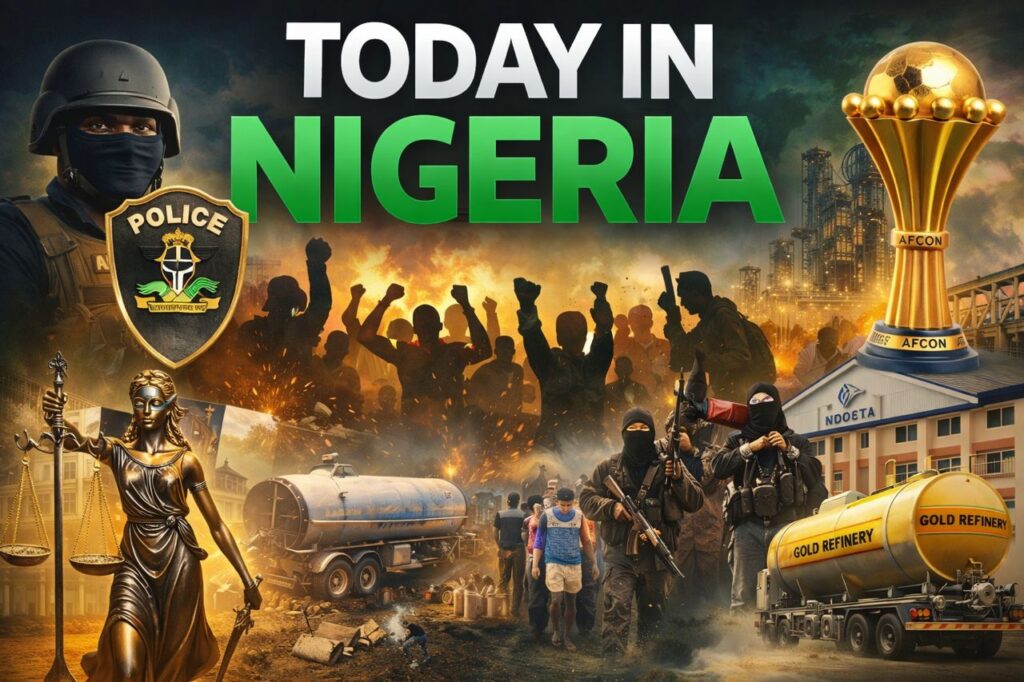
Nigeria woke up today to a mix of global uncertainty, domestic political tension, rising security concerns, and fresh economic signals — all unfolding against a backdrop of shifting international alliances and mounting pressure on governance at home. From Western leaders quietly recalibrating relations with China, to renewed security fears across the Sahel, and internal debates over elections, protests, and accountability, today’s developments underline how deeply interconnected Nigeria’s local realities have become with global currents.
This Today in Nigeria roundup examines the major stories shaping public conversation, policy direction, and national mood.
Global Tensions and Their Ripple Effects on Nigeria
One of the most consequential global developments today is the growing move by Western leaders to seek closer ties with China amid uncertainty surrounding United States trade policy. With renewed tariff threats and unclear signals from Washington, several Western economies are quietly hedging their bets.
For Nigeria, this shift matters. China remains one of the country’s largest infrastructure financiers and trade partners. Any rebalancing of global power blocs could affect loan terms, project financing, and trade flows into Africa. Analysts warn that while China offers capital and speed, Nigeria must guard against overexposure and debt vulnerability.
Closely linked to global uncertainty is the surge in gold prices, which hit fresh highs as markets reacted to former U.S. President Donald Trump’s ultimatum to Iran. Investors fleeing risk are turning to safe-haven assets, reinforcing volatility across commodities and currencies. For Nigeria, which relies heavily on oil exports, sustained global instability could tighten foreign exchange conditions and worsen inflation pressures at home.
Security Fears Across the Sahel and Nigeria’s Northern Frontier
Security concerns deepened today following reports of heavy gunfire and an explosion rocking Niamey Airport in neighboring Niger. While details remain sketchy, the incident has raised alarm across the Sahel, a region already struggling with coups, insurgency, and cross-border instability.
Nigeria cannot afford to view these developments as distant. The porous northern borders and long-standing movement of armed groups across Niger, Mali, and Burkina Faso mean any escalation could spill southward. Security experts warn that instability in Niger directly affects Nigeria’s northern states, particularly Sokoto, Zamfara, Katsina, and parts of Borno.
In response to persistent insecurity, the Federal Government announced plans to deploy retired soldiers to help secure “ungoverned spaces” across the country. The proposal has sparked debate. Supporters argue that retired military personnel possess invaluable terrain knowledge and experience. Critics, however, caution against the risks of accountability, coordination, and the militarisation of civilian spaces.
Still, the move reflects growing urgency within the government to plug security gaps that conventional forces have struggled to manage.
https://www.businessday.ng/news/article
Security, Protest, and Public Trust at Home
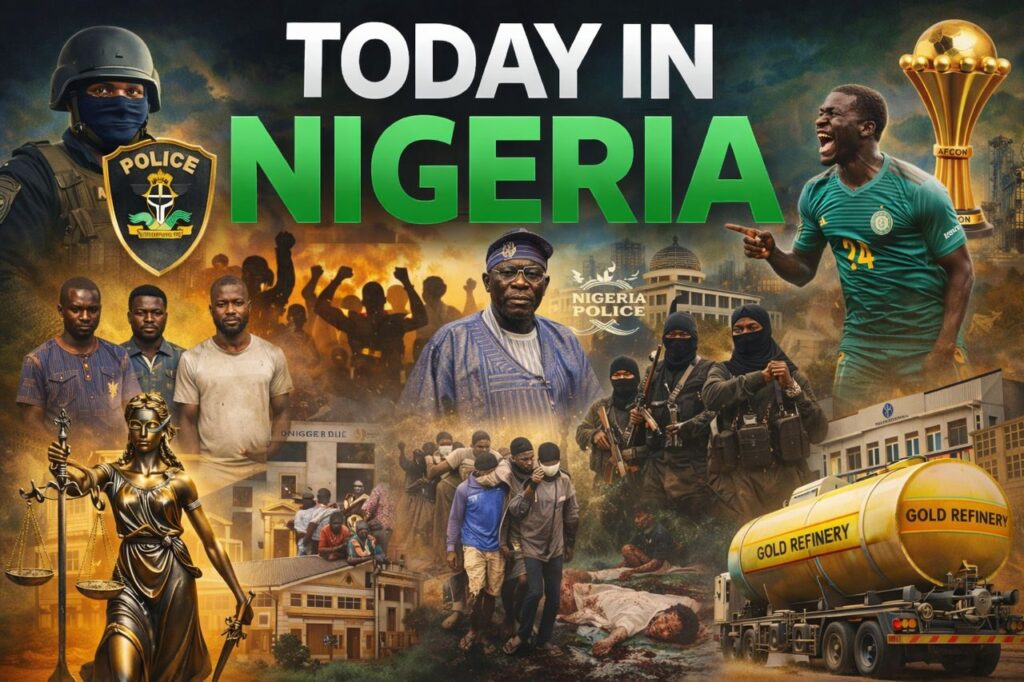
Public trust in law enforcement came under renewed strain today after outrage erupted over police crackdowns on anti-demolition protesters in Lagos. Demonstrators opposing forced evictions reported the use of tear gas and aggressive dispersal tactics, reigniting debates about citizens’ rights, urban development, and policing standards.
These incidents have become a recurring feature of Nigeria’s urban experience — where redevelopment projects clash with livelihoods, and dialogue often gives way to force. Civil society groups insist that development without consultation breeds resentment and instability.
Meanwhile, family members of detained IPOB leader Nnamdi Kanu issued fresh warnings to Nigerians about fake social media accounts spreading misinformation in his name. The proliferation of impersonation accounts, they say, risks misleading supporters and escalating tensions unnecessarily. The warning underscores how digital misinformation continues to complicate Nigeria’s already fragile security and political environment.
Political Developments and Power Contests
Political undercurrents were equally intense today. The All Progressives Grand Alliance (APGA) released its timetable for the 2026 Anambra local government primaries, formally setting the stage for grassroots political contests in the state. Local government elections in Anambra have historically carried significant political weight, often serving as a bellwether for broader state-level battles.
In Kano, political drama escalated as a commissioner publicly called for the resignation of the deputy governor, triggering fresh controversy within the state’s political establishment. The call has widened internal cracks and reignited debates about leadership accountability and internal party discipline.
Legal debates also took center stage after a legal expert warned that state governors lack constitutional powers to pardon terrorists. The statement challenges growing calls for state-level amnesty initiatives and reinforces the argument that counterterrorism policy must remain within clearly defined federal frameworks.
On the international stage, Turkish officials dismissed public commentary around President Bola Tinubu’s recent stumble during a visit as a “silly distraction,” according to remarks attributed to officials and relayed by Abike Dabiri. The response suggests irritation with what Ankara views as trivialisation of diplomatic engagements, especially at a time when Nigeria and Turkey are deepening economic and security cooperation.
Anti-Corruption and Accountability
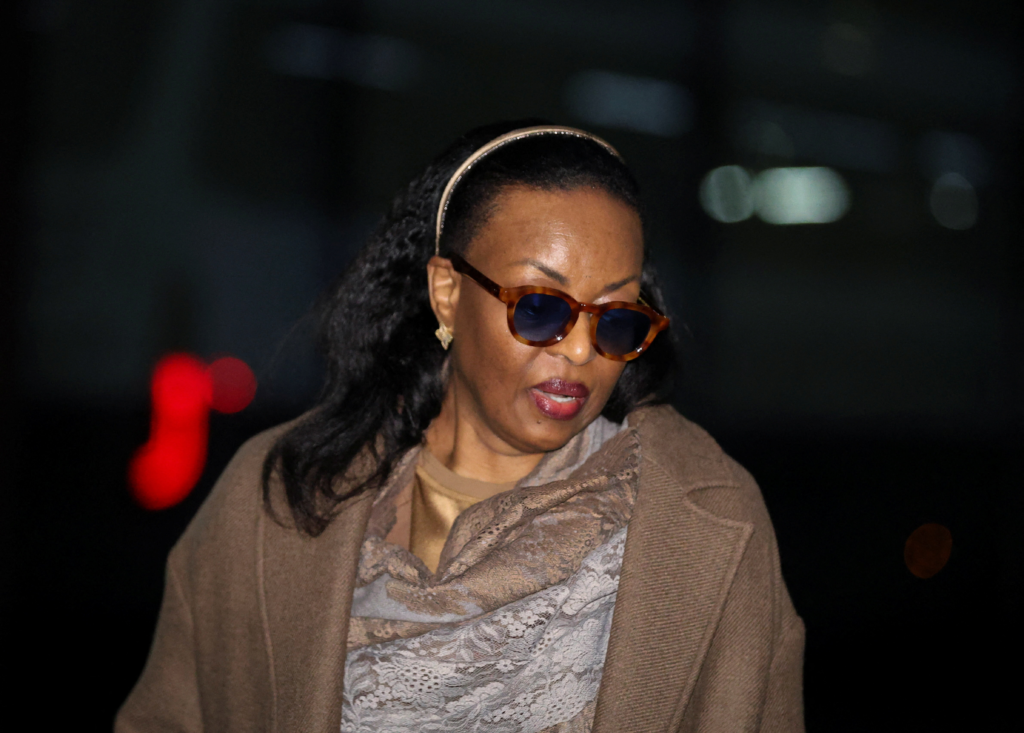
Corruption allegations resurfaced prominently with reports that former oil minister Diezani Alison-Madueke allegedly lavished over ₦4 billion in a London luxury store, according to UK prosecutors. The claim adds to the long-running international case surrounding her finances and reignites public anger over elite excess amid domestic hardship.
The case continues to symbolise Nigeria’s struggle to recover stolen assets and hold powerful figures accountable across borders. Anti-corruption advocates argue that sustained international cooperation remains critical if justice is to be seen and felt at home.
Youth, Innovation, and Economic Hope
Not all developments were grim. In Edo State, authorities announced plans to train 800 youths in digital skills as part of a broader push toward tech-driven jobs and innovation. The programme aligns with a growing recognition among state governments that traditional employment pathways are shrinking, while digital skills offer scalable opportunities.
Observers note that while such initiatives are promising, their success will depend on continuity, private-sector integration, and access to infrastructure like reliable power and internet connectivity.
Sports and Continental Governance
Sports headlines also dominated discussion following the fallout from the AFCON 2025 final. The Confederation of African Football (CAF) announced the suspension of Achraf Hakimi and Malick Thiaw, alongside fines imposed on Senegal and Morocco. The disciplinary measures have sparked debate over consistency, transparency, and governance standards within African football.
For Nigeria, which closely follows continental football politics, the episode reinforces long-standing concerns about officiating, discipline, and administrative credibility within CAF.
Why Today Matters
Taken together, today’s developments paint a picture of a country navigating multiple pressures at once. Today in Nigeria is no longer just about domestic headlines; it is about how global power shifts, regional insecurity, political accountability, and economic adaptation intersect daily.
From the Sahel’s instability to global market tremors, from urban protests to youth digital programmes, Nigeria stands at a crossroads where policy choices, leadership tone, and public trust will shape the coming months.
The challenge ahead lies not only in responding to crises but in building systems resilient enough to absorb shocks — political, economic, and security-related — without tipping into chaos.
Bottom Line
Today’s Nigeria reflects a nation balancing urgency and opportunity. While insecurity and political tension persist, efforts toward youth empowerment, institutional reform, and international engagement continue. The question is whether these efforts will mature into lasting solutions or remain reactive measures in an increasingly complex world.
https://ogelenews.ng/today-in-nigeria-8
Today in Nigeria 8