















Traditional rulers protect national oil assets
Traditional rulers from oil-producing communities in Rivers State, Imo State, and Abia State have renewed their collective commitment to protecting Nigeria’s national oil assets, as concerns persist over crude oil theft, pipeline vandalism, and insecurity across the Niger Delta and adjoining regions.
The monarchs made their position known during recent engagements with security agencies, community stakeholders, and industry representatives, stressing that the protection of oil infrastructure has become a shared responsibility between the state and host communities.
According to them, oil installations and pipelines are not abstract federal property but assets whose security directly affects local livelihoods, environmental safety, and long-term regional stability.
Oil infrastructure as community survival systems
Speaking through various traditional councils, the rulers emphasized that oil assets should be understood as lifelines for host communities rather than distant symbols of federal authority. Persistent vandalism, they noted, has worsened environmental degradation, reduced government revenue, and deepened poverty in areas already facing limited development opportunities.
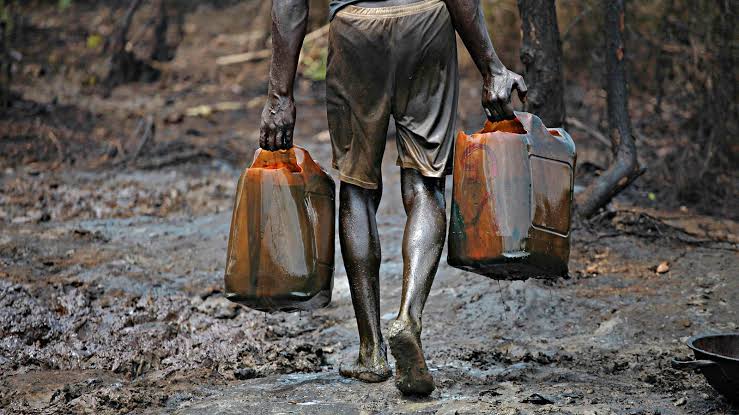
A traditional ruler from Rivers State said communities often bear the heaviest consequences when pipelines are damaged. Polluted rivers, destroyed farmlands, and heightened military presence frequently follow such incidents, leaving residents trapped between economic loss and insecurity.
“When oil facilities are attacked, our people suffer first,” the monarch said. “Protecting these assets is not charity to the state. It is protection of our own future.”
Strengthening cooperation with security agencies
https://ogelenews.ng/traditional-rulers-protect-national-oil-assets
The traditional rulers pledged closer cooperation with security agencies, including the Nigerian Army, Navy, and Nigeria Security and Civil Defence Corps, particularly through intelligence sharing and community-level mediation.
Security officials have repeatedly acknowledged that while technology and patrols remain important, community cooperation is essential in riverine and forested terrains where surveillance is difficult.
The monarchs said traditional institutions remain among the most trusted structures at the grassroots and can play a critical role in early warning, conflict resolution, and discouraging youth participation in illegal activities.
“Our influence is moral, not military,” one ruler from Imo State noted. “But moral authority still matters when communities listen.”
Youth unemployment and the limits of enforcement
A recurring concern raised during the engagements was the role of youth unemployment in sustaining pipeline vandalism and illegal refining. The rulers warned that enforcement without economic alternatives would only produce temporary results.
They called on the Federal Government, oil companies, and development agencies to expand skills acquisition programmes, youth employment schemes, and community-based enterprises that offer legitimate livelihoods.
A monarch from Abia State described security as inseparable from opportunity. “When young people see no future, criminal networks step in,” he said. “Hope is the most effective security tool.”
Traditional rulers protect national oil assets Rejection of external criminal networks
The rulers also condemned the activities of non-indigenous armed groups operating in parts of the Niger Delta and neighboring states. They accused such groups of exploiting local grievances to justify oil theft, kidnapping, and violent attacks on infrastructure.
According to the monarchs, external criminal elements often escalate violence and provoke heavy security responses that ultimately harm innocent communities.
They pledged to resist any attempt by such groups to establish operational bases within their domains and urged residents to report suspicious movements early.
Environmental damage and economic losses
Beyond security, the monarchs highlighted the severe environmental and economic consequences of oil theft. Repeated spills have devastated mangroves, rivers, and farmlands across the Niger Delta, creating long-term health risks and undermining fishing and farming livelihoods.
They urged oil companies to strengthen environmental standards, accelerate cleanup of polluted sites, and engage more transparently with host communities.
Visible development projects, they argued, would foster community ownership of oil infrastructure and reduce hostility toward operators.
A renewed role for traditional institutions by Traditional rulers protect national oil assets
Observers say the renewed stance by traditional rulers reflects a broader recognition of their strategic role in regional stability. While lacking formal enforcement powers, monarchs often wield moral authority capable of influencing behavior in ways state institutions cannot.
By publicly aligning with efforts to protect national oil assets, traditional rulers are positioning themselves as partners in Nigeria’s economic and security strategy.
As Nigeria continues to depend heavily on oil revenue to fund public services and stabilize its economy, the effectiveness of such community-level commitments may prove decisive.
For communities in Rivers, Imo, and Abia States, the message from their traditional leaders is clear: protecting oil assets is not merely a federal obligation, but a shared responsibility tied to peace, prosperity, and the future of the region.
Traditional rulers protect national oil assets