















UNICEF urges journalists to adopt ethical reporting in children’s matters
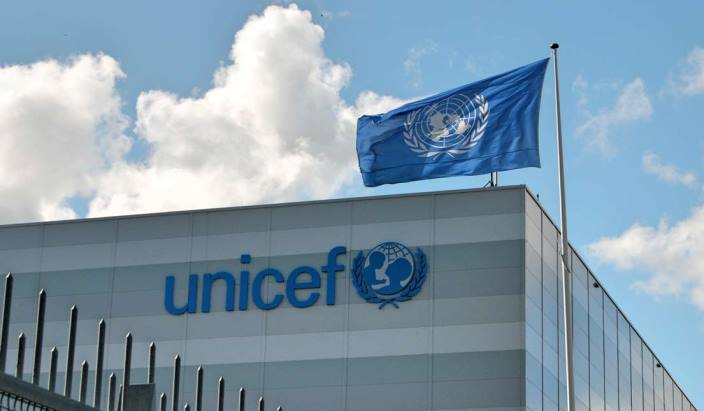
UNICEF urges journalists to adopt ethical reporting in children’s matters as the United Nations Children’s Fund called on media professionals in Nigeria to handle stories involving children with greater care, empathy and responsibility, especially where abuse, violence and vulnerability are involved. The appeal was made during the Northeast and North Central Regional Workshop on Ethical Reporting of Children held in Gombe State, where UNICEF officials stressed that careless coverage can leave lasting harm on the lives of children already facing trauma. 
The message from UNICEF was clear: journalism does not stop at getting the facts right. When children are involved, accuracy must go hand in hand with dignity, privacy and protection. That is the real force behind the statement that UNICEF urges journalists to adopt ethical reporting in children’s matters. 
At the workshop, UNICEF’s communication officials said ethical reporting should begin with empathy. Journalists were asked to think carefully about how their stories, headlines, photographs and video clips may affect a child long after publication. UNICEF warned that identifying a child survivor of abuse or violence can expose that child to stigma, retraumatisation and rejection within the community. 
That warning goes to the heart of why UNICEF urges journalists to adopt ethical reporting in children’s matters. A report that attracts clicks today may become a burden a child carries for years. Names, faces, locations and family details that seem minor in a newsroom can become life-changing markers of shame or danger for a child in the real world. 
UNICEF’s position is not new, but it is increasingly urgent. Its formal media guidelines say reporting on children and young people should never put them at risk, and that journalists should protect a child’s identity whenever identification could cause harm, stigma or retaliation. The organisation’s ethical framework is built around one central idea: the public interest should be served without compromising the rights of children. 
That principle gives deeper meaning to the call that UNICEF urges journalists to adopt ethical reporting in children’s matters. This is not merely about being polite or cautious. It is about child rights. It is about recognising that a child featured in the news is not just a subject of public curiosity but a human being with legal and moral claims to safety, dignity and future wellbeing. 
At the Gombe workshop, UNICEF’s representatives urged reporters to avoid harmful framing when covering child survivors of abuse and violence. They stressed that journalists should not present children in ways that define them only by their suffering or expose them to fresh victimisation. Ethical reporting, they said, means telling the truth in ways that do not worsen the injury already done.
https://ogelenews.ng/unicef-urges-journalists-to-adopt-ethical-reporting
This is why UNICEF urges journalists to adopt ethical reporting in children’s matters should matter far beyond one workshop hall. In a media environment driven by speed, shock value and social media virality, children can easily become collateral damage. A blurred line between public interest and public curiosity often leads to the publication of details that should never have left the reporter’s notebook. 
UNICEF’s broader engagement with Nigerian journalists over the past year shows that this is part of a sustained campaign, not a one-off remark. In workshops held in Rivers, Kano and other locations, UNICEF and government partners have repeatedly urged journalists to adopt fact-based, child-sensitive reporting standards and strengthen their knowledge of child protection laws and ethical principles. 
That continuity strengthens the present story. UNICEF urges journalists to adopt ethical reporting in children’s matters not as a passing comment, but as a repeated institutional demand grounded in both child rights and professional ethics. UNICEF is effectively telling the media that the way children are reported is part of the child protection system itself. 
There is also a practical newsroom lesson here. Ethical child reporting is not only about what journalists must avoid. It is also about what they should do. UNICEF’s guidelines encourage reporters to obtain informed consent where appropriate, consider whether a child truly understands the implications of being interviewed, use language that respects age and vulnerability, and avoid images or descriptions that sensationalise pain. 
In other words, when UNICEF urges journalists to adopt ethical reporting in children’s matters, it is calling for journalism that is both humane and disciplined. A child’s story can still be told powerfully without exposing identity. Abuse can still be reported without graphic exploitation. Public accountability can still be demanded without sacrificing the child at the centre of the story. 
For Nigeria, where stories of child abuse, trafficking, violence, displacement, hunger and neglect regularly make the news, the stakes are especially high. A reckless report can deepen stigma around a child survivor. A thoughtful one can mobilise support, protect dignity and push authorities to act. That is the public value in the position that UNICEF urges journalists to adopt ethical reporting in children’s matters. 
There is another reason this matters. Ethical journalism builds trust. UNICEF has argued in previous engagements that responsible reporting helps communities understand children’s issues more clearly and respond with care rather than prejudice. In an era of misinformation and outrage-driven storytelling, credibility belongs more and more to media organisations that know how to tell difficult stories without causing avoidable harm. 
So the takeaway is simple, and it is worth stating plainly: UNICEF urges journalists to adopt ethical reporting in children’s matters because children are not just part of the story. They are rights-holders whose safety can be shaped by the choices editors, reporters and photographers make every day. 
For newsrooms, this means slowing down enough to ask the hard questions before publishing. Does this headline protect the child? Does this image expose the child? Does this detail serve the public interest, or merely satisfy curiosity? Those are the questions ethical reporting demands. And they are the questions UNICEF wants journalists in Nigeria to carry into every child-related story they handle. 
In the end, UNICEF urges journalists to adopt ethical reporting in children’s matters because the cost of getting it wrong is paid not by the newsroom, but by the child. That is the truth behind the appeal in Gombe, and it is why the message deserves to outlive the event itself. 
https://punchng.com/unicef-urges-journalists-to-adopt-ethical-reporting-in-childrens-matters