










Windstorm damages newly built Abuja bus terminal
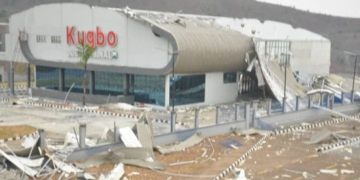
A violent afternoon windstorm has damaged parts of the newly built Kugbo Bus Terminal in Nyanya, Abuja, in an incident that has quickly stirred concern among commuters, residents, and observers of public infrastructure in the Federal Capital Territory. What might have been dismissed as a weather event is already becoming something more politically and publicly significant, because the structure involved is not an old, neglected site. It is a flagship transport facility meant to signal modernisation in Abuja’s public transit system. That is why the story that Windstorm damages newly built Abuja bus terminal carries weight far beyond a routine weather update.
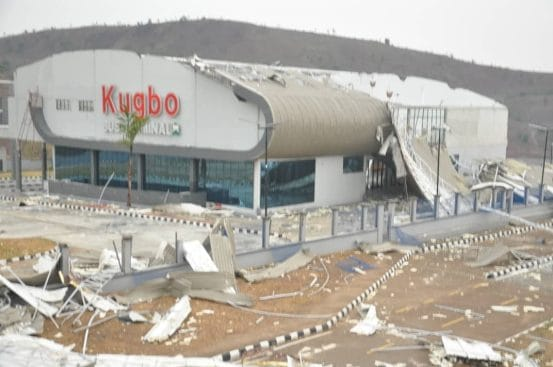
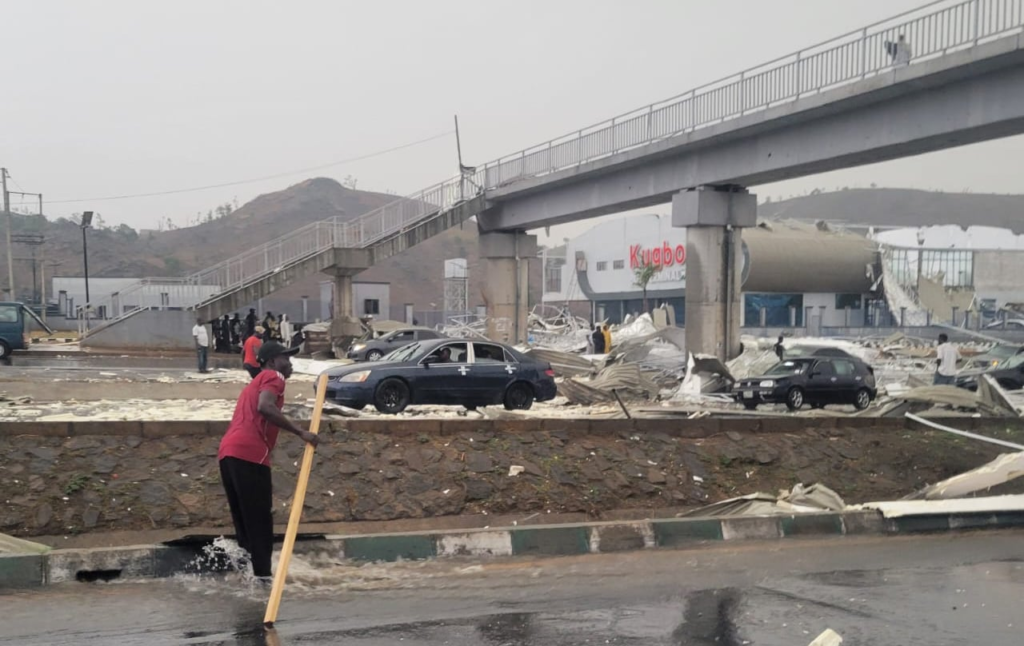
According to reports and an official statement cited by multiple outlets, the storm struck during heavy rainfall on Tuesday and damaged sections of the Kugbo Bus Terminal. The same weather event also caused minor damage to the Nyanya pedestrian bridge and some nearby buildings. Preliminary reports said no one was injured and no vehicle was damaged, which is an important relief in a city corridor that is often crowded and tense even on ordinary days. But while the absence of casualties is reassuring, it does not cancel the seriousness of what happened. When Windstorm damages newly built Abuja bus terminal, the immediate public reaction is bound to move beyond sympathy and into scrutiny.
That scrutiny is understandable. The Kugbo terminal is one of the transport projects intended to modernise the FCT, improve commuter order, and reduce the risks associated with informal transit systems, including the long-running fear of “one chance” crimes. Premium Times reported that the terminal was completed and inaugurated as part of these broader efforts, while Channels Television noted that the terminal, along with two others in the FCT, was commissioned in June 2025. So when Windstorm damages newly built Abuja bus terminal, it does not read like a random accident hitting an ageing structure. It raises questions about resilience, finishing standards, maintenance planning, and whether infrastructure meant to project confidence is being tested too early by real-world conditions.
The disruption on the road was immediate. TheCable and Channels Television reported that debris from the damaged sections spilled onto the busy Nyanya-Keffi Expressway, obstructing movement and triggering heavy traffic congestion along one of the capital’s most important commuter routes. TheCable said sections of the terminal roof were blown off and scattered onto the highway, while Channels described hours-long gridlock that left motorists stranded. These reports matter because they shift the story from visible physical damage to public consequence. In practical terms, Windstorm damages newly built Abuja bus terminal also meant commuters lost time, traffic flow broke down, and the city was reminded again that infrastructure failure, however partial, quickly becomes a social and economic issue in Abuja.
https://ogelenews.ng/windstorm-damages-newly-built-abuja-bus-terminal
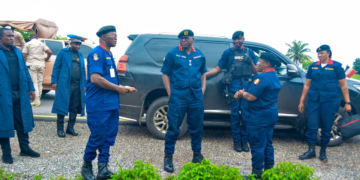
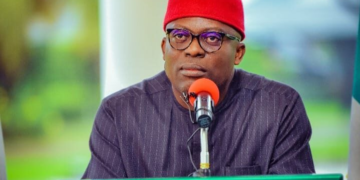
The Federal Capital Territory Administration moved quickly in its official response. According to statements carried by Punch, Premium Times and others, FCT Minister Nyesom Wike ordered the deployment of security personnel to the scene and directed immediate action to repair the damage. The stated aim was to prevent a breakdown of law and order and to restore traffic movement in the affected area. That response was necessary, but it will not end public questioning. Emergency action can stabilise a scene. It cannot by itself answer the deeper concern that arises when Windstorm damages newly built Abuja bus terminal before the public has fully embraced it as a dependable transport asset.
There is also the timing problem. Reports indicate that residents have repeatedly urged the FCT administration to begin operations at the Kugbo and Mabushi terminals, which were completed months ago but had remained non-operational pending final approvals and other administrative steps. Punch reported in February that FCT bus terminals would start operating after Federal Executive Council approval. That means the Kugbo terminal had already become a symbol of delayed promise before this windstorm hit. In that context, Windstorm damages newly built Abuja bus terminal becomes an even more uncomfortable headline for authorities, because it lands at the intersection of public expectation, project delay, and visible vulnerability.
Still, caution matters. It would be irresponsible to turn one weather-related incident into a full verdict on the quality of the project without official technical findings. None of the cited reports says the entire terminal collapsed, and none provides an engineering assessment proving systemic construction failure. What is firmly established is that parts of the structure were damaged during a heavy windstorm and rain event, debris affected traffic, nearby infrastructure was also hit, no casualties were reported, and repairs were ordered immediately. Those facts are enough. They are also serious enough. The careful journalist’s task is not to sensationalise the event, but to explain why Windstorm damages newly built Abuja bus terminal has triggered legitimate public concern.
For ordinary Abuja residents, the issue is simple. Public infrastructure is paid for in public trust as much as public money. When a major transport terminal is unveiled, people expect durability, safety, and readiness for the city’s weather realities. Abuja is not new to heavy rainfall and strong winds. So while extreme weather can damage even solid infrastructure, the public will still expect answers when Windstorm damages newly built Abuja bus terminal so visibly and so early in its life cycle. That expectation is not unfair. It is what accountability looks like.
The broader lesson here is that infrastructure stories do not end at commissioning ceremonies. They mature in use, in stress, and in crisis. Ribbon cuttings are easy. Endurance is the real test. The Kugbo Bus Terminal was designed to represent a more orderly and secure transport future for the FCT. Now it faces a harder burden: proving that it can withstand the conditions of the city it was built to serve. Until the repairs are completed and authorities provide more clarity, the headline will continue to echo for reasons deeper than the storm itself: Windstorm damages newly built Abuja bus terminal.
https://guardian.ng/news/nigeria/metro/chaos-as-rainstorm-damages-abuja-transport-project