


















Women group urges NDDC, NEDC to equip schools with laboratories
A prominent women’s science advocacy group is urging key federal intervention to improve science education in Nigerian schools, stressing that a lack of functional laboratories is discouraging students — especially girls — from pursuing careers in science. At a high-profile event in Delta State this week, Women in Chemistry (WIC) called on the Niger Delta Development Commission (NDDC), the North East Development Commission (NEDC) and other development agencies to prioritise funding and support for science laboratories in schools nationwide. 
Dr Sarah Nwinee, Coordinator of Women in Chemistry, highlighted the poor state of science labs across the country and warned that many students are being deprived of essential hands-on learning opportunities. She described the absence of functional laboratories as a key barrier to effective science education, which ultimately affects students’ performance in national exams and hinders interest in fields such as chemistry, biology and physics. Women group urges NDDC to equip schools with laboratories.
“We are calling on the NDDC, the NEDC and other relevant agencies to equip schools with modern laboratories,” Dr Nwinee told participants at the International Union of Pure and Applied Chemistry (IUPAC) 2026 Global Women’s Breakfast held at the Petroleum Training Institute in Effurun, Delta State. She said science learning is fundamentally practical, and without adequate lab facilities students are being forced to learn theory in environments that make meaningful understanding difficult. 
Poor Laboratory Facilities Holding Back Science Education
The concern raised by WIC reflects a broader problem across Nigeria’s education sector: many schools lack functional laboratories, yet students are still expected to sit for exams that require demonstration of practical skills. Dr Nwinee said this disconnect discourages young learners, especially girls, from pursuing careers in scientific disciplines. “Poor learning environments are discouraging young girls from thriving in the sciences, particularly chemistry,” she said. 
The issue is not unique to the Niger Delta or the North East regions targeted by the commissions mentioned. Across the country, science classrooms often lack basic equipment such as beakers, Bunsen burners, microscopes, safety gear and even adequate space for experiments. Education experts have repeatedly said that science without practical exposure is incomplete, and Nigeria’s technological and industrial aspirations depend on strengthening foundational science education. 
https://ogelenews.ng/women-group-urges-nddc-nedc-to-equip-schools-with-l…
Why Lab Infrastructure Matters for Nigeria’s Future
Equipping schools with modern laboratories is more than a formal request from a women’s group: it goes to the heart of Nigeria’s ability to produce scientists, engineers and technologists who can support national development goals. Dr Nwinee emphasised that practical science is critical not only for students’ success in exams such as WAEC and NECO, but also for fostering innovation and problem-solving skills that are essential in fields ranging from healthcare and agriculture to energy and environmental science. 
Laboratories allow students to experience science in action rather than as abstract concepts in textbooks. Teachers with well-equipped labs can demonstrate core principles in chemistry, biology and physics, helping learners to connect theory with real-world phenomena. By contrast, when schools lack these facilities, students often resort to memorisation, which weakens their understanding and reduces interest in STEM (Science, Technology, Engineering and Mathematics) careers. 
NDDC, NEDC and Their Mandates
The NDDC and NEDC were established to drive development in their respective regions — the Niger Delta and the North East — through infrastructure projects, human capital development and community empowerment. While these commissions have been involved in roads, healthcare and other social infrastructure, WIC’s appeal places education infrastructure at the centre of current priorities. 
The Niger Delta Development Commission’s mandate includes improving social welfare and human capital as part of its development strategy. Its activities have ranged from road construction to health outreach and youth empowerment, but education infrastructure improvements — such as equipping science labs — would expand its contribution to human development outcomes. 
Similarly, the NEDC has overseen numerous projects aimed at revitalising the North East after years of insurgency, including investments in education facilities, vocational training and community infrastructure. Its focus on basic and higher education facilities highlights the potential for impact if these commissions prioritise science labs as strategic investment areas. 
Gender Dimensions in Science Education
WIC’s specific focus on girls in science education underscores a wider gender dimension. Globally and in Nigeria, female participation in STEM fields is often lower than male participation due to societal bias, lack of role models and discouraging learning environments. A woman-led appeal for better labs — especially at events like the Global Women’s Breakfast — signals a push to break barriers that discourage girls from pursuing science. 
Teachers and education administrators have said that when schools provide functional labs, girls and boys alike benefit. Practical sessions build confidence and competence, making science more engaging and less intimidating. Better lab access could therefore help boost female representation in science courses at the secondary and tertiary levels, supporting broader efforts to increase women’s participation in STEM. 
Voices From the Event
At the IUPAC Global Women’s Breakfast, speakers emphasised that the challenge goes beyond equipment to training teachers and redesigning curricula. Schools need not only physical labs, but also well-trained science teachers who can effectively use the facilities to deliver hands-on instruction. Participants noted that improved teaching methods were essential for fully leveraging any new lab infrastructure. 
To encourage student interest, the 2026 edition of the Global Women’s Breakfast featured a quiz competition designed to stimulate curiosity, build confidence and reward academic excellence. WIC increased the competition prizes significantly this year to motivate learners, demonstrating creative ways to bolster student engagement alongside infrastructure appeals. 
Challenges and the Road Ahead
Despite the compelling case for laboratory investment, challenges remain. Funding constraints at state and federal levels often limit the ability of governments and commissions to support every school. In some regions, basic classroom needs still go unmet, making advanced lab investment seem distant. Yet advocates argue that investing in labs now is investing in the future workforce and innovation capacity of the nation.
WIC’s call to agencies such as the NDDC and NEDC is therefore both timely and strategic: by positioning education infrastructure as part of development commissions’ mandates, it encourages a broader view of regional development that includes academic excellence and scientific capacity building. 
Conclusion
The call by Women in Chemistry for the NDDC, NEDC and similar agencies to equip schools with laboratories highlights a persistent gap in Nigeria’s education system and connects it to larger development goals. Without well-equipped labs, students — especially girls — may continue to be discouraged from excelling in science, which has implications for the country’s ability to nurture its next generation of scientists, engineers and innovators. For Nigeria to compete globally and realise its development ambitions, strengthening science education through practical learning environments must be a priority — not an afterthought. 
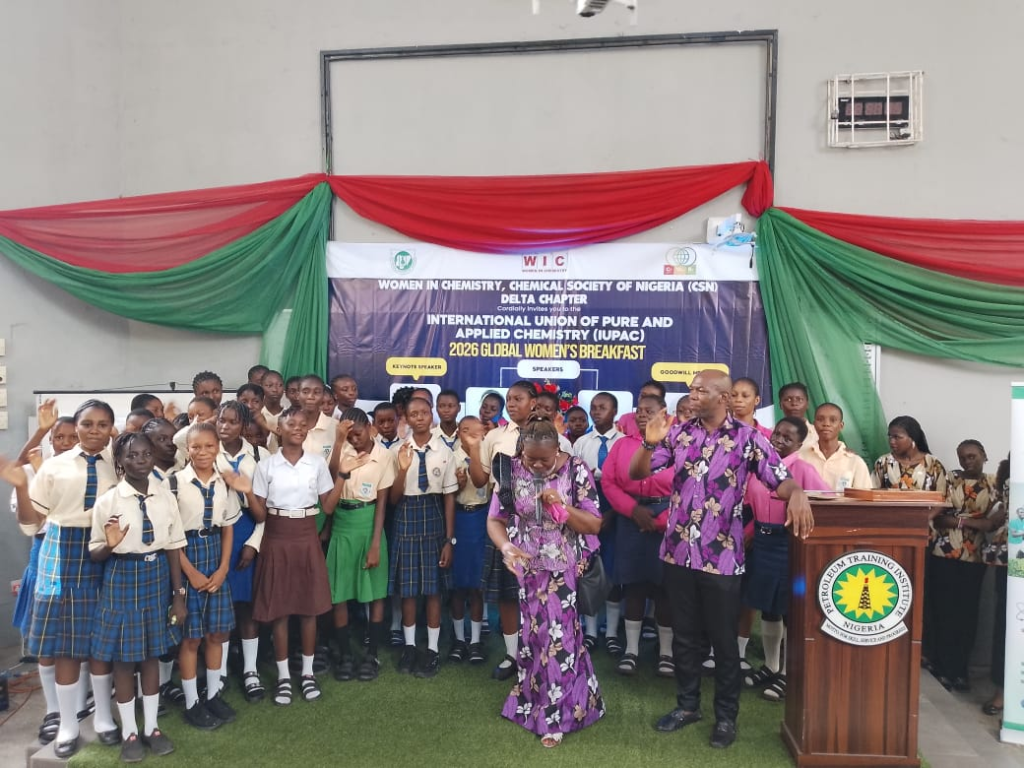
Women group urges NDDC, NEDC to equip schools with laboratories