
















fake agency scandal
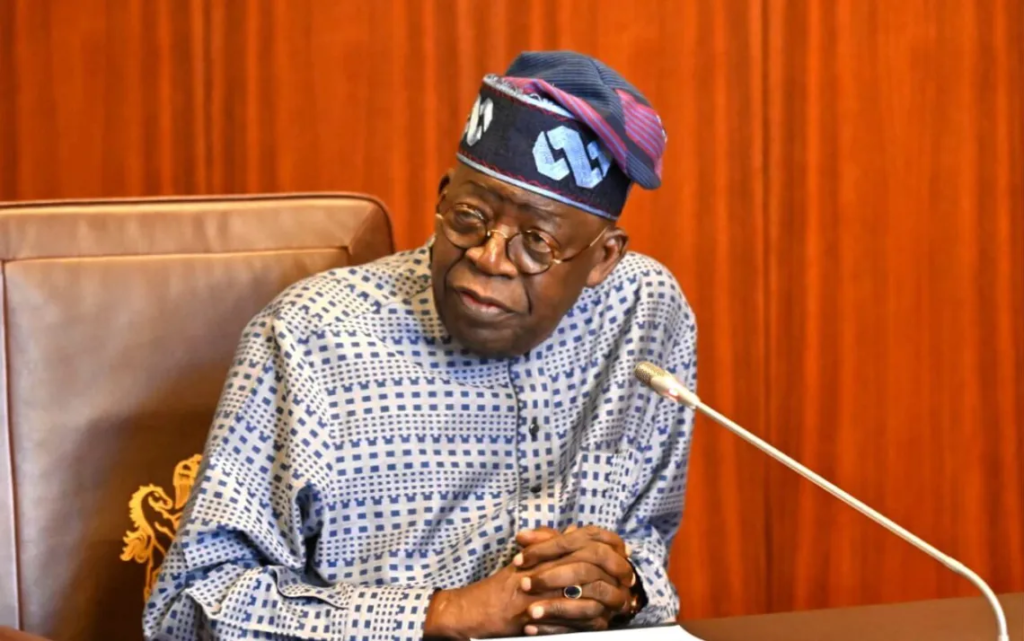
President Bola Tinubu has ordered a 30-day investigation into the fake agency scandal involving the purported Presidential Foreign Intervention Promotion Council, as pressure mounts on the Presidency, the National Assembly and key government institutions over how a body declared fictitious allegedly gained official appearance.
The directive, announced by the President’s Special Adviser on Information and Strategy, Bayo Onanuga, mandates the Independent Corrupt Practices and Other Related Offences Commission to investigate the alleged use of forged appointment letters, official documents, diplomatic channels and bank accounts linked to the disputed body.
At the centre of the fake agency scandal is Adeniyi Adeyemi Matthew, who the Presidency said presented himself as Director-General of the Presidential Foreign Intervention Promotion Council and claimed to be a presidential appointee. The Presidency insists the council was never established by law, presidential instrument, executive approval or any lawful act of government.
Tinubu’s directive gives the ICPC 30 days to submit a comprehensive report. The commission is expected to determine the origin of the allegedly forged documents, how the purported council sought official recognition, whether diplomatic support was requested, how related bank accounts were opened, and whether any public officers, private individuals, financial institutions or intermediaries played a role.
The fake agency scandal has become more troubling because of the questions it raises beyond one man. If the council was fake, how did it allegedly acquire the appearance of legitimacy? How did official-looking documents move through government channels? How did the name of the body reportedly appear in public discussions around the 2026 budget? And why did it take sustained public pressure before a broader anti-graft probe was ordered?
These are the questions Tinubu’s directive now places before the ICPC.
According to the Presidency, all ministries, departments and agencies have been directed to cooperate fully with the anti-graft commission by providing documents, records and other assistance needed for the investigation. That instruction is important because the fake agency scandal touches several layers of government procedure, including appointments, correspondence, budget processing, diplomatic communication and institutional verification.
The Senate, however, has rejected blame for the controversy. Speaking through its spokesperson, Senator Yemi Adaramodu, the upper chamber said the matter was largely an executive issue and that the National Assembly could not intervene because no formal petition had been submitted to it. The Senate also noted that the dispute was already before the court, making it inappropriate for lawmakers to make detailed comments.
Adaramodu argued that the Senate did not create the alleged agency and was not responsible for carrying out security checks on persons claiming to head government bodies. He said if the alleged director-general had been a presidential nominee screened and confirmed by the Senate, the matter would have been different.
https://ogelenews.ng/fake-agency-scandal-tinubu-orders-30-day-icpc-probe…
But that explanation may not end the public debate. The fake agency scandal has exposed a deeper institutional weakness. Nigerians are asking how a body the Presidency now calls fictitious could allegedly move far enough within official circles to attract attention, correspondence and controversy.
The matter has also drawn legal and political pressure. Human rights lawyer Femi Falana, SAN, who represents Adeyemi, has called for a wider investigation. He has argued that the issue cannot be settled by statements from the Presidency alone, especially where allegations and counter-allegations have been made.
Adeyemi, who is already facing prosecution at the Federal High Court in Abuja, has denied wrongdoing and made claims of his own. Those claims remain unproven. The Presidency has dismissed them and insists that documents allegedly used by him were forged. The court will ultimately determine the criminal allegations, but the ICPC probe is expected to examine the wider system that may have allowed the controversy to grow.
That wider system is where the real public interest lies.
A country cannot afford a situation where anyone can create official-looking papers, claim presidential authority, open accounts, seek diplomatic assistance or engage institutions without immediate detection. The fake agency scandal is therefore not only a criminal case. It is a governance failure test.
The Presidency must now show that this investigation will not become another routine file buried under political convenience. Nigerians need clear answers. Who created the documents? Who processed any correspondence? Were any offices misled? Were any officials negligent? Did any bank fail to carry out proper due diligence? Was any public fund involved? Were there institutional loopholes that made the scheme possible?
These questions must be answered plainly.
The ICPC must also be allowed to work independently. A credible probe should not be designed to protect reputations. It should follow the evidence. If Adeyemi acted alone, the evidence should show it. If others helped, enabled or ignored warning signs, the public deserves to know.
For Tinubu, the fake agency scandal is now a test of accountability at the highest level. His order to the ICPC is a necessary first step, but the real measure will be the quality of the report, the speed of action and whether anyone found culpable is prosecuted without political shielding.
For the Senate, rejecting blame may be legally convenient, but public trust requires more. If any questionable budget line, correspondence or institutional process passed through legislative channels, Nigerians will expect lawmakers to explain how oversight failed.
This is why the fake agency scandal must not be reduced to political name-calling. It is about the integrity of the Presidency, the discipline of the bureaucracy, the vigilance of the legislature and the ability of anti-corruption agencies to protect public institutions from impersonation and abuse.
As the 30-day deadline begins to count, Nigerians will be watching closely. The Presidency says the agency is fictitious. The Senate says it is not to blame. Adeyemi says he has his own side. The ICPC now has the duty to cut through the noise and establish the truth.
Until that happens, the fake agency scandal will remain a disturbing reminder that Nigeria’s public institutions are only as strong as the systems built to protect them.