













FG borrows N5tn from bond market
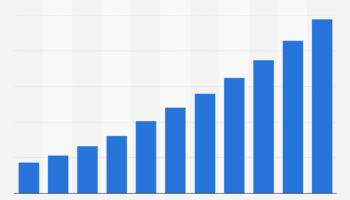
The Federal Government raised approximately ₦5.08 trillion from Nigeria’s domestic bond market in the first six months of 2026, representing a sharp increase in its reliance on local investors to finance public spending and meet budgetary obligations.
An analysis of bond auction results published by the Debt Management Office showed that the amount allotted between January and June 2026 was 77.8 per cent higher than the ₦2.86 trillion raised during the corresponding period of 2025.
The figures indicate that FG borrows N5tn from bond market instruments at a time when the government is attempting to finance a large fiscal deficit, refinance existing obligations and sustain expenditure on infrastructure and other public programmes.
Total bond subscriptions during the six-month period reached about ₦9.04 trillion, more than double the ₦4.37 trillion recorded in the first half of 2025. This reflected continued investor interest in Federal Government securities despite changes in yields and the growing volume of bonds offered for sale.
Government increases domestic bond offers
The Federal Government offered bonds valued at approximately ₦4.95 trillion between January and June 2026, compared with ₦1.85 trillion during the same period in 2025.
This represented an increase of about ₦3.10 trillion, or 167.6 per cent, and pointed to a substantially more aggressive domestic borrowing programme.
The conclusion that FG borrows N5tn from bond market auctions is based on both competitive allocations to investors and non-competitive allotments disclosed by the DMO.
Competitive bids are usually submitted by financial institutions and other investors who state the yields at which they are prepared to buy government securities. Non-competitive allotments may be made under separate arrangements without investors participating in the normal price-setting process.
Although subscriptions increased significantly in absolute terms, investor demand did not grow as rapidly as the size of the bonds offered.
Subscriptions were equivalent to about 182.6 per cent of the amount offered during the first half of 2026. That was lower than the 236.1 per cent subscription-to-offer ratio recorded during the corresponding period of 2025.
This means investors offered the government substantially more money in 2026, but the increase in demand was not as steep as the expansion in the government’s borrowing requirement.
January records highest bond allotment
January was the strongest borrowing month in the first half of 2026.
The DMO allotted about ₦1.54 trillion to competitive investors during the month, while total allotments rose to approximately ₦1.68 trillion after non-competitive allocations were included.
That figure was considerably higher than the ₦601.04 billion allotted in January 2025.
June followed with total allotments of about ₦1.22 trillion, compared with only ₦100 billion in June 2025.
The size of the January and June auctions helps explain how FG borrows N5tn from bond market operations within just six months, despite relatively lower allotments in some of the intervening months.
In May, competitive allotments stood at approximately ₦614.51 billion. Total allotments, however, rose to ₦894.51 billion after the inclusion of a ₦280 billion non-competitive allocation for the 16.2499 per cent Federal Government bond due in April 2037.
The May 2026 figure was almost three times the ₦300.69 billion raised in the corresponding month of 2025.
March also recorded a year-on-year increase, with total allotments rising to ₦485.50 billion from ₦423.68 billion.
Borrowing was lower in February and April. The Federal Government allotted ₦524.28 billion in February 2026, down from ₦910.39 billion in February 2025. April allotments also declined to ₦276.79 billion from ₦520.90 billion a year earlier.
Borrowing costs decline despite larger debt raising
One notable feature of the domestic borrowing programme was the decline in interest rates demanded by investors.
Marginal rates across the bonds offered during the first half of 2026 ranged from 15.50 per cent to 18.35 per cent. In the first half of 2025, the rates ranged between 17.75 per cent and 22.60 per cent.
The simple average marginal rate fell to approximately 16.78 per cent from 19.84 per cent, while the allotment-weighted average declined to around 17.29 per cent from 20.14 per cent.
Consequently, the report that FG borrows N5tn from bond market auctions does not mean that the cost of every new bond increased. The government raised considerably more money while accepting lower average yields than it did during the same period of 2025.
Lower yields may reduce the immediate cost of new borrowing, but rates above 15 per cent still translate into significant future interest obligations.
The government will be required to make periodic coupon payments to bondholders and repay the principal when the securities mature. The long-term impact will therefore depend on how the proceeds are used and whether government revenue grows fast enough to service the obligations.
https://ogelenews.ng/fg-borrows-₦5-08tn-from-bond-market-as-domestic-deb…
Investors submit more than 2,800 bids
Investor participation also increased during the review period.
A total of 2,823 bids were submitted across the bond auctions held between January and June 2026, compared with 1,621 bids in the corresponding period of 2025.
Successful bids increased from 926 to 1,449. However, the percentage of successful bids declined from 57.1 per cent to 51.3 per cent.
The lower success rate suggests that the DMO became more selective, rejecting bids considered too expensive or inconsistent with its preferred debt-management objectives.
Investor demand was concentrated in a number of major instruments.
The 22.60 per cent Federal Government bond maturing in January 2035 attracted subscriptions of approximately ₦2.30 trillion across four reopening auctions and accounted for about ₦1.52 trillion in allotments.
The 16.2499 per cent Federal Government bond due in April 2037 attracted subscriptions exceeding ₦1.24 trillion after being offered in May and June. Its total allotments reached approximately ₦1.38 trillion, supported by the ₦280 billion non-competitive allocation made in May.
The 19.89 per cent bond maturing in May 2033 received subscriptions of about ₦1.34 trillion and allotments of ₦541.34 billion across three reopening auctions.
These instruments accounted for a substantial share of the total reflected in the declaration that FG borrows N5tn from bond market securities during the first half of the year.
Why investors continue to buy government bonds
Federal Government bonds are generally considered lower-risk investments than corporate debt because repayment is backed by the sovereign government.
Banks, pension fund administrators, insurance companies, asset managers and foreign portfolio investors commonly purchase the securities because they offer predictable coupon payments and can be traded in the secondary market.
Foreign investors reportedly invested about $3.23 billion in Nigerian bonds during the first quarter of 2026. Bond investments accounted for 32.71 per cent of the $9.86 billion in portfolio investment recorded during the quarter.
The inflow was more than three times the $877.41 million recorded in the first quarter of 2025, reflecting renewed interest in Nigeria’s high-yield fixed-income market.
Nigeria’s domestic bonds have continued to offer attractive returns, even as inflation and exchange-rate risks remain important considerations for local and foreign investors.
Concerns over private-sector crowding out
While strong bond subscriptions can help the government meet its financing needs, increased domestic borrowing may create challenges for private businesses.
When government securities offer high returns with comparatively low credit risk, banks and institutional investors may prefer buying sovereign bonds rather than extending loans to manufacturers, farmers and small businesses.
This is known as crowding out. It can limit access to credit in the productive economy and keep commercial lending rates high.
Therefore, the revelation that FG borrows N5tn from bond market auctions should not be assessed only by the amount successfully raised. Policymakers must also consider the effect of government borrowing on credit availability, private investment and economic growth.
Another concern is debt servicing. Even when borrowing rates decline, a rapid increase in the volume of debt may raise the government’s total interest bill.
Borrowing can support growth when the proceeds are directed towards productive infrastructure, power, transport, education and projects capable of expanding future revenue. It becomes more difficult to sustain when new debt is used mainly to finance recurrent expenditure or repay existing obligations without meaningful economic expansion.
Transparency and responsible spending required
The DMO publishes monthly auction results showing the bonds offered, subscriptions received, allotments made and marginal rates accepted. Its auction records include separate releases for each month from January to June 2026.
The June auction result was published on June 22, 2026, completing the data required to assess the government’s domestic bond activity during the first half of the year.
However, transparency should extend beyond the auction process. Nigerians also require clear information about how borrowed funds are spent, which projects are financed and the economic value created by those investments.
The fact that FG borrows N5tn from bond market instruments within six months underlines the scale of the government’s financing needs.
The lower average yields and strong subscriptions are positive from a debt-issuance perspective, but the larger question is whether the borrowed money will strengthen the economy enough to meet future repayment obligations.
As Nigeria continues to rely on the domestic debt market, fiscal discipline, improved revenue collection and transparent project execution will be essential. Without these measures, rising borrowing may increase debt-servicing pressure and reduce the amount available for essential public services.
The first-half figures therefore present two contrasting realities: investors remain willing to finance the Federal Government, and borrowing costs have moderated, but the volume of debt being accumulated has risen sharply.
That makes the report that FG borrows N5tn from bond market securities not merely a financial-market development, but a major test of Nigeria’s fiscal management and its ability to convert borrowed funds into measurable economic progress.
https://www.dmo.gov.ng/fgn-bonds/bonds-auction-results
FG borrows N5tn from bond market