
















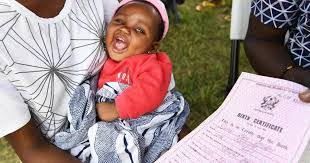
NPC registers 36,000 Kano births in nine months – Official
The National Population Commission says it has registered more than 36,000 births in Kano State within nine months of deploying its electronic birth registration system, a figure officials say reflects early progress in the push to give more children a legal identity from birth. The disclosure came from the Kano State Director of the NPC, Balarabe Kabir, during a two-day State Refresher Training of Trainers held in Kano, NPC registers 36,000 Kano births in nine months – Official.
At first glance, the headline may sound like a routine bureaucratic update. It is not. Birth registration is one of the most basic ways a state recognises the existence of a child before the law. UNICEF says birth registration helps protect children from abuse and exclusion, and gives them better access to services such as health, education and social protection. The NPC itself describes civil registration as part of its mandate to ensure that every birth and other vital event is recorded accurately and promptly. That is why the story, NPC registers 36,000 Kano births in nine months – Official, matters beyond Kano and beyond one training session.
Kabir said the 36,000 figure represents only part of the children captured so far. According to him, about 27,000 children under five who had previously not been registered were also documented, while more than 40,000 persons above five years were captured as well. That means the exercise is doing more than registering newborns. It is also trying to close the gap created by years of under-registration. In a state as large and socially important as Kano, that matters for planning, identity management and long-term service delivery.
The training where the figures were presented was not a stand-alone event. Reports say it was organised by the NPC in collaboration with the Association of Local Governments of Nigeria and the National Identity Management Commission, with support from the Government of the Netherlands through UNICEF. Participants included ALGON focal persons and District Civil Registrars drawn from all 44 local government areas of Kano State. The goal was to strengthen their capacity to use the Vital Registration application for electronic civil registration.
That detail is important because it shows the story is really about system-building. When NPC registers 36,000 Kano births in nine months – Official, the real question is not just how many names were added to a database. The deeper question is whether Nigeria is finally building a durable civil registration structure that can work in real time, across local governments, wards and rural communities. UNICEF has said digitalisation is central to improving birth registration in Nigeria, and its partnership with NPC and other institutions was designed to reach millions of eligible under-five children nationwide.
https://ogelenews.ng/npc-registers-36000-kano-births-in-nine-months-offi…
That said, the Kano update was not presented as an unqualified success story. Kabir openly listed the challenges slowing implementation. According to the report, these include system downtime, login problems, delays in National Identification Number validation, and inadequate support for field registrars, especially in remote areas. Those are not minor inconveniences. They are precisely the kind of administrative weaknesses that can frustrate parents, discourage registrars and weaken confidence in government systems. If these problems persist, the momentum behind the electronic process may slow.
This is where the story becomes more useful than the headline suggests. NPC registers 36,000 Kano births in nine months – Official is not just a number story. It is a governance story. Nigeria cannot plan properly if millions of children remain invisible in official records. UNICEF noted in 2021 that only 43 per cent of Nigerian children’s births were registered, and said birth registration is a one-off event that gives every child a unique identity and better access to vital services. More broadly, UNICEF’s global data says birth registration is an essential prerequisite for legal identity and is tied to Sustainable Development Goal 16.9, which aims to provide legal identity for all by 2030.
Kano’s latest numbers therefore point in two directions at once. One direction is encouraging. The electronic system is clearly capturing people who were previously left out. The other direction is sobering. If 27,000 under-five children and more than 40,000 people above five in one state were previously unregistered and only later documented, it says something uncomfortable about how much of the backlog still exists. Nigeria’s civil registration challenge is not merely about newborns arriving today. It is also about children and older persons who were never properly entered into the system in the first place, NPC registers 36,000 Kano births in nine months – Official.
Kabir said the commission plans to take the next step by conducting step-down training across all 44 local government areas in order to reach ward registrars in Kano’s 484 wards. That is the kind of expansion this programme will need if it is to move from pilot-level visibility to statewide impact. A few trained officials in urban centres cannot solve a registration problem rooted partly in rural access, awareness gaps and weak documentation culture. The work has to move downward into the wards, where families actually live and where many births happen far from formal institutions, NPC registers 36,000 Kano births in nine months – Official.
The officials behind the exercise appear to understand that. Kabir stressed that birth registration is a fundamental right of every child and said it is critical for planning, security and access to social services. He also called on traditional institutions and corporate organisations to support the commission’s work. That appeal makes sense. In many Nigerian communities, traditional and religious leaders often have more immediate influence than distant government offices. If awareness is to deepen, those local authority structures will have to be part of the campaign.
Participants at the Kano training also pointed to the practical value of the refresher sessions. Two attendees quoted in the report said the programme improved their knowledge of modern techniques and digital tools, and would help them address low birth registration in rural communities. Those remarks may sound small, but they speak to a hard truth about public programmes in Nigeria: good policy often fails when the last-mile implementers are undertrained, unsupported or disconnected from the tools they are meant to use, NPC registers 36,000 Kano births in nine months – Official.
There is another reason this story matters now. Across Nigeria, the push for stronger birth registration is increasingly tied to broader identity and service-delivery reforms. UNICEF said in 2025 that better data and stronger civil registration systems are necessary to ensure every child has a legal identity and access to essential services. The NPC’s own civil registration platform is meant to maintain records of births, deaths and stillbirths on a continuous basis. So when NPC registers 36,000 Kano births in nine months – Official, the number should be read as part of a larger national struggle to count people properly and govern with facts instead of estimates.
Still, numbers alone do not equal transformation. The real test will be whether Kano can keep the pace up, reduce technical failures, improve NIN validation, and make registration easier in hard-to-reach communities. If it does, the 36,000 figure may become the start of a stronger state-level model. If it does not, the headline will remain what too many Nigerian reform stories become: evidence of promise, but not yet proof of system-wide change.
In the end, NPC registers 36,000 Kano births in nine months – Official is a useful headline, but the deeper truth is this: every registered birth is a child moved from invisibility into recognition. For a country still struggling to build reliable records, fair planning and accessible services, that is no small thing. Kano’s progress deserves notice. Its unresolved bottlenecks deserve even more attention, NPC registers 36,000 Kano births in nine months – Official.
https://punchng.com/npc-registers-36000-kano-births-in-nine-months-official/?utm_source

NPC registers 36,000 Kano births in nine months – Official