
















South Africa xenophobia
The Federal Government has intensified diplomatic and evacuation efforts as South Africa xenophobia fears deepen, with 269 Nigerians returning to Lagos amid renewed anti-immigrant protests and growing anxiety among foreign nationals in South Africa.
The latest batch of returnees arrived at the Murtala Muhammed International Airport, Lagos, on Tuesday, June 30, 2026, aboard an Air Peace flight from Johannesburg. Their arrival marked another phase in Nigeria’s voluntary evacuation programme for citizens who no longer feel safe in South Africa following weeks of tension, threats and protests directed at undocumented migrants.
The Ministry of Foreign Affairs said the returnees were accompanied by officials of the Nigerian Mission in South Africa and received in Lagos by senior officials of the ministry, led by the Director of African Affairs, Ambassador Haruna Ali-Gombe. The government said the evacuation exercise would continue for Nigerians who had been screened and cleared to return home.
The South Africa xenophobia crisis has placed fresh pressure on Nigeria’s diplomatic mission in Pretoria, where many Nigerians reportedly sought assistance as protests spread across major cities. The Nigerian High Commission and Nigerian community leaders have been providing temporary shelter, food and support to affected citizens while arrangements are made for evacuation in batches.
The Acting Nigerian High Commissioner to South Africa, Temitope Ajayi, said the mission was attending to Nigerians who approached the embassy with accommodation and welfare concerns. She explained that the evacuation would proceed in batches because of screening, flight arrangements and coordination between Nigerian and South African authorities.
The latest evacuation followed an earlier return of 66 Nigerians on June 24. Before that, the first major group of returnees had arrived in Lagos as part of the same process. Nigerian officials had earlier disclosed that more than 1,000 Nigerians registered interest in voluntary return from South Africa as fears over attacks and harassment grew.
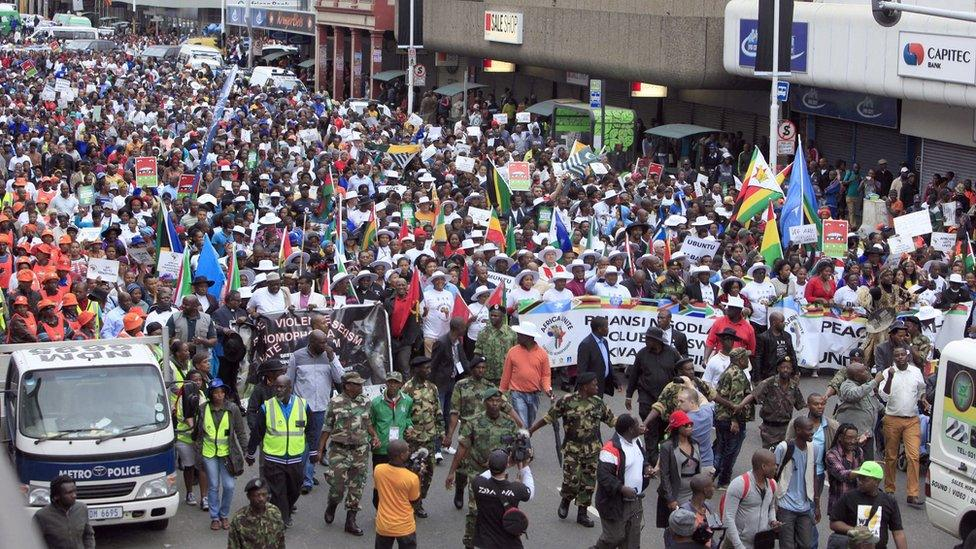
The South Africa xenophobia situation worsened after citizen-led groups and anti-immigration campaigners reportedly issued a June 30 deadline for undocumented foreign nationals to leave the country. Thousands of protesters later marched in several cities, demanding tougher action on illegal immigration.
South African President Cyril Ramaphosa met with some protest leaders before the demonstrations and urged restraint. While acknowledging public concerns over immigration, he warned against intimidation and violence, stressing that some foreign nationals in South Africa are legally resident.
That distinction has become central to the dispute. South African authorities have argued that some returnees were undocumented, while Nigerian officials and community leaders insist that many Nigerians became vulnerable because of delays in passport renewal, permit processing and immigration documentation.
Nigerian community leaders in South Africa say the problem is not always deliberate illegality. According to them, many Nigerians entered South Africa through lawful channels but later struggled to renew passports, residence permits, work permits and business permits. Some reportedly spent large sums trying to regularise their documents without success.
https://ogelenews.ng/south-africa-xenophobia-269-nigerians-return-as-emb…
This administrative failure has now become a serious diplomatic matter. Nigerians who cannot renew passports or permits are more exposed to harassment, arrest, extortion and mob suspicion. In a climate already poisoned by South Africa xenophobia, expired documents can quickly become a weapon against migrants.
The Nigerian Citizens Association South Africa has urged Abuja to engage Pretoria more strongly on documentation, welfare and protection. Its leaders argue that evacuation alone is not enough. They want the Nigerian government to push for mobile passport enrolment, faster consular services and better bilateral engagement with South African immigration authorities.
There are also concerns over reported killings involving Nigerians in South Africa. Nigerian officials have demanded investigations into recent deaths and have said the mission is engaging South African police to establish the facts. Until those investigations are concluded, responsible reporting must avoid unverified claims, but the pattern of fear among Nigerians remains undeniable.
The South Africa xenophobia crisis is not new. Anti-foreigner violence has erupted repeatedly over the years, often driven by unemployment, poverty, poor service delivery and public anger over illegal immigration. Migrants from other African countries are frequently blamed for jobs, crime and pressure on public services, even when such claims are not supported by evidence.
For Nigeria, the matter goes beyond emergency flights. It touches diplomacy, African solidarity, citizen protection and the dignity of Nigerians abroad. South Africa and Nigeria are two of Africa’s biggest economies, but repeated attacks on Nigerians have strained relations and exposed the weakness of continental institutions in protecting African migrants within Africa.
The Federal Government must now pursue three urgent goals. First, it must complete the evacuation of Nigerians who voluntarily want to return. Second, it must protect Nigerians who choose to remain in South Africa and ensure that they are not abandoned to mob hostility. Third, it must engage South Africa on immigration bottlenecks that leave lawful migrants trapped in documentation uncertainty.
South Africa also has a duty to enforce immigration law without encouraging vigilante justice. No country is expected to ignore illegal immigration, but no democratic state should allow mobs to determine who belongs, who works or who receives public services.
As more Nigerians return home, the human cost of South Africa xenophobia is becoming clearer. Families are leaving businesses, homes, jobs and years of struggle behind. For many, returning to Nigeria is not a celebration. It is a painful decision made in the name of safety.
The 269 Nigerians who landed in Lagos are therefore more than statistics. They are evidence of a widening crisis that requires firm diplomacy, humane policy and honest leadership from both Abuja and Pretoria.
For now, the evacuation continues. But unless Nigeria and South Africa confront the deeper issues behind South Africa xenophobia, the flights may only bring temporary relief while the wounds remain open.