












2027 election government spending
Economic experts have warned that rising 2027 election government spending could place Nigeria’s fragile fiscal stability under fresh pressure, with concerns mounting over debt sustainability, inflation and increased political expenditure ahead of the next general elections.
The warning followed the release of a Coronation Economic Note reviewing Nigeria’s Q4 2025 debt profile, which described the country’s fiscal consolidation efforts as “fragile” despite recent attempts to stabilise public finances. The report warned that the 2026–2027 political cycle may trigger a surge in government spending capable of weakening recent debt-management gains.
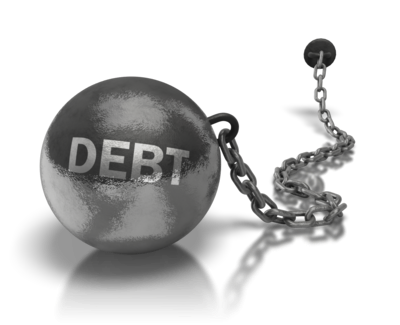
According to the report, Nigeria’s total public debt has climbed to about N159.28tn, while the country’s debt-service-to-revenue ratio reached an estimated 113 per cent in early 2025. This means the Federal Government was spending more on debt servicing than it generated in total revenue.
That is the central fear surrounding 2027 election government spending. Election periods in Nigeria are historically associated with increased public expenditure, political patronage, liquidity injection and pressure on fiscal discipline. Economists warn that if spending rises aggressively without matching revenue growth, the country could face renewed macroeconomic instability.
The Coronation report reportedly described Nigeria’s fiscal consolidation story as “aspirational” rather than firmly established, warning that excessive pre-election spending may become a major risk variable in the coming political cycle.
This concern is already reflected in broader budget trends. Earlier reports showed that the Federal Government expanded the proposed 2026 budget from N58.4tn to N68.3tn, while increasing its borrowing plan to about N29.2tn. Analysts warned that persistent borrowing and widening fiscal deficits could push the country closer to a debt trap if repayment discipline weakens.
The 2027 election government spending debate is particularly sensitive because Nigeria is still dealing with inflationary pressure, exchange-rate volatility and high living costs. Although authorities argue that recent reforms have improved fiscal outlook and revenue generation, many households continue to struggle with rising food and transport costs.
Economic analysts fear that politically induced spending may inject excess liquidity into the economy, weaken anti-inflation measures and increase pressure on the naira. The Guardian had earlier warned that election-related spending could “stress-test” efforts by the Central Bank of Nigeria to stabilise inflation and exchange rates ahead of 2027.
The issue goes beyond campaign costs alone. Election seasons in Nigeria often involve increased government projects, political mobilisation, social intervention announcements and pressure to satisfy political constituencies. Critics argue that some of these expenditures are driven more by electoral calculations than long-term economic planning.
That is why the 2027 election government spending concern extends into debt management. Experts warn that borrowing to sustain politically motivated spending could create a cycle where Nigeria continues to finance old obligations with new debt.
The Coronation report reportedly warned that when a government spends more on debt servicing than it earns in revenue, it effectively rolls obligations forward instead of paying from actual cash flow.
https://ogelenews.ng/2027-election-experts-warn-pre-election-spending-ma…
This concern is amplified by recent budgetary provisions linked to the elections. Reports showed that the Federal Government earmarked about N135.22bn for election-related litigation and post-election adjudication ahead of the 2027 polls, while INEC projected a proposed election budget of roughly N873.78bn.
Although authorities say these provisions are necessary for credible elections and legal preparedness, critics argue that the scale of spending highlights how expensive Nigeria’s electoral process has become.
The 2027 election government spending warning also reflects historical experience. Previous election cycles have often coincided with increased fiscal deficits, pressure on foreign reserves and market uncertainty. Investors and financial institutions therefore closely monitor political spending patterns as election periods approach.
Some analysts worry that excessive public spending during politically sensitive periods could undermine investor confidence and weaken reform momentum. BusinessDay recently argued that Nigeria’s ongoing economic reforms may face serious credibility tests as election pressures rise closer to 2027.
Still, not all government spending during election periods is automatically harmful. Economists note that borrowing and public expenditure can support growth if directed toward productive infrastructure, healthcare, education, agriculture and industrial expansion. The major issue is whether spending is strategic or politically consumptive.
This distinction is important in the 2027 election government spending discussion. A country may increase spending responsibly if projects improve productivity and generate long-term economic returns. But if spending is driven mainly by short-term political calculations, the fiscal consequences can become severe.
Former officials and economists have therefore called for stronger transparency, budget discipline and monitoring ahead of the election cycle. They argue that Nigeria cannot afford another period of uncontrolled deficit expansion at a time when debt servicing already consumes a significant share of government revenue.
The private sector is also watching closely. Businesses worry that excessive election-related liquidity could increase inflation and borrowing costs, making operations more expensive. Financial markets often react cautiously when political spending appears disconnected from fiscal realities.
The 2027 election government spending concern is therefore not just about politics. It affects food prices, exchange rates, lending costs, investor confidence and the broader economy.
Meanwhile, opposition politics may further complicate fiscal planning. Nigeria’s political environment ahead of 2027 is already becoming tense, with defections, coalition breakdowns and intensified party mobilisation shaping the early electoral atmosphere.
Analysts warn that in such an environment, governments may face greater temptation to increase politically strategic spending in order to strengthen electoral positioning.
For ordinary Nigerians, however, the key issue is simple: whether public spending improves daily life or merely increases debt burdens without visible benefits.
The challenge for policymakers will therefore be balancing election-year realities with fiscal discipline. Nigeria needs stable infrastructure, social investment and economic growth, but it also needs credible debt management and sustainable public finance.
In the final analysis, the 2027 election government spending warning reflects growing anxiety about whether Nigeria can avoid the familiar cycle of election-season expenditure followed by inflation, rising debt and economic pressure.
Experts are not merely warning about politics. They are warning about fiscal sustainability itself.
If authorities maintain discipline, the election cycle may pass without major economic disruption. But if spending expands aggressively without accountability or productive returns, the consequences could extend far beyond the ballot box.
https://punchng.com/2027-election-experts-warn-of-surge-in-govt-spending