













Asaba transformer levies
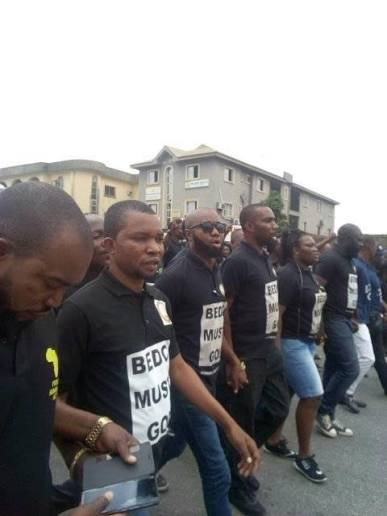
Residents of Asaba, the Delta State capital, have protested repeated financial contributions demanded within their communities for the repair and maintenance of electricity transformers, amid persistent power outages and growing frustration over unreliable supply.
The residents complained that the burden of keeping electricity infrastructure functioning has increasingly fallen on consumers who already pay electricity bills and, in many cases, spend additional money on generators, fuel and alternative energy.
At the centre of the dispute are the Asaba transformer levies, which residents say have become a recurring response whenever transformers serving their neighbourhoods develop faults.
For households already dealing with rising living costs, the prospect of contributing repeatedly to electricity infrastructure has become difficult to accept.
The protest therefore raises a fundamental question for the electricity sector: if consumers are already paying tariffs for electricity services, who should pay when a distribution transformer fails?
Under the Nigerian Electricity Regulatory Commission’s consumer protection position, the answer is clear. Transformers, poles and related distribution infrastructure are ordinarily the responsibility of electricity distribution companies, not communities.
Residents Kick Against Asaba Transformer Levies
The protesting residents expressed anger over what they described as repeated contributions for transformer repairs and other electricity-related expenses.
Their complaint is not simply that they have experienced power outages.
It is that restoration of supply allegedly keeps returning to the same formula: residents are asked to contribute money before infrastructure problems can be resolved.
That is what has made the Asaba transformer levies particularly controversial.
For many families, electricity already comes with several costs.
There is the official electricity tariff.
There is the cost of prepaid meter recharge for metered customers.
Unmetered consumers may still contend with estimated bills.
During prolonged outages, households buy petrol or diesel to run generators.
Businesses must do the same if they want to remain operational.
Adding another community levy for transformer repair can therefore amount to paying several times for one basic service.
NERC Says Consumers Should Not Repair DisCo Transformers
The regulatory position gives the residents’ complaint additional weight.
NERC states that it is not the responsibility of an electricity customer or community to buy, replace or repair transformers, poles and related equipment used in supplying electricity.
The regulator has also specifically addressed situations where a transformer develops a fault and a distribution company asks residents to contribute money for repairs.
According to NERC, consumers are not required to pay for the repair or replacement of a distribution company’s assets, except where it has been established that customers wilfully destroyed the infrastructure.
This means the controversy surrounding Asaba transformer levies cannot be treated merely as a disagreement between residents and electricity officials.
It is a consumer-protection issue.
Where electricity infrastructure belongs to a distribution company, the responsibility for maintaining that infrastructure ordinarily remains with the utility.
Communities Can Invest, But There Must Be an Agreement
There is, however, an important exception.
NERC recognises that some communities may voluntarily choose to provide funding to accelerate the provision or restoration of electricity infrastructure.
But such an arrangement is not supposed to operate like an informal neighbourhood collection.
The regulator says customers who wish to finance electricity assets should do so under an agreed investment arrangement with the distribution company.
That agreement should spell out the cost of the infrastructure and how the community will recover its investment.
This distinction matters in the debate over Asaba transformer levies.
There is a big difference between residents voluntarily financing a transformer under a properly documented agreement that provides for reimbursement and residents repeatedly contributing money because electricity will otherwise remain off.
One is a regulated investment.
The other raises serious questions about whether consumers are being made to assume responsibilities that belong to the electricity company.
Asaba Has Faced Repeated Electricity Complaints
The current frustration also has a history.
Electricity supply in Asaba and surrounding communities has generated complaints over several years.
Earlier in 2026, residents in parts of Asaba complained about prolonged and irregular supply from the Benin Electricity Distribution Company.
Communities around Asaba have also previously reported situations where damaged electricity infrastructure remained unattended for weeks or months.
In July, residents in the Ezenei area complained that they had been without power for nearly two months after a rainstorm damaged electricity poles.
They said the damaged infrastructure had been reported to BEDC but supply had not been restored at the time of their complaint.
Against that background, the latest controversy over Asaba transformer levies reflects a broader problem rather than an isolated disagreement.
Residents want electricity infrastructure to be repaired quickly, but many are increasingly unwilling to finance repairs from their own pockets.
Businesses Pay Heavily for Blackouts
For a household, a power outage is inconvenient.
For a small business, it can be financially devastating.
Consider a barber running electric clippers and air conditioners.
A fashion designer depends on sewing and pressing equipment.
A restaurant needs refrigerators and freezers.
A welder requires electricity to work.
A cybercafé, printing shop, pharmacy or supermarket cannot function normally through prolonged outages.
When public electricity disappears, these businesses move to generators or solar installations.
Fuel costs then become part of operating expenses.
Those costs eventually appear in the prices customers pay.
That is why repeated Asaba transformer levies are not simply a residential issue.
They have economic consequences.
A business owner who pays electricity bills, buys fuel during blackouts and then contributes money to repair public electricity infrastructure faces a cost structure that makes survival increasingly difficult.
https://ogelenews.ng/power-outage-asaba-residents-protest-repeated-trans…
Paying for Darkness Creates Public Anger
There is perhaps no electricity complaint more frustrating to Nigerian consumers than receiving a bill during a prolonged blackout.
NERC’s consumer regulations provide mechanisms for customers to challenge billing disputes.
The regulator also says unmetered customers should be billed according to approved estimated-billing methodology and applicable caps.
For communities experiencing extended outages, accurate billing becomes even more important.
Residents should not be made to pay for electricity they did not consume.
The combination of unreliable supply, electricity bills and Asaba transformer levies can therefore create exactly the kind of resentment now being expressed by residents.
Consumers want to understand what they are paying for.
If they buy electricity through tariffs, they reasonably expect the infrastructure required to deliver that electricity to be maintained.
BEDC Has Responsibility to Explain
The Benin Electricity Distribution Company serves Delta State as part of its electricity distribution franchise.
The company therefore has a responsibility to provide clear explanations whenever communities face prolonged transformer-related outages.
If the transformer has failed, residents should know the nature of the fault.
If replacement is required, they should know the expected timeline.
If supply is delayed because of another network problem, that should also be communicated.
What should not become normal is uncertainty.
The dispute over Asaba transformer levies will become more difficult to resolve where consumers do not know whether a contribution was requested by BEDC officials, community electricity committees, private technicians or other actors.
That distinction should be investigated.
Residents should also insist on receipts and written documentation whenever money is requested in connection with electricity infrastructure.
Communities Should Document Every Payment
One practical lesson from this controversy is the importance of documentation.
Communities should avoid handing over cash simply because someone claims electricity cannot be restored without payment.
If money has already been contributed, residents should preserve:
receipts;
bank-transfer evidence;
minutes of community meetings;
letters sent to BEDC;
names and official designations of persons who requested payments;
photographs of damaged equipment;
and correspondence concerning repair work.
Such records can become crucial if complaints over Asaba transformer levies are escalated to BEDC management or NERC.
Verbal allegations are harder to investigate.
Documents create an evidence trail.
NERC Provides a Complaints Process
Residents do not have to end their protest on the street.
NERC provides a formal complaints procedure for electricity consumers.
A complaint should first be submitted in writing to the customer-care unit of the electricity distribution company.
Consumers should obtain acknowledgment that the complaint was received.
Where the matter is not satisfactorily resolved, the customer can escalate it to the appropriate NERC Forum Office.
A further appeal can ultimately be made to the Commission.
That process is particularly useful for residents challenging Asaba transformer levies because NERC has already stated its policy on consumer-funded transformer repairs.
The question then becomes whether what is happening in individual Asaba communities complies with that policy.
Transformer Maintenance Cannot Become Permanent Self-Help
Nigeria has a long history of communities providing infrastructure for themselves.
Residents contribute money for roads.
Communities provide boreholes.
Neighbourhoods employ private security.
Parents sometimes support public schools.
And electricity consumers have repeatedly bought cables, poles and transformers simply because waiting for formal intervention can mean months in darkness.
That spirit of communal self-help is admirable.
But it can also allow institutions responsible for public services to transfer their responsibilities quietly to citizens.
That is the danger behind repeated Asaba transformer levies.
If residents repair a transformer today, replace cables tomorrow and buy poles next month, the question eventually becomes: what exactly is the electricity tariff paying for?
NERC itself says the cost of electricity distribution assets is incorporated into the system through tariffs and that distribution companies should finance infrastructure from revenues, loans or shareholder funds.
Residents Have Obligations Too
Consumer rights do not mean consumers have no responsibilities.
Residents must pay legitimate electricity bills.
They must not bypass meters.
They must not vandalise or tamper with electricity installations.
Communities should protect transformers and cables from vandalism.
They should report suspicious activity around electricity infrastructure.
Where customers deliberately destroy electricity assets, they can be held responsible.
This balance is necessary.
BEDC has obligations to its consumers.
Consumers also have obligations to the electricity system.
But routine transformer maintenance should not be shifted to residents merely because communities are desperate for power.
The Larger Question Behind the Protest
The dispute over Asaba transformer levies is ultimately about trust.
Residents want to know that when they pay for electricity, the company responsible for delivering it will maintain the network.
BEDC needs communities to pay legitimate bills and protect electricity assets.
NERC is expected to ensure that both sides comply with the rules.
Where that relationship works, communities should not need street protests before failed transformers receive attention.
Where it fails, residents begin to rely on self-help.
And once self-help becomes permanent, accountability disappears.
The latest protest should therefore prompt more than another promise to restore electricity.
BEDC should establish the condition of the affected transformers, clarify responsibility for the reported levies and provide residents with a credible restoration timetable.
NERC should investigate any complaint suggesting that customers are being compelled to finance distribution assets outside the approved framework.
And residents should document every demand for money rather than surrendering to informal collections simply because darkness has become unbearable.
Asaba residents are not asking for free electricity.
They are asking for a basic principle to be respected.
They will pay for the electricity they consume.
The electricity company should maintain the infrastructure required to deliver it.
https://nerc.gov.ng/need-help/services/consumer-rights-obligations/?utm_source=chatgpt.com