


















By Ogele News Political Desk | Abuja | October 26, 2026
The Independent National Electoral Commission (INEC) has assured Nigerians that artificial intelligence will not determine the outcome of the 2027 general elections, insisting that the constitutional responsibility of choosing political leaders belongs exclusively to eligible voters.
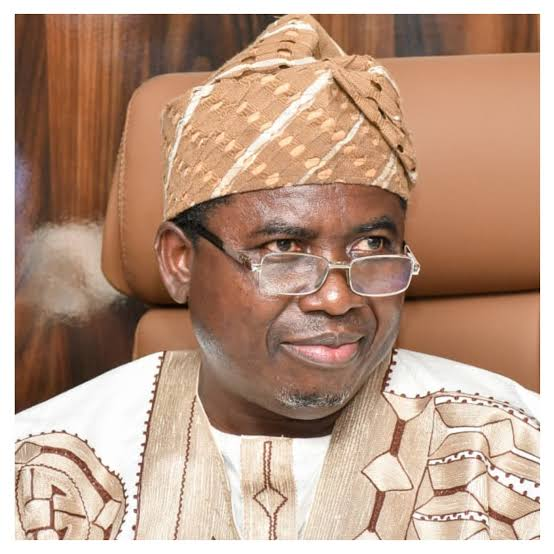
INEC Chairman, Professor Joash Amupitan, gave the assurance while explaining the commission’s increasing deployment of artificial intelligence in election administration, including logistics planning, voter accreditation, cybersecurity and the verification of electoral information.
The latest clarification comes amid growing public interest in the role of emerging technologies in Nigeria’s electoral system and concerns about their potential influence on democratic processes.
Speaking at the AI and Democracy Forum 2026 in Abuja, Amupitan maintained that technology must support electoral integrity rather than replace human judgment or undermine the authority of voters.
The chairman declared that algorithms would not be permitted to determine election outcomes, stressing that the power to choose Nigeria’s leaders remains with the electorate.
The INEC 2027 elections preparations are taking place at a time when artificial intelligence is increasingly capable of generating realistic images, reproducing human voices, analysing large volumes of information and influencing how citizens encounter political content.
Amupitan acknowledged these developments but maintained that the commission was establishing safeguards to ensure that artificial intelligence remains subject to human supervision, electoral laws and institutional accountability.
The assurances also raise important questions about how Nigeria intends to balance technological innovation with transparency, public confidence and the protection of voters’ democratic rights.
INEC 2027 Elections: Amupitan Rules Out Algorithm-Controlled Results
Amupitan’s central message is that no computer system should possess independent authority to determine who wins an election.
He argued that although artificial intelligence can identify patterns, process information and support administrative decisions, it cannot exercise the constitutional voting rights reserved for Nigerian citizens.
The INEC chairman explained that technology could improve operational efficiency but must remain subordinate to the institutions and procedures established by law.
According to him, important electoral functions, including result collation, voter accreditation and candidate qualification, would not be fully delegated to autonomous systems.
The distinction is particularly significant because automated tools are already being introduced into several aspects of election management worldwide.
Artificial intelligence can identify unusual data patterns or recommend logistical arrangements, but such outputs require appropriate verification before officials take consequential decisions.
INEC has consequently maintained that human oversight, statutory accountability and judicial review will remain part of Nigeria’s electoral process.
However, these assurances do not eliminate the need for the commission to explain how automated tools will be tested, monitored and audited.
The credibility of the promised safeguards will ultimately depend on their practical implementation.
How Artificial Intelligence Will Support Nigeria’s Elections
The INEC 2027 elections programme includes several proposed and existing applications of technology designed to improve election administration.
One area receiving particular attention is logistics.
Nigeria’s electoral commission must distribute personnel, ballot materials and electronic accreditation devices across thousands of polling units, including locations affected by difficult terrain, inadequate transport infrastructure and security challenges.
Amupitan explained that artificial intelligence-powered geographical analysis and predictive modelling could assist the commission in identifying efficient deployment routes and anticipating operational difficulties.
Such systems can analyse large amounts of logistical information more quickly than conventional manual procedures.
They may also help election officials determine which locations require additional attention before voting begins.
According to the chairman, INEC has tested predictive logistics optimisation during elections conducted under his leadership.
He said reports from civil society groups and election observers indicated improvements in the early deployment of materials and the commencement of voting.
Nevertheless, logistical improvements should be assessed through independently documented operational results rather than official claims alone.
For the INEC 2027 elections, the practical test will be whether technological assistance contributes to the timely arrival of election materials and the smooth conduct of voting across the country.
https://ogelenews.ng/inec-2027-elections-nigerians-not-algorithms
BVAS, Biometric Verification and Human Accountability
The Bimodal Voter Accreditation System (BVAS) remains an important component of Nigeria’s electronic voter accreditation arrangements.
The system uses biometric information to establish voters’ identities and support the accreditation process at polling units.
Amupitan explained that artificial intelligence-related components are already present in some electoral technologies, particularly systems involving facial recognition and fingerprint verification.
He also referred to earlier smart card readers as part of the commission’s technological development.
However, biometric matching should not be confused with giving an artificial intelligence system authority to determine an election winner.
Accreditation establishes whether a person is eligible to participate under the prescribed procedure. Election results depend on votes cast and counted according to electoral law.
This distinction is central to the INEC 2027 elections debate because public discussion sometimes treats every digital component as though it performs the same function.
Technology used to verify identity is different from software used to analyse logistics, detect anomalies or support result verification.
The commission must therefore communicate clearly about the purpose, limitations and oversight of each system.
Clearer public information could help voters understand what electronic election equipment does and what it does not do.
INEC Establishes Dedicated Artificial Intelligence Division
As part of preparations for the 2027 general elections, INEC has established an Artificial Intelligence Division within its Information and Communications Technology Department.
Amupitan disclosed the development during a world press conference and national stakeholders’ meeting on October 6, 2026.
The division is expected to help the commission strengthen cybersecurity, examine irregularities in electoral information and identify emerging threats associated with artificial intelligence.
INEC also announced that automated AI auditing tools had been integrated into its result verification arrangements.
These tools are intended to assist officials in identifying suspicious discrepancies that may require further examination.
However, the identification of an unusual data pattern is not itself proof of electoral malpractice.
An anomaly may result from an administrative error, an inaccurate data entry, a technical problem or another explanation requiring investigation.
Automated findings must therefore be assessed through appropriate evidence and established procedures.
The commission said its AI deployment would operate within a five-pillar governance framework requiring human oversight.
The complete governance policy was still being finalised when the announcement was made.
For the INEC 2027 elections, the existence of a dedicated AI division represents an administrative development, but public confidence will depend on the quality of its procedures, safeguards and accountability arrangements.
Deepfake Videos and Fake Political Messages Pose New Risks
One of the most serious challenges facing electoral institutions is the growing ability of artificial intelligence to create convincing but fabricated audiovisual material.
Deepfake technology can produce videos in which a person appears to make statements that were never spoken.
AI-powered voice cloning can similarly imitate the speech patterns of politicians, electoral officials and other public figures.
During an election campaign, such content could be used to circulate false statements, impersonate candidates or mislead voters about voting arrangements.
False announcements concerning polling dates, accreditation procedures, election postponements or purported results could also create confusion.
Amupitan warned that the growing sophistication of synthetic media threatens the information environment in which citizens make political decisions.
This concern extends beyond the election commission.
Political parties, journalists, social media platforms and civil society organisations all have roles in ensuring that information presented to voters can be properly examined.
The INEC 2027 elections will consequently require sustained efforts to identify manipulated material without suppressing legitimate political expression.
For media organisations, including Ogele News, the responsibility is to verify politically sensitive videos, audio recordings and claims before presenting them as authentic.
Yiaga Africa Demands Transparency and Auditable Systems
The Executive Director of Yiaga Africa, Samson Itodo, has emphasised the importance of transparency, accurate information and systems capable of independent examination.
Speaking at the AI and Democracy Forum, Itodo called attention to the need for reliable data and clear methodologies in the use of artificial intelligence.
His position reflects a broader concern that automated systems can influence important decisions without providing sufficient information about how their outputs are produced.
Election management institutions must therefore consider the possibility of errors, bias, flawed data and inappropriate reliance on automated recommendations.
An automated system may produce a plausible result while relying on incomplete or inaccurate information.
Without effective human review, such outputs could mislead decision-makers.
The INEC 2027 elections preparations will require arrangements that allow authorised officials and relevant oversight institutions to verify important technological processes.
Some cybersecurity information may legitimately need protection from public disclosure.
However, protecting sensitive technical details should not prevent appropriate public accountability concerning electoral procedures, safeguards and the treatment of identified errors.
More Than 103 Million Registered Voters Present Major Logistical Challenge
Nigeria’s electoral commission is preparing to conduct elections involving more than 103 million registered voters across 176,846 polling units in 774 local government areas.
The exercise covers presidential, National Assembly, governorship and state Houses of Assembly elections.
Amupitan has described the scale of the operation as one of the major administrative challenges confronting the commission.
He said INEC had completed 10 of 14 major operational milestones under the Electoral Act 2026 at the time of his October 14 address.
The chairman also disclosed that additional BVAS devices had been procured and that candidate nomination processes had been digitised.
According to him, the commission had processed more than 15,000 candidate nominations across 22 political parties.
These figures illustrate the volume of information, personnel and equipment involved in the election process.
However, the size of the voter register does not indicate how many citizens will eventually vote.
For the INEC 2027 elections, voter turnout, security, operational preparedness and compliance with electoral procedures will remain important considerations alongside technological readiness.
Experts Warn Against Manipulation of Voters Through AI
The discussion about artificial intelligence extends beyond the possibility of interfering with official election systems.
Digital platforms increasingly determine which political messages users encounter, how frequently they see them and how quickly information spreads.
Algorithm-driven recommendations can amplify genuine reporting, political advertising, misleading claims or fabricated content.
The risks include coordinated disinformation campaigns, impersonation, automated accounts and the creation of misleading narratives using synthetic images and voices.
Political advertising based on personal data also raises questions about transparency and the information available to citizens.
Participants at the October 2026 AI and Democracy Forum called for stronger safeguards against these threats.
They urged closer cooperation among electoral institutions, technology companies, journalists and civil society organisations.
These concerns do not establish that artificial intelligence will control election results. Rather, they show how the information environment surrounding an election can be affected even when voting and counting remain subject to established legal procedures.
For the INEC 2027 elections, protecting electoral integrity therefore involves both the administration of votes and the reliability of information available to voters.
Why INEC Must Go Beyond Public Assurances
Amupitan’s declaration addresses an important question, but assurances alone cannot establish the reliability of an electoral process.
Confidence in election technology depends on clear procedures, effective training, independent oversight and consistent application of the law.
Voters need to understand how their identities will be verified and how their votes will be counted.
Political parties and accredited observers need reliable information about electoral procedures and the mechanisms available for raising concerns.
Election officials must also understand when technological outputs require further examination.
The commission’s AI governance framework could become an important reference point if it clearly defines accountability for automated recommendations, data protection, human intervention and incident reporting.
Cybersecurity arrangements will also require continuous attention because threats can evolve during an election cycle.
The INEC 2027 elections programme should therefore be assessed not only by the technology deployed but also by the safeguards surrounding its use.
The essential question is whether technological improvements can contribute to a process that remains transparent, verifiable and accountable to citizens.
Nigerians Retain Final Authority Over Electoral Choices
Nigeria’s adoption of artificial intelligence in election administration reflects wider technological changes affecting governments and democratic institutions.
Automated tools can assist with complex operations, identify technical irregularities and support administrative planning.
They can also introduce new risks when deployed without sufficient oversight.
Amupitan has acknowledged both possibilities while maintaining that electoral decisions must remain subject to the authority of voters and the law.
For the INEC 2027 elections, this distinction is fundamental.
A computer system may assist officials in preparing for an election, but it cannot legitimately replace the choices citizens express through their votes.
Nor should automated recommendations remove the accountability of public officials responsible for administering the process.
As Nigeria approaches another general election, the commission faces the challenge of demonstrating that technological innovation can operate alongside transparency, lawful procedures and public scrutiny.
The electorate, rather than artificial intelligence, remains the source of democratic authority.
Whether INEC’s developing safeguards meet public expectations will depend on their implementation, the handling of election-day challenges and the ability of voters and observers to verify the process.
The commission’s central commitment is clear: the 2027 election results must reflect the votes of Nigerians, not decisions independently generated by algorithms.