
















Dangote Kenya refinery
Dangote Industries Limited has taken a major step toward building a $17bn refinery in Kenya, a project that could reshape East Africa’s fuel market and deepen Aliko Dangote’s influence in Africa’s downstream oil sector.
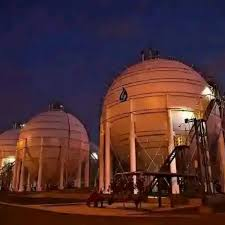
The proposed Dangote Kenya refinery is expected to process about 700,000 barrels of crude oil per day, making it one of the largest refining projects ever planned on the continent. The facility is expected to be located in Lamu, on Kenya’s coast, after months of speculation over whether the project would go to Kenya or Tanzania.
Company officials say the refinery will be financed through a mix of internal cash flow, bond issuances and a planned public offering. That financing model suggests Dangote Group wants to spread the burden of the massive investment while also opening room for broader participation in what could become East Africa’s most important industrial energy project.
The Dangote Kenya refinery is not just another private investment. It is a direct response to East Africa’s heavy dependence on imported refined petroleum products. Kenya, Uganda, Rwanda, Burundi, eastern Democratic Republic of Congo and parts of South Sudan rely heavily on imported fuel, much of it moved through the Kenyan coast and regional pipelines.
If completed, the project could give the region a stronger local refining base, reduce dependence on imported finished products and improve supply security. It could also position Kenya as a major energy logistics hub for East and Central Africa.
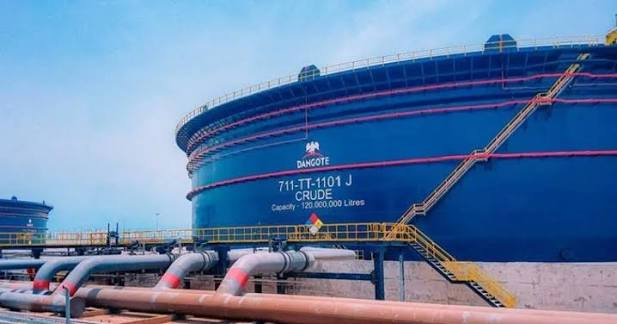
The project follows Dangote’s experience in Nigeria, where the Lekki-based Dangote Petroleum Refinery has become a major force in West Africa’s fuel supply. The Nigerian plant, with 650,000 barrels-per-day capacity, was built after years of delays, cost overruns and regulatory battles. It eventually became Africa’s largest refinery and a symbol of private-sector industrial ambition.
That history matters because the Dangote Kenya refinery will not be easy. A project of this size requires land, port access, crude supply, financing, environmental approval, pipeline connections, storage facilities, political stability and protection from unfair fuel dumping. It also requires patience.
Dangote has already made it clear in earlier comments that Kenya’s coast offers strategic advantages. Mombasa was previously mentioned because of its deeper port and stronger market base, but latest reports point to Lamu as the chosen location. Lamu also fits Kenya’s long-term infrastructure ambitions, especially its desire to expand port-led industrial development.
For Kenya, the refinery could be a major economic win. It could create jobs, attract related industries, increase government revenue and reduce exposure to global fuel supply shocks. A major refinery on the Kenyan coast would also strengthen the country’s regional influence, especially if it becomes a supplier to neighbouring landlocked economies.
But the Dangote Kenya refinery will also raise difficult questions. Kenya must ensure that the project does not become another high-profile announcement without delivery. Large refinery projects across Africa have often suffered from funding delays, political disputes, environmental concerns and weak supporting infrastructure.
There will also be questions about crude supply. Kenya is not a major crude oil producer. That means the refinery will likely depend on imported crude from the Middle East, Africa or other producing regions. The economics will depend on crude sourcing, shipping cost, refining margins and regional demand.
Environmental concerns will also be unavoidable. A 700,000 barrels-per-day refinery is a massive industrial facility. Communities around the proposed site will demand clarity on land acquisition, pollution control, coastal protection, compensation, jobs and long-term environmental safeguards.
Kenya’s government will therefore need to balance enthusiasm with scrutiny. The country should welcome investment, but it must also insist on transparency, proper environmental assessment and clear community engagement.
https://ogelenews.ng/dangote-kenya-refinery-17bn-project-signals-new-rac…
For Dangote Group, the Dangote Kenya refinery represents a bold continental play. After building a dominant refining asset in Nigeria, the company now appears to be looking eastward. If the project succeeds, Dangote would control major refining capacity on both sides of Africa, giving the group influence across West, Central and East African fuel markets.
The project could also change the politics of African energy. For decades, many African countries exported crude and imported refined fuel at higher cost. Dangote’s model challenges that pattern by pushing for large-scale refining within Africa.
Still, ambition alone will not guarantee success. The Nigerian refinery took longer and cost more than originally expected. The Kenyan project may face similar obstacles. Financing a $17bn project in a high-interest global environment will be difficult. Securing regional supply agreements will also be essential.
The Dangote Kenya refinery must therefore be judged by milestones, not headlines. The real test will be whether land is secured, financing is closed, permits are issued, contractors are appointed and construction begins at scale.
For now, the announcement is significant. It shows that Dangote is not slowing down after Nigeria. It also signals that Kenya is positioning itself as a major industrial and energy gateway for East Africa.
If properly executed, the Dangote Kenya refinery could reduce fuel import dependence, support regional trade and give East Africa a stronger voice in the downstream petroleum market. If poorly managed, it could become another expensive dream trapped between politics, funding and bureaucracy.
The stakes are high. A $17bn refinery is not just a business deal. It is a test of Africa’s ability to build, finance and manage strategic infrastructure on its own soil.
For Kenya, this could be the beginning of a new energy chapter. For Dangote, it could be the project that turns a Nigerian industrial empire into a truly continental refining powerhouse.