















2027 election security
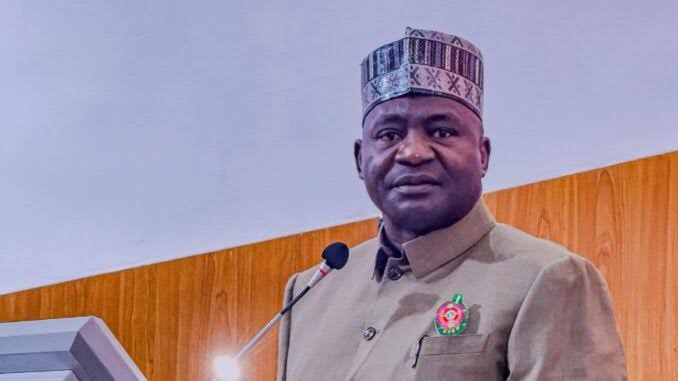
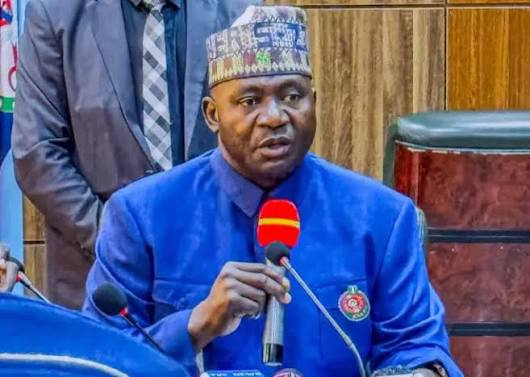
ABUJA, Nigeria — Minister of Defence, Gen. Christopher Gwabin Musa (retd.), has warned Nigeria’s security agencies against waiting until the last minute to deploy personnel for elections, insisting that credible polls require months of intelligence gathering, planning and coordinated security operations.
Musa said effective 2027 election security cannot be achieved by flooding communities with security personnel only days before voting begins.
Instead, he called for early threat assessments, intelligence-led planning, stronger cooperation among security agencies, deployment of technology, community engagement and strict professionalism by personnel assigned to election duties.
The Defence Minister spoke on Tuesday at the 8th edition of the Blueprint Newspapers Public Lecture, Impact Series and Awards Ceremony at the Bola Ahmed Tinubu International Conference Centre in Abuja.
The event, themed “Security Challenges and Integrity of Nigeria’s 2027 Elections,” brought together political leaders, security stakeholders and government officials to examine threats that could undermine the credibility of the next general elections.
Musa’s intervention comes as political activities intensify ahead of 2027 and raises a fundamental question for security authorities: how early should Nigeria begin preparing to protect an election involving thousands of voting locations and millions of voters?
2027 Election Security Must Begin Months Ahead
The Defence Minister’s central argument is that 2027 election security should begin long before election day.
According to Musa, deploying personnel shortly before voting may create a visible security presence but does not address threats that develop over several months.
Election-related insecurity can take different forms.
Political thugs may be recruited and armed.
Communities with existing conflicts may become more volatile as political competition intensifies.
Misinformation can spread online.
Threats may be made against candidates, electoral officials or voters.
Criminal organisations can also exploit election periods when security resources are stretched.
Identifying such risks requires intelligence before they become emergencies.
That is why Musa’s warning against last-minute deployment deserves attention beyond the security establishment.
Election security should be preventive, not merely reactive.
Intelligence Gathering Central to Musa’s Plan
Intelligence is one of the foundations of the Defence Minister’s proposed framework.
Effective 2027 election security, he argued, requires authorities to identify possible threats before election day.
This means security agencies must understand local conditions.
A security strategy for a community experiencing communal violence may differ from what is required in an urban centre where the principal concerns are political thuggery or ballot disruption.
Likewise, areas facing terrorism, banditry or kidnapping present different operational challenges.
Intelligence gathering allows security agencies to allocate personnel and resources according to actual risks rather than simply deploying the same security model everywhere.
Musa’s approach therefore shifts attention from the number of personnel deployed to the quality of preparation behind the deployment.
Defence Minister Calls for Inter-Agency Coordination
Another major element of the proposed 2027 election security framework is stronger cooperation among Nigeria’s security institutions.
Election security is not handled by one agency.
The Nigeria Police Force traditionally plays the leading role in maintaining law and order during elections, but other security and law-enforcement institutions can provide support depending on operational requirements.
Without proper coordination, multiple agencies operating simultaneously can create confusion.
Personnel need to understand command arrangements, responsibilities, communication channels and rules governing their deployment.
Coordination also becomes critical when incidents require rapid reinforcement.
A disturbance at a polling location can escalate quickly if security agencies cannot communicate effectively.
Musa’s call therefore recognises that deploying thousands of personnel means little if they operate as disconnected units.
Cyber Threats Could Challenge 2027 Elections
The Defence Minister also drew attention to the changing nature of election threats.
Security is no longer confined to armed men at polling stations.
Cyber threats and misinformation are becoming increasingly important considerations in 2027 election security.
Musa warned that Nigeria’s next elections could face cyberattacks and digitally driven misinformation capable of undermining public confidence in the process.
This is particularly important because election administration increasingly relies on technology.
Digital systems are used for voter registration, accreditation, communication and transmission or publication of electoral information.
Protecting those systems therefore becomes part of protecting the election itself.
Cybersecurity planning should include attempts to disrupt systems, compromise data or impersonate legitimate institutions.
But misinformation presents a different problem.
False claims about election results, violence or voting procedures can spread rapidly on social media.
A fabricated message circulated widely enough could discourage voters from travelling to polling centres or provoke unnecessary tension.
Technology Should Strengthen Election Protection
Musa’s framework includes greater use of technology in election security.
Technology can improve surveillance, communication and situational awareness.
Security commanders can use digital tools to monitor incidents, coordinate deployments and identify areas requiring reinforcement.
But technology is not a substitute for trained personnel.
The success of 2027 election security will depend on how effectively technological tools are integrated into operational planning.
Systems must work when needed.
Personnel must understand how to use them.
Communication networks must remain reliable.
Cybersecurity must protect sensitive information.
Nigeria has previously experienced situations where technological expectations exceeded actual operational performance.
Authorities therefore have more than a year to test systems rather than discovering weaknesses during voting.
Community Engagement Is Essential
Another pillar identified by Musa is community engagement.
This aspect of 2027 election security is sometimes overlooked.
Security agencies cannot gather every piece of intelligence from headquarters.
Local residents often know when unfamiliar individuals arrive in their communities.
They may observe weapons being stockpiled or notice political tensions developing before violence occurs.
Traditional leaders, religious leaders, youth organisations, civil society groups and community associations can therefore become important sources of early warning.
But such cooperation depends on trust.
Residents are less likely to provide information when they fear retaliation or believe security agencies will not protect their identities.
Community engagement must consequently begin before election day.
Professionalism Could Determine Public Confidence
Perhaps one of the most important elements of Musa’s framework is professionalism and accountability.
Security personnel are expected to protect voters and electoral institutions without becoming political actors themselves.
That requirement is fundamental to 2027 election security.
A security officer deployed to an election should not determine which candidate succeeds.
The officer’s responsibility is to protect the process.
Personnel must therefore remain neutral regardless of political pressure.
They should protect voters, electoral officials, candidates and party agents equally.
Any security agency perceived as favouring a particular political party risks damaging confidence in the election.
Professional conduct is therefore not merely an internal disciplinary matter. It is part of electoral credibility.
Security Forces Must Avoid Voter Intimidation
There is another important balance to maintain.
Elections require security, but excessive or intimidating deployment can discourage participation.
Voters should feel protected rather than threatened when approaching polling units.
The objective of 2027 election security should therefore be to create an environment in which citizens can vote freely.
Security personnel should intervene against violence, intimidation, ballot disruption and other offences.
But ordinary voters complying with electoral rules should be able to cast their ballots without unnecessary interference.
This balance between security and civic freedom is especially important in areas with a history of election-related violence.
A visible security presence can reassure residents, but only when officers behave professionally.
Nigeria Has Time to Prepare for 2027
One advantage authorities currently possess is time.
Nigeria’s 2027 general elections are not taking place tomorrow.
That makes Musa’s warning particularly relevant.
Security agencies have an opportunity to conduct risk assessments, map vulnerable communities, strengthen intelligence networks and test communication systems.
They can also develop contingency plans for different scenarios.
If authorities wait until the final weeks before voting, many of those opportunities disappear.
This is the central logic behind the Defence Minister’s argument that 2027 election security cannot be treated as an emergency deployment exercise.
Preparation should begin before political tensions reach their peak.
https://ogelenews.ng/2027-election-security
Recent Osun Election Offers Lessons
Nigeria’s recent off-cycle elections provide useful lessons for the 2027 preparations.
Ahead of the August 15 Osun governorship election, INEC mobilised a large pool of National Youth Service Corps members and began distributing election materials days before the poll. Security arrangements were similarly an important part of the preparations.
Off-cycle elections allow security agencies to concentrate resources in a single state.
A presidential and National Assembly election is different.
Security personnel must simultaneously cover polling locations across the federation.
That dramatically increases the logistical challenge.
The experience from state elections should therefore be studied now to identify operational weaknesses before 2027.
Election Security Goes Beyond Election Day
Musa’s framework also points towards a broader understanding of electoral security.
Threats can arise before, during and after voting.
Before elections, candidates and supporters may face attacks.
During voting, authorities must protect polling locations, election materials and officials.
After results are announced, disputes can trigger protests or violence.
Effective 2027 election security therefore requires planning for the entire electoral cycle.
That includes monitoring political campaigns and protecting lawful political gatherings without interfering with democratic competition.
Security agencies should also prepare for peaceful protests while maintaining the capacity to respond when demonstrations become violent.
Political Parties Have Responsibilities Too
Security agencies cannot guarantee peaceful elections on their own.
Political parties and candidates also have responsibilities.
Inflammatory rhetoric can increase tension.
Recruiting thugs or encouraging supporters to attack opponents directly undermines election security.
Politicians who demand peaceful elections publicly while promoting violence privately are part of the problem.
Political parties should therefore complement the 2027 election security framework by disciplining supporters and candidates who promote violence.
The law should apply equally to ruling and opposition parties.
That is essential if security arrangements are to retain public credibility.
Ogele News Analysis: Musa’s Warning Should Become a Timetable
The original headline, “Defence minister warns against last-minute deployments for election security,” is accurate, but it understates the substance of Musa’s intervention.
He did more than issue a warning.
He presented a six-point framework for protecting the integrity of Nigeria’s 2027 elections.
That makes the stronger story not simply what Nigeria should avoid but what it should start doing now.
Early planning.
Intelligence gathering.
Inter-agency coordination.
Technology and cyber defence.
Community engagement.
Professionalism and accountability.
The question is whether those principles will be converted into measurable preparations.
Nigeria does not need to wait until election month to discover security vulnerabilities.
Potential flashpoints can be mapped now.
Communication systems can be tested now.
Personnel can be trained now.
Cyber defences can be strengthened now.
Inter-agency command structures can be clarified now.
And communities can be engaged now.
That is the real significance of Musa’s warning.
Successful 2027 election security should be almost invisible to peaceful voters because the planning behind it has already prevented many threats from reaching polling stations.
The alternative is the familiar spectacle of emergency meetings, hurried deployments and heavily armed personnel arriving only when political tensions are already at their highest.
Nigeria still has time to choose the first approach.
The Defence Minister has now publicly outlined the framework. What matters next is implementation.