















DR Congo Ebola outbreak
The death toll from the DR Congo Ebola outbreak has risen above 2,000, marking another grim milestone in an epidemic that has spread faster than any previous Ebola outbreak recorded globally.
As of August 11, 2026, health authorities had confirmed 4,381 Ebola cases and 2,011 deaths in the Democratic Republic of the Congo, according to figures reported by Reuters.
The new figures mean the current epidemic has become the deadliest Ebola outbreak experienced by the country since the devastating 2018-2020 epidemic and the second-deadliest Ebola outbreak ever recorded worldwide.
Only the 2014-2016 West African Ebola epidemic, which affected Guinea, Liberia and Sierra Leone most severely, has produced a higher death toll.
The speed of the current DR Congo Ebola outbreak is particularly worrying.
The number of confirmed deaths rose from about 1,000 to more than 2,000 within weeks, while infections spread across several provinces despite intensified surveillance and public-health interventions.
More than 4,300 confirmed cases
The latest figures represent a sharp deterioration from July.
On July 15, the World Health Organization reported 2,124 confirmed cases and 828 deaths in the Democratic Republic of the Congo.
By July 30, the number had increased to 3,605 confirmed cases and 1,587 deaths.
Less than two weeks later, the death toll had crossed 2,000.
The rapid increase illustrates the extraordinary speed of transmission in the DR Congo Ebola outbreak.
Health officials have warned that the actual number of infections may be considerably higher than officially confirmed because surveillance remains difficult in some affected communities.
Many cases have emerged outside established contact-tracing networks, making it harder for health teams to identify infected individuals quickly and prevent further transmission.
Bundibugyo strain complicates response
The outbreak is caused by the Bundibugyo species of Ebola virus.
This presents a major challenge because the vaccines and treatments developed for the more familiar Zaire Ebola virus are not currently approved specifically for the Bundibugyo strain.
The World Health Organization says there is presently no approved vaccine or specific treatment for the species responsible for the DR Congo Ebola outbreak, although research into potential medical countermeasures continues.
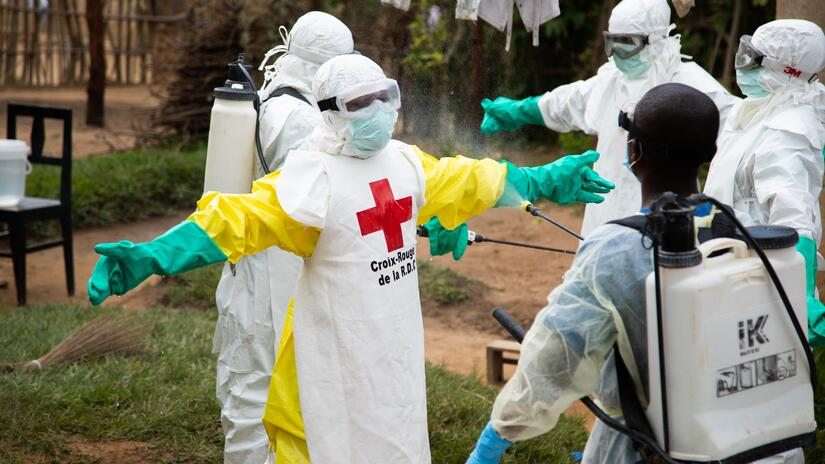
This means controlling the epidemic depends heavily on early detection, isolation of confirmed cases, infection prevention, proper clinical care, contact tracing and strong community participation.
Health authorities must therefore identify infections quickly enough to interrupt chains of transmission.
Outbreak began earlier than initially recognised
The epidemic was officially declared in May 2026, but investigators believe transmission may have started considerably earlier.
WHO first received an alert on May 5 concerning an unidentified illness with a high death rate in the Mongbwalu Health Zone in Ituri Province.
Among the early warning signs were reports that four health workers had died within four days.
Further testing eventually confirmed Ebola.
Evidence gathered during the investigation has suggested that transmission may have been occurring since January, meaning the virus could have spread for months before the full scale of the outbreak became clear.
That delay is now regarded as one of the important factors behind the rapid expansion of the DR Congo Ebola outbreak.
Conflict makes containment harder
The epidemic is unfolding in one of the most difficult environments imaginable for a major public-health emergency.
Eastern Democratic Republic of the Congo has endured years of armed conflict, displacement and weak public infrastructure.
Some communities are difficult for health workers to reach safely, while insecurity can interrupt surveillance, treatment and the delivery of medical supplies.
Road networks are also limited in several affected areas.
Large population movements further complicate attempts to trace people who may have been exposed to the virus.
WHO has described the combination of humanitarian crisis, insecurity, dense populations and extensive movement of people and goods as major obstacles to controlling the DR Congo Ebola outbreak.
These conditions make traditional disease-control measures much more difficult to implement consistently.
Deaths outside treatment centres raise concern
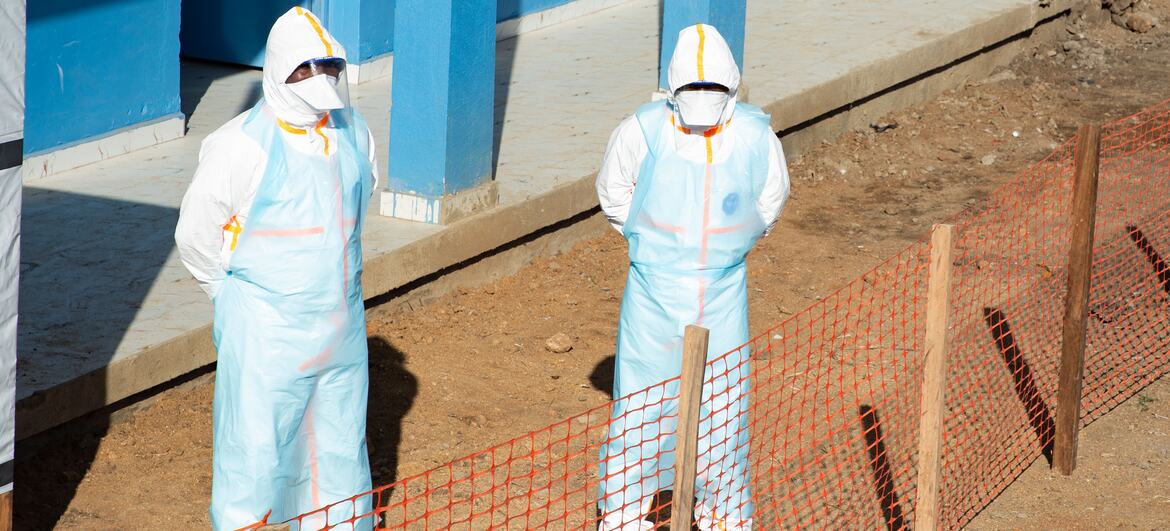
Another major challenge is that many Ebola deaths have occurred outside recognised treatment centres.
Public-health officials worry that infections occurring in homes or communities are less likely to be identified quickly.
They can also make it harder for health authorities to trace contacts and understand where transmission is occurring.
By late July and early August, officials were warning that surveillance systems were struggling to keep pace with the expanding epidemic.
Africa CDC and other health organisations have advocated more active community-based case finding instead of relying exclusively on conventional contact tracing.
The effectiveness of that strategy could prove critical to slowing the DR Congo Ebola outbreak.
WHO declared international health emergency
The World Health Organization has determined that the outbreak constitutes a Public Health Emergency of International Concern.
That designation is reserved for serious international health threats requiring coordinated action.
It does not mean that Ebola is spreading uncontrollably around the world.
Rather, it reflects the severity of the epidemic, the possibility of international spread and the need for sustained cooperation among governments and global health organisations.
Uganda has also recorded infections connected with the broader outbreak.
The international response therefore involves surveillance along borders, clinical support, laboratory testing and efforts to prevent further regional transmission.
https://ogelenews.ng/dr-congo-ebola-outbreak

Health system under intense pressure
The outbreak has placed additional strain on health facilities already operating under difficult circumstances.
Healthcare workers must treat Ebola patients while continuing to provide essential services such as maternal healthcare, childhood vaccination and treatment for other diseases.
When hospitals become overwhelmed or communities become afraid to seek treatment, other health problems can worsen.
Reports from affected areas have indicated disruptions to routine health programmes, including childhood immunisation.
Containing the DR Congo Ebola outbreak therefore requires more than building Ebola treatment centres.
Authorities must also prevent the epidemic from weakening the wider health system.
International financing becomes critical
WHO and humanitarian organisations have repeatedly stressed that sustained funding is essential.
Disease surveillance requires trained personnel, protective equipment, laboratories, transport and communication systems.
Treatment centres also need reliable supplies and adequately trained health workers.
WHO warned in July, when the death toll passed 1,000, that insufficient financing could slow the response.
The crisis has since deteriorated considerably, with deaths now more than double that level.
International assistance has increased, but officials continue to warn that a prolonged epidemic would require sustained financial and logistical support.
Lessons from earlier Ebola outbreaks
The Democratic Republic of the Congo has extensive experience confronting Ebola.
The virus was first identified in 1976 near the Ebola River in what was then Zaire.
Since then, the country has experienced numerous outbreaks.
Its 2018-2020 epidemic was previously the second-largest Ebola outbreak globally. That crisis occurred primarily in North Kivu and Ituri and was also complicated by conflict and public mistrust.
The current DR Congo Ebola outbreak, however, has expanded with unusual speed.
That makes lessons from previous outbreaks especially important.
Early detection, trusted community engagement and effective infection-control measures have repeatedly proven essential to reducing transmission.
Public cooperation also matters because disease-control measures are difficult to enforce successfully where communities distrust health authorities.
Why the death toll is significant
Crossing 2,000 confirmed deaths is more than a statistical milestone.
It demonstrates that existing interventions have not yet brought transmission under control.
The number of confirmed cases has continued to rise substantially even as response operations expand.
Health authorities must therefore determine where transmission is occurring most rapidly and concentrate surveillance, medical personnel and community outreach in those locations.
The DR Congo Ebola outbreak also demonstrates the danger created when a virus spreads for an extended period before being fully detected.
Once transmission becomes established across multiple communities, stopping an epidemic becomes significantly more difficult.
What happens next
The immediate priority is breaking transmission chains.
That means identifying cases earlier, testing suspected infections quickly, providing appropriate treatment and finding people who may have been exposed.
Community involvement will remain essential.
Residents need reliable information about the disease and access to healthcare without fear or misinformation.
Authorities must also protect medical personnel and ensure treatment facilities can continue operating safely.
International partners will need to maintain financial support while helping Congo strengthen laboratory capacity, surveillance and health infrastructure.
The DR Congo Ebola outbreak will not be contained by emergency declarations alone.
Success will depend on whether health teams can reach infected communities quickly enough to stop transmission.
Ogele News perspective
The latest figures represent a serious warning to Africa and the international health community.
The Democratic Republic of the Congo has confronted Ebola repeatedly and has developed considerable expertise in managing outbreaks.
Yet the extraordinary growth of the DR Congo Ebola outbreak demonstrates how quickly previous gains can be overwhelmed when disease spreads amid conflict, displacement and weak infrastructure.
The outbreak also reinforces a lesson repeatedly demonstrated by infectious-disease emergencies: early detection matters.
Every delay gives a dangerous virus more time to establish new chains of transmission.
The fact that the current outbreak may have been spreading before it was officially recognised underscores the importance of local surveillance systems capable of identifying unusual illnesses quickly.
There is also an urgent need for continued research into vaccines and treatments effective against different Ebola species.
The lack of an approved vaccine specifically targeted at the Bundibugyo virus has left health authorities without one of the most powerful tools used during previous Zaire Ebola outbreaks.
For now, the battle against the DR Congo Ebola outbreak depends heavily on traditional public-health measures, strong clinical care and cooperation from affected communities.
Passing 2,000 deaths should intensify that effort.
It should not create panic.
Ebola can be contained when health authorities identify infections quickly, communities cooperate with public-health teams and sufficient resources reach affected areas.
The challenge facing Congo is that those conditions must be created while the country simultaneously confronts insecurity, displacement and an already strained health system.
The coming weeks will therefore be critical.
With confirmed cases already above 4,300 and deaths exceeding 2,000, containing the outbreak before it expands further must remain one of Africa’s most urgent public-health priorities.
https://www.who.int/emergencies/situations/ebola-outbreak—drc-2026