
















Edo mini-grid licence
The Edo State Government has taken another significant step towards improving electricity access and accelerating renewable energy development by granting a 7-megawatt (MW) mini-grid licence to indigenous energy company IZENERGY Limited.
The approval marks a major milestone in the state’s drive to attract private investment into the electricity sector while reducing dependence on Nigeria’s overstretched national grid. It also reflects the growing implementation of the Edo State Electricity Law 2025, which empowers the state to regulate electricity generation, distribution and licensing following the constitutional reforms that decentralised parts of Nigeria’s electricity market.
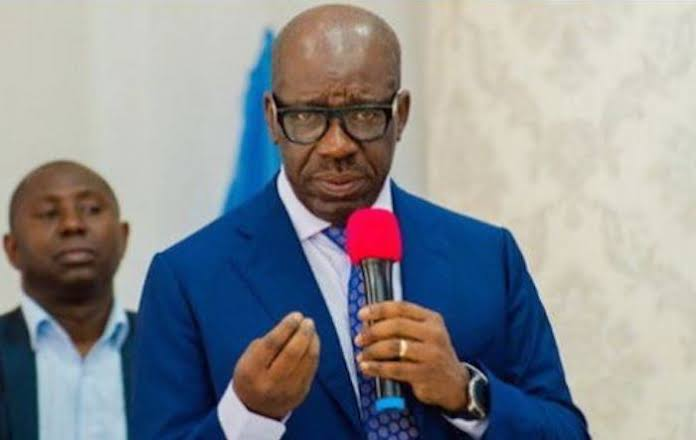
The Edo mini-grid licence was officially presented by the Commissioner for Power, Hon. Paul Usenbo, during a ceremony in Benin City.
According to the commissioner, IZENERGY successfully met all financial, technical and regulatory requirements prescribed under the state’s electricity law, making it eligible to generate and distribute electricity within Edo State.
Usenbo explained that before approving the licence, the government carried out extensive technical assessments and feasibility studies across the state’s three senatorial districts and all 18 local government areas to identify communities with significant electricity deficits and investment opportunities.
The Edo mini-grid licence represents more than just another regulatory approval. It signals the state’s determination to build a decentralised electricity market capable of attracting local and international investors while improving power supply to households, businesses and industries.
For years, unreliable electricity has remained one of the biggest obstacles to economic development in Edo State. Manufacturers, hospitals, schools, hotels and small businesses have depended heavily on diesel and petrol generators due to unstable supply from the national grid.
Government officials believe projects like the IZENERGY mini-grid will gradually reduce that dependence while lowering energy costs and supporting cleaner sources of electricity.
Speaking during the licence presentation, Commissioner Usenbo described the development as part of Governor Monday Okpebholo’s broader vision of building a modern electricity sector capable of supporting industrialisation and sustainable economic growth.
He noted that reliable electricity remains one of the strongest drivers of investment, employment creation and improved public services.
The Edo mini-grid licence also demonstrates the increasing role states are expected to play following the Electricity Act and subsequent state electricity laws, which now allow qualified states to regulate electricity generation and distribution within their jurisdictions.
Industry observers say decentralised electricity systems such as mini-grids have become increasingly important because they provide faster and more reliable solutions for underserved communities than relying solely on expansion of the national transmission network.
Unlike conventional grid expansion projects that often require several years and enormous capital investment, mini-grids can be deployed more quickly to supply electricity to residential communities, commercial centres, healthcare facilities and productive industries.
Renewable energy experts also point out that mini-grids powered by solar and hybrid technologies contribute to environmental sustainability by reducing carbon emissions and promoting cleaner energy alternatives.
The Edo mini-grid licence therefore aligns with Nigeria’s broader transition towards renewable energy and distributed electricity generation.
Across Nigeria, governments are increasingly embracing mini-grid projects to close the country’s electricity access gap. The Federal Government, through the Rural Electrification Agency (REA), recently announced the completion of 23 solar mini-grid projects serving about 50,000 Nigerians in underserved communities.
Similarly, several states have begun establishing their own electricity markets following the constitutional amendment that decentralised power sector regulation.
Edo has positioned itself among the leading states pursuing electricity reforms by introducing its own regulatory framework and encouraging indigenous companies to participate in power generation.
https://ogelenews.ng/edo-mini-grid-licence-izenergy
The Edo mini-grid licence awarded to IZENERGY is expected to encourage additional investors seeking opportunities in the state’s evolving electricity market.
Energy analysts believe increased competition among licensed operators could ultimately improve service quality while expanding electricity access across rural and urban communities.
The state government has repeatedly stated that improved electricity infrastructure remains central to its economic development agenda.
Reliable power is expected to stimulate manufacturing, agriculture, healthcare, education, information technology and other productive sectors that depend heavily on uninterrupted electricity.
Businesses operating in industrial clusters stand to benefit significantly if independent electricity projects reduce outages and lower operating costs.
For households, expanded electricity access could improve living standards by supporting refrigeration, digital learning, healthcare delivery and other essential services.
The Edo mini-grid licence also demonstrates growing confidence in indigenous Nigerian companies capable of developing modern renewable energy infrastructure.
Rather than depending solely on foreign investors, the state is encouraging local firms with proven technical and financial capacity to participate in solving Nigeria’s electricity challenges.
Experts say this approach strengthens local expertise, creates employment opportunities and retains more investment within the domestic economy.
As electricity demand continues to grow, decentralised generation projects are expected to play an increasingly important role alongside the national grid.
While the Transmission Company of Nigeria and distribution companies continue upgrading conventional infrastructure, state-regulated mini-grids offer complementary solutions capable of reaching communities that have historically experienced poor electricity supply.
The successful implementation of the IZENERGY project could therefore become a model for similar investments across Edo State and other parts of Nigeria.
Ultimately, the Edo mini-grid licence represents another practical step towards achieving a more reliable, resilient and diversified electricity sector capable of supporting long-term economic transformation.
For businesses, investors and residents alike, the licence offers renewed optimism that sustainable electricity solutions can be delivered through effective regulation, private sector participation and continued government support.
https://rea.gov.ng/?utm_source=chatgpt.com