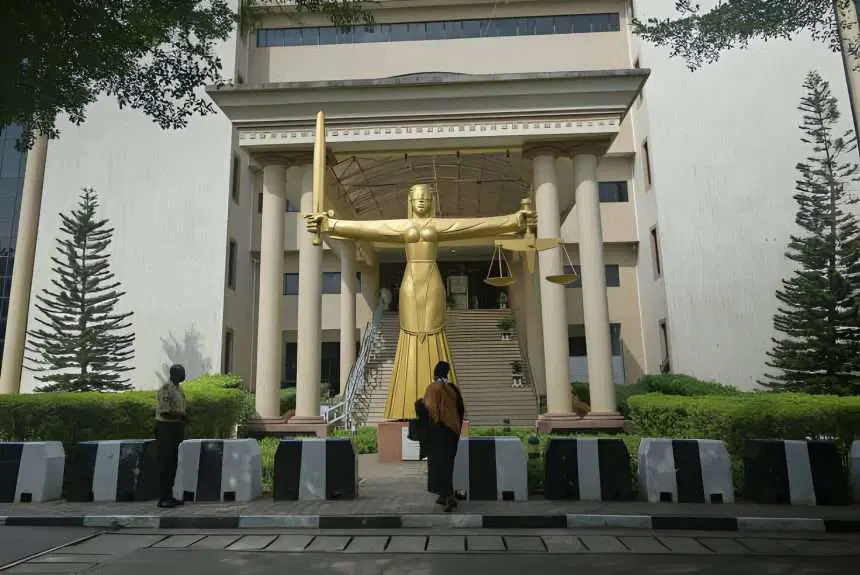


















FHC amends 2026 pre-election rules
The Federal High Court (FHC) has introduced significant amendments to its 2026 Pre-Election Matters Practice Directions, approving the use of virtual hearings, electronic filing and digital service of court processes as part of efforts to improve the speedy determination of election-related disputes before Nigeria’s 2027 general elections.
The revised rules, signed by the Chief Judge of the Federal High Court, Justice John Tsoho, are expected to modernise the handling of pre-election matters by allowing judges, lawyers and litigants to utilise technology while ensuring compliance with constitutional provisions governing fair hearing and access to justice.
According to the court, the amendments are intended to reduce delays, enhance judicial efficiency and strengthen confidence in the administration of electoral justice. (Punch)
The FHC amends 2026 pre-election rules, approves virtual hearings development represents one of the judiciary’s most significant procedural reforms ahead of the next election cycle.
Virtual Hearings Receive Official Approval
One of the major innovations introduced by the amended Practice Directions is the formal recognition of virtual hearings in pre-election matters.
Under the new rules, judges may conduct proceedings through approved electronic platforms where appropriate, provided the rights of all parties are adequately protected.
Legal practitioners believe the change could significantly reduce unnecessary adjournments while improving access to justice, particularly where parties or counsel are unable to attend proceedings physically.
The FHC amends 2026 pre-election rules, approves virtual hearings reform reflects the judiciary’s increasing adoption of technology to improve court administration.
Electronic Filing and Digital Service Introduced
The amended Practice Directions also strengthen the use of electronic filing systems and digital service of court documents.
Lawyers handling pre-election disputes will now be able to submit court processes electronically in accordance with procedures established by the Federal High Court.
Similarly, parties may receive official court documents through approved electronic channels where permitted under the revised rules.
The FHC amends 2026 pre-election rules, approves virtual hearings initiative is expected to reduce paperwork while improving administrative efficiency.
Why the Reforms Matter
Pre-election disputes often involve issues such as party primaries, candidate nominations, qualifications and compliance with the Electoral Act.
Because the Constitution imposes strict timelines for resolving such disputes, delays in court proceedings can significantly affect electoral processes.
The Federal High Court explained that the revised Practice Directions are designed to facilitate faster hearing and determination of these matters without compromising procedural fairness.
The FHC amends 2026 pre-election rules, approves virtual hearings decision therefore supports timely resolution of election-related litigation before the commencement of general elections.
https://ogelenews.ng/fhc-amends-2026-pre-election-rules
Legal Community Welcomes Digital Transformation
Many legal practitioners have welcomed the amendments, describing them as an important step toward modernising Nigeria’s judicial system.
According to constitutional lawyers, virtual hearings and electronic filing became increasingly important during the COVID-19 pandemic and have continued demonstrating practical benefits even after emergency restrictions ended.
Experts argue that digital court procedures can reduce costs, improve efficiency and increase access to justice while maintaining transparency.
The FHC amends 2026 pre-election rules, approves virtual hearings reform aligns Nigeria’s judicial administration with international best practices in court technology.
Safeguarding Fair Hearing
Despite embracing technology, the Federal High Court emphasised that the revised procedures do not diminish constitutional guarantees of fair hearing.
Judges remain responsible for ensuring that all parties receive adequate notice of proceedings, opportunities to present their cases and equal treatment throughout litigation.
Legal analysts note that technology should enhance rather than replace fundamental principles of justice.
The FHC amends 2026 pre-election rules, approves virtual hearings amendments therefore balance judicial innovation with constitutional safeguards.
Preparing for the 2027 Elections
With political activities expected to intensify in the coming months, election lawyers anticipate an increase in litigation relating to party primaries and candidate nominations.
Efficient judicial procedures will be essential to ensuring that disputes are resolved within constitutional deadlines.
Observers believe the revised Practice Directions will help reduce case backlogs while enabling courts to manage election-related matters more effectively.
The FHC amends 2026 pre-election rules, approves virtual hearings development demonstrates the judiciary’s proactive preparation for the legal challenges often associated with election seasons.
Looking Ahead
The success of the amended Practice Directions will depend largely on effective implementation, adequate technological infrastructure and continued cooperation among judges, lawyers and litigants.
Legal experts also encourage continuous training for judicial officers and court personnel to maximise the benefits of digital court administration.
As Nigeria prepares for another electoral cycle, the Federal High Court’s procedural reforms are expected to contribute to faster, more transparent and more efficient adjudication of pre-election disputes.
Ultimately, the FHC amends 2026 pre-election rules, approves virtual hearings initiative reflects the judiciary’s commitment to strengthening electoral justice through innovation while preserving the constitutional rights of all parties involved.