















Kano vehicle theft arrests
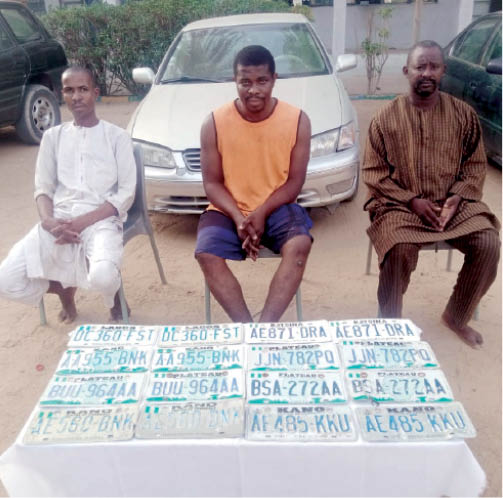
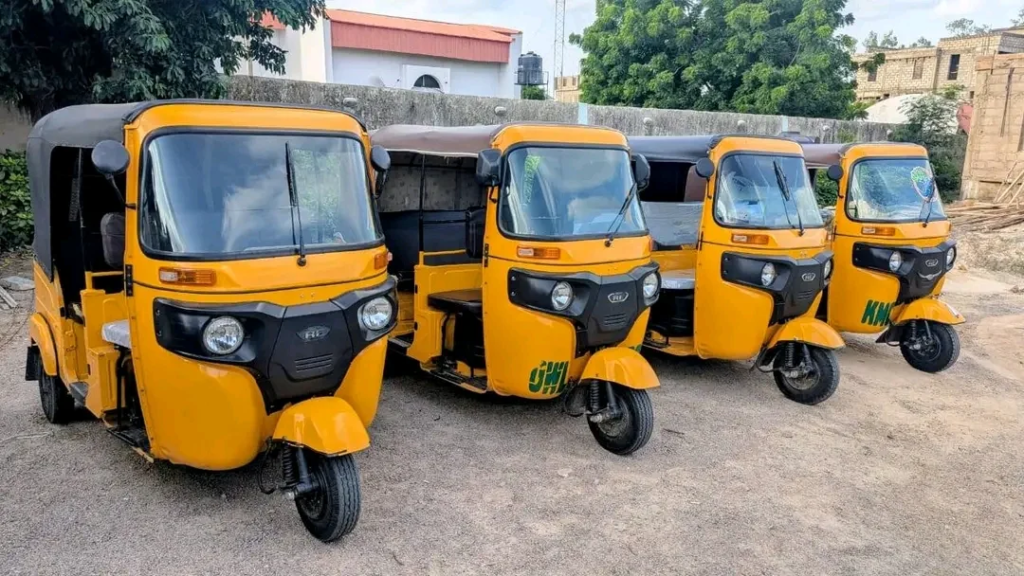
The Kano State Police Command has arrested three suspects in separate intelligence-led investigations into alleged vehicle theft, recovering four tricycles and a maroon Pontiac as detectives pursue other persons believed to be connected with the cases.
The latest Kano vehicle theft arrests followed operations that extended beyond the state, with investigators tracing one suspect to Katsina and another vehicle allegedly linked to Taraba State and Niger Republic.
Police Public Relations Officer, CSP Abdullahi Kiyawa, disclosed the development in a statement, saying the operations involved cooperation between police formations across state boundaries.
According to the command, the first investigation began after a commercial tricycle operator reported that his vehicle had been stolen after picking up a passenger along Hadejia Road.
The second case involved the recovery of a Pontiac vehicle from a suspect in Kano after police investigations allegedly traced its history outside the state.
Tricycle operator reports theft
Police said the first of the Kano vehicle theft arrests followed a complaint received at Bompai Police Division on August 4, 2026.
The complainant, identified as Abubakar Ali of Danmarke, Hotoro Quarters, told police that he was operating his tricycle and looking for passengers along Hadejia Road when he picked up a man identified as Muhammad Sani, 23.
According to the police account, Sani appeared to have injuries and had bandages around parts of his body.
Police alleged that the passenger later asked the tricycle operator to stop at a supermarket, ostensibly to purchase items.
After the rider left the tricycle, the suspect allegedly used another key to start the vehicle and drove away.
The allegation remains subject to police investigation and eventual judicial determination.
Suspect arrested following police alert
After the complaint was made, Bompai officers circulated information about the stolen tricycle to other police formations.
The alert eventually produced a breakthrough when officers attached to Bichi Police Division arrested Sani.
Investigators subsequently expanded the operation into Katsina State.
Police said this led to the arrest of another suspect, Aminu Saad, 33, and the recovery of four tricycles suspected to have been stolen.
The Kano vehicle theft arrests therefore raise questions about whether investigators are dealing with isolated thefts or an organised operation involving movement of stolen tricycles across state boundaries.
Police said efforts were continuing to locate other suspected participants.
Four tricycles returned to owners
One particularly important part of the police statement is that all four recovered tricycles have reportedly been returned to their legitimate owners.
For commercial operators, a tricycle is often much more than a means of transportation. It is a source of livelihood.
Losing one can immediately affect a family’s daily income and ability to pay for food, accommodation, education and other essential expenses.
The recovery following the Kano vehicle theft arrests therefore has direct economic importance for the victims.
However, returning the vehicles should not bring the investigation to an end.
Police will need to determine whether other tricycles were allegedly obtained through similar methods and whether there are additional suspects involved in receiving, moving or selling stolen vehicles.
Separate Pontiac case
The third suspect was arrested in a separate investigation.
Police identified him as Isah Yusuf, 23, of Titin Jajira, Rijiyar Lemo, Kano State.
According to the command, officers arrested Yusuf on July 25 and found him in possession of a maroon Pontiac vehicle without a registration number.
Police said the vehicle was suspected to have been stolen.
Yusuf allegedly told investigators that he purchased the vehicle from Niger Republic through an individual identified as Ashiru Mohammed, also known as Mai Gold.
Investigators subsequently alleged that the Pontiac had originally been stolen in Taraba State before being moved into Niger Republic and later returned to Nigeria.
If established through evidence, that route would make the Kano vehicle theft arrests particularly significant because it would point to movement of allegedly stolen property across both state and international boundaries.
Police seek owner of recovered Pontiac
Unlike the four tricycles, the recovered Pontiac had not been returned to its owner at the time the police statement was issued.
The Kano State Police Command appealed to anyone with a legitimate claim to the vehicle to come forward with valid proof of ownership.
Vehicle owners seeking to reclaim recovered property are normally required to provide documents capable of establishing ownership.
This protects investigators from releasing property to the wrong person.
The case also highlights the importance of keeping vehicle registration and ownership documents secure.
When a stolen vehicle is moved from one state to another, reliable documentation and identification details can become crucial to tracing it.
https://ogelenews.ng/kano-police-arrest-three-suspected-vehicle-thieves-…
Interstate cooperation behind investigation
One of the strongest lessons from the latest Kano vehicle theft arrests is the importance of cooperation among police formations.
The tricycle investigation began in Kano and subsequently led officers to Katsina.
The Pontiac investigation allegedly connects Kano with Taraba State and Niger Republic.
Criminal networks do not necessarily respect state boundaries.
A stolen vehicle can be moved hundreds of kilometres within a relatively short period, making information sharing among security formations essential.
Commissioner of Police Ibrahim Adamu Bakori praised the officers involved and stressed the value of intelligence-led policing.
For such strategies to work effectively, police commands must be able to communicate quickly when vehicles are reported stolen.
Kano has recorded previous tricycle theft cases
The latest operation is not an isolated event.
Earlier in April 2026, Kano police said they dismantled another suspected tricycle theft syndicate and recovered eight tricycles.
Three suspects were arrested in that investigation, according to the police account.
In February, six suspects were arrested over alleged involvement in stealing and selling tricycles in Kano State.
The pattern suggests that vehicle and tricycle theft remains a continuing law-enforcement challenge.
In May, Kano police also reported recovering two stolen cars and a tricycle in separate intelligence-led operations.
These previous cases give context to the latest Kano vehicle theft arrests without establishing that the suspects in the different investigations are connected.
Why commercial tricycle theft matters
Tricycles play a major role in urban and suburban transportation in Kano.
Thousands of people rely on them daily, while many operators depend entirely on fares for their livelihoods.
A stolen commercial tricycle can therefore impose immediate hardship.
Police efforts to recover vehicles and dismantle alleged theft networks can protect both property and livelihoods.
Transport associations can also assist by keeping accurate membership and vehicle records that make identification easier when property is recovered.
The Kano vehicle theft arrests also show why operators should promptly report stolen vehicles rather than wait several days.
Early reporting gives investigators a better opportunity to circulate identifying information before the vehicle is moved farther away.
Arrest is not conviction
Although police have announced three arrests, the men remain suspects.
This distinction is important.
Muhammad Sani, Aminu Saad and Isah Yusuf are entitled to the presumption of innocence until a competent court determines their guilt.
Police statements set out allegations and the preliminary findings of investigators, but those claims must eventually be supported by admissible evidence if charges are filed.
That is why Ogele News should avoid the original headline’s unqualified description of the men as “vehicle thieves.”
Responsible reporting on the Kano vehicle theft arrests requires consistent use of terms such as “suspect,” “alleged” and “according to police.”
Investigation should follow the wider network
The recovery of several vehicles raises important questions investigators should pursue.
Were the tricycles stolen by the same method?
Were they being prepared for resale?
Were registration or identifying details altered?
Were there people responsible for receiving the vehicles after they were allegedly stolen?
The Pontiac case raises additional questions because of the alleged movement between Nigeria and Niger Republic.
Police should establish how the vehicle crossed borders, who handled it at each stage and whether its movement formed part of a wider trafficking arrangement.
The Kano vehicle theft arrests will become significantly more important if investigators identify and dismantle a larger criminal network.
Public cooperation remains important
Police have repeatedly asked Kano residents to provide credible information about criminal activity.
Such cooperation can be especially useful in property crimes because neighbours, mechanics, transport operators and vehicle dealers may notice suspicious movement or sudden changes in ownership.
But citizens should report concerns to law-enforcement agencies rather than confront suspected offenders directly.
Security agencies have the responsibility to investigate and establish whether an offence has occurred.
Police should equally protect the confidentiality of people who provide useful intelligence.
Public trust is essential to intelligence-led policing.
Ogele News perspective
The recovery of four tricycles and a Pontiac vehicle is a welcome development, especially because police say the four tricycles have already been returned to their owners.
But the success of the Kano vehicle theft arrests should ultimately be measured by what happens next.
Investigators must establish whether the suspects acted independently or as part of wider networks.
Where sufficient evidence exists, prosecution should follow.
Where evidence does not support an allegation, suspects should not be kept indefinitely merely because their arrests were announced publicly.
The interstate and alleged cross-border dimensions make the investigations particularly worthy of attention.
Property stolen in Kano can be transported to another state. A vehicle allegedly stolen in Taraba may end up in Niger Republic before resurfacing elsewhere in Nigeria.
That reality requires security agencies to think beyond administrative boundaries.
The latest Kano vehicle theft arrests demonstrate the potential value of rapid intelligence sharing between police formations.
For the victims, however, the immediate measure of success is simpler.
Their property has been recovered.
For the police, the larger task remains: identify other suspects, establish the complete chain surrounding the recovered vehicles and ensure that anyone proven to have committed an offence is dealt with according to law.
That is how an arrest becomes a successful criminal investigation.
https://punchng.com/police-arrest-three-vehicle-thieves-recover-four-tricycles-in-kano/