
















Nasarawa underage mining ban
The Nasarawa State Government has banned children below the age of 18 from mining sites across the state and established a special enforcement team to tackle illegal mining, child labour and unsafe practices in mineral-producing communities.
The government said the Nasarawa underage mining ban applies across all 13 local government areas and prohibits minors from participating at mining sites not only as labourers but also as errand runners or food vendors.
Commissioner for Environment, Solid Minerals and Mining, Margaret Elayo, announced the measure at a press conference in Lafia on Friday, saying the government was moving to protect children from exploitation, hazardous working conditions and activities that could keep them out of school.
Under the directive, mining companies and site operators found engaging children could face arrest and prosecution.
Parents who allow their children to work at mining sites could also face sanctions under applicable child protection and mining laws.
The government said the measure was not designed to shut down legitimate mining but to establish a safer and more regulated industry.
Nasarawa underage mining ban targets child labour
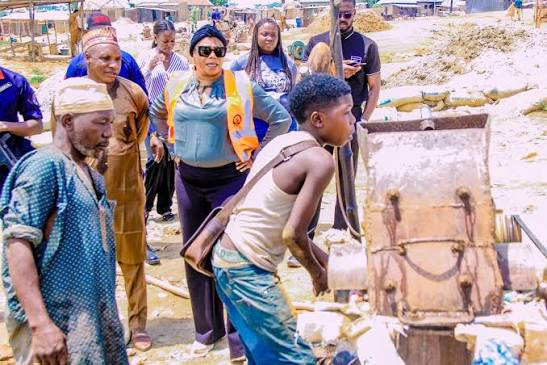
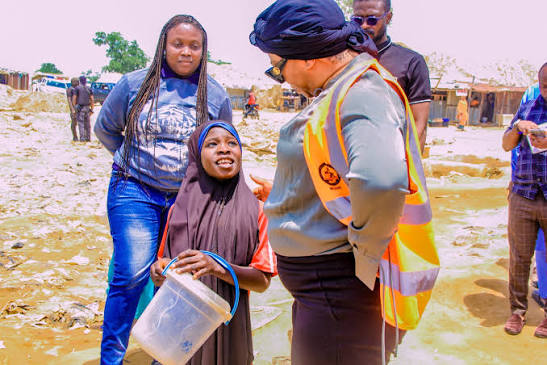
The government’s immediate concern is the reported presence of children at artisanal mining sites.
Elayo said information available to the ministry indicated that children were being exposed to potentially dangerous conditions at mining locations in Wamba, Nasarawa-Eggon and Kokona local government areas.
Some children, she said, were being used directly as labourers.
Others were reportedly performing support roles around mining locations.
The Nasarawa underage mining ban therefore goes beyond preventing children from digging for minerals.
The directive bars anyone below 18 from being found at mining sites as a labourer, errand runner or food vendor.
That broader definition is significant because children around informal mining economies may participate indirectly even when they are not involved in excavation.
The government says such exposure can interfere with education while placing children close to hazardous operations.
Special team to monitor mining communities
Enforcement will be handled through a special monitoring team empowered to visit mining sites and communities across Nasarawa.
The team is expected to identify operators conducting mining activities without the required licences and government clearances.
Where violations are established, the government says arrests and prosecution could follow.
Security agencies, traditional rulers and community leaders are also expected to participate in enforcing the Nasarawa underage mining ban.
That community component could prove important.
Many artisanal mining sites operate outside major urban centres, meaning enforcement based only on occasional inspections from Lafia may struggle to identify violations quickly.
Traditional and community leaders can potentially provide information about new mining sites, the use of children and operators working outside regulatory requirements.
Niger custody deaths influence new measures
The Nasarawa government’s announcement comes amid heightened scrutiny of illegal mining following the deaths of dozens of suspected illegal miners after arrests in neighbouring Niger State.
The detainees had been arrested during enforcement operations before multiple deaths were subsequently recorded in NSCDC custody.
Investigations are underway into the circumstances.
Elayo cited the Niger incident while explaining Nasarawa’s decision to strengthen monitoring of mining activities.
The cases are not identical, and the cause of the Niger deaths remains under investigation.
But the incident has increased attention on the risks surrounding unregulated mining, enforcement practices and the welfare of people involved in artisanal operations.
For Nasarawa, the government’s response is intended to prevent children from being exposed to an industry where unregulated operations can carry significant safety risks.
Mining companies told to employ adults
Under the new directive, mining companies are expected to employ workers who are at least 18 years old.
But age is only one part of the requirement.
Elayo said companies should properly train workers and provide appropriate safety equipment.
The Nasarawa underage mining ban therefore sits within a wider occupational safety message.
Mining can expose workers to physical injuries, unstable excavations, dust and other occupational hazards depending on the mineral, mining method and conditions at a particular site.
Simply replacing children with adults would not make an unsafe operation acceptable.
Government enforcement will therefore need to examine both who is working and the conditions under which mining is taking place.
https://ogelenews.ng/nasarawa-bans-under-18s-from-mining-launches-task-f…
Wamba, Nasarawa-Eggon and Kokona under spotlight
The government specifically identified Wamba, Nasarawa-Eggon and Kokona among areas where reports about children’s exposure to mining activities had raised concern.
Authorities say such involvement can deprive children of educational opportunities.
The problem is particularly complicated in communities where mining has become an important source of household income.
Families facing poverty may see artisanal mining as an immediate opportunity to earn money.
That economic reality does not eliminate the risks to children.
But it means enforcement of the Nasarawa underage mining ban may be more sustainable if it is accompanied by measures that keep children in school and help vulnerable households avoid dependence on children’s earnings.
Removing a child from a mining site addresses the immediate danger.
Keeping that child permanently away from hazardous labour may require wider social and economic intervention.
https://ogelenews.ng/nasarawa-bans-under-18s-from-mining-launches-task-f…
Nasarawa’s mineral economy is expanding
The directive comes at a particularly important moment for Nasarawa’s mining industry.
The state contains deposits of lithium, tin, gold, baryte and several other minerals and has attracted increasing investment in recent years.
In July, the Federal Government commissioned a major lithium processing plant in Nasarawa State with a reported processing capacity of 6,000 metric tonnes per day.
The facility represents an investment of about $250 million, according to the Federal Ministry of Information and National Orientation.
Nasarawa has also reported significant revenue from its lithium interests, including a $1.5 million signature bonus and N2.6 billion paid in September under a supplementary mining agreement.
Those developments demonstrate the growing economic importance of solid minerals to the state.
But increased investment also raises the stakes for regulation.
A state seeking to position itself as a modern mining and mineral-processing hub must demonstrate that economic growth does not depend on child labour or unsafe artisanal practices.
Government seeks to formalise artisanal miners
The Nasarawa underage mining ban is also linked to efforts to bring artisanal miners into the formal economy.
Elayo said the state was working with the Federal Ministry of Solid Minerals Development and other relevant agencies to organise artisanal miners into cooperatives.
Formalisation could help government identify miners, regulate sites, improve safety standards and create clearer channels for monitoring mineral production.
It could also make it easier for legitimate small-scale miners to access training, equipment and formal financing.
Nigeria has pursued similar cooperative-based formalisation efforts nationally.
The Federal Government says more than 250 artisanal mining cooperatives have been formalised across the country as part of reforms aimed at reducing illegal operations.
For Nasarawa, effective formalisation could help distinguish subsistence miners trying to enter the regulated economy from criminal or unlicensed operators deliberately avoiding government oversight.
Child labour concern extends beyond Nasarawa
The announcement also comes as Nigeria renews its national campaign against child labour.
The Federal Government and International Labour Organisation this week launched the National Policy and National Action Plan for the Elimination of Child Labour 2026-2030.
Mining is among the sectors identified as exposing children to hazardous forms of work.
That gives the Nasarawa underage mining ban a broader national context.
The challenge is moving from policy declarations to enforcement.
Banning child labour is easier than eliminating the economic conditions that sustain it.
Inspection capacity, school attendance, social protection, household poverty and community cooperation will all influence whether the directive succeeds.
Parents also face responsibility
The Nasarawa government has placed part of the responsibility directly on parents and guardians.
Elayo warned parents against sending or allowing children to work at mining sites.
Under the directive, parents found violating the ban could face legal consequences.
That approach recognises that child labour does not always begin with a mining company’s recruitment process.
In informal economies, children may accompany relatives, perform errands, sell food or participate in mineral processing and sorting.
By prohibiting these activities, the Nasarawa underage mining ban attempts to close loopholes that could allow children to remain around hazardous sites while technically not being classified as miners.
However, enforcement will need to distinguish between deliberate exploitation and families facing severe economic vulnerability.
Prosecution may be appropriate in some circumstances, while social intervention may be necessary in others.
Task force will be judged by enforcement
Creating an enforcement team is an important first step, but its effectiveness will depend on what happens after the announcement.
The government will need reliable records of inspections, violations, arrests and prosecutions.
Authorities should also be able to show whether children removed from mining locations return to school rather than simply moving to another site.
Mining operators will need clarity on licensing requirements, occupational safety standards and their obligations to surrounding communities.
The same standards should apply consistently, whether an operation is conducted by an artisanal miner or a larger commercial company.
Selective enforcement would undermine the credibility of the programme.
Environmental damage also under scrutiny
Illegal and poorly regulated mining affects more than workers.
Excavation can damage farmland and alter landscapes, while irresponsible operations may affect water sources and surrounding ecosystems.
Elayo said environmental degradation was among the government’s concerns.
This gives the enforcement programme a second important objective beyond child protection.
The Nasarawa underage mining ban may be the most immediately visible element, but the broader policy seeks to bring mining under stronger regulatory control.
That means inspecting licences, environmental obligations, worker safety and compliance with government approvals.
Nasarawa underage mining ban faces implementation test
Nasarawa’s mineral resources present significant economic opportunities.
Lithium and other strategic minerals could attract investment, create jobs, generate government revenue and support local processing.
But the expansion of mining also creates responsibilities.
Children should not become the hidden workforce behind mineral extraction.
Communities should not bear environmental costs without protection.
Adult workers should not enter hazardous sites without adequate training and safety equipment.
And legitimate mining companies should not have to compete against operators ignoring licensing and environmental rules.
The Nasarawa underage mining ban therefore represents more than a prohibition on children entering mines.
It is a test of whether the state can simultaneously expand its mineral economy and strengthen the institutions responsible for regulating it.
The government’s task force will determine whether Friday’s announcement becomes an enforceable policy or another directive that gradually disappears from public attention.
The real measure of success will not be the number of press conferences held or task-force members appointed.
It will be whether children disappear from hazardous mining sites, remain in school, illegal operators are identified, adult workers receive proper protection and Nasarawa’s growing mineral wealth is developed without sacrificing the welfare of the communities from which that wealth is extracted.
https://von.gov.ng/nigeria-ilo-launch-action-plan-to-eliminate-child-labour/?utm_source=chatgpt.com