













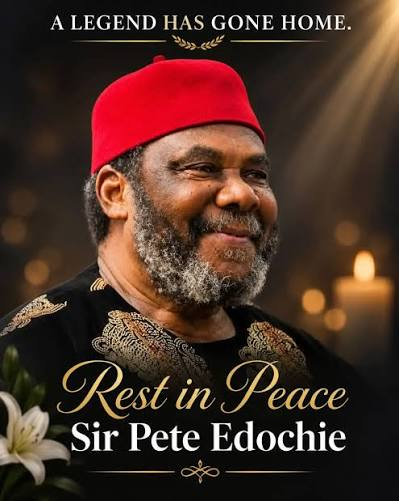
Pete Edochie death
The celebrated actor and broadcaster, whose unforgettable portrayal of Okonkwo in Things Fall Apart helped define Nigerian television drama, died in Enugu on Wednesday.
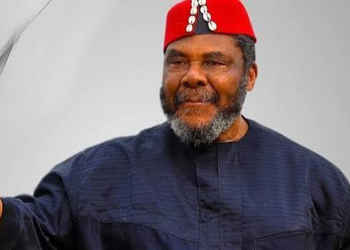
Nigeria’s entertainment industry has lost one of its most recognisable figures following the death of veteran Nollywood actor and broadcaster, Chief Pete Edochie, at the age of 79.
The Pete Edochie death was announced on Wednesday, November 25, 2026, by his son, Chief Leo Pete Edochie, in a family statement shared on Instagram.
According to the family, the celebrated actor died at approximately 12:30 a.m. in Enugu after a prolonged battle with prostate cancer.
Edochie, widely celebrated for his commanding voice, measured delivery of African proverbs and memorable portrayals of traditional rulers, became a defining figure in Nigerian cinema over several decades.
His death brings to an end a career that began in broadcasting and later helped shape the emergence of Nollywood as an influential African film industry.
The veteran actor was particularly remembered for his portrayal of Okonkwo in the Nigerian Television Authority adaptation of Chinua Achebe’s acclaimed novel, Things Fall Apart.
He is survived by his wife, Josephine Edochie, his children, siblings and other relatives.
Pete Edochie Death Confirmed by Family
In a statement titled “An Iroko Has Fallen,” the Edochie family announced the passing of the actor and expressed grief over the loss of their husband, father, brother and kinsman.
The announcement identified him as Chief Dr Pete Edochie, MON, Ononenyi, a retired broadcaster and veteran actor from Akamnato, Ifite Nteje, in Anambra State.
His son, Leo, signed the statement on behalf of the family.
According to the announcement, Edochie died following a prolonged illness associated with prostate cancer.
The family also requested prayers as relatives and loved ones mourned his passing.
Funeral arrangements had not been announced at the time of the statement, with the family indicating that further details would be communicated later.
Who Was Pete Edochie? Early Life and Broadcasting Career
Born Peter Uwadiegwu Ogugua Edochie on March 7, 1947, the actor came from Akamnato, Ifite Nteje, in present-day Anambra State.
His early professional life was spent in broadcasting rather than filmmaking.
In 1967, at the age of 20, he joined the Eastern Nigerian Broadcasting Corporation as a junior programmes assistant.
He subsequently developed his career in broadcasting, taking on responsibilities that exposed him to programme production, presentation and administration.
Over the years, he rose through the ranks, eventually occupying senior management positions, including Director of Programmes and Deputy Managing Director.
His broadcasting background helped shape the disciplined delivery, distinctive voice and composure that later became central features of his acting.
Before Nigerian home videos became a major cultural industry, Edochie had already established himself as a professional broadcaster.
That foundation would prove important when an opportunity emerged for him to portray one of African literature’s most famous fictional characters.
How Things Fall Apart Made Pete Edochie Famous
Edochie’s breakthrough came in 1987 when he portrayed Okonkwo in the Nigerian Television Authority adaptation of Chinua Achebe’s Things Fall Apart.
The production introduced him to a much wider audience and established his reputation as an actor capable of portraying complex characters with remarkable authority.
Okonkwo, the central character in Achebe’s novel, is a respected but deeply troubled figure whose personal struggles unfold against the transformation of traditional Igbo society during the colonial period.
Edochie’s portrayal gave the character a distinctive physical and emotional presence on Nigerian television.
His delivery, facial expressions and commanding manner became closely associated with the role.
The performance also helped bring an important work of African literature to viewers who had not encountered the novel.
Decades later, his portrayal of Okonkwo remained one of the most frequently cited achievements of his career.
For many Nigerians, the character became inseparable from Edochie’s screen identity.
https://ogelenews.ng/nollywood-legend-pete-edochie-dies-at-79-after-batt…
From Television Drama to Nollywood Stardom
Following his success in Things Fall Apart, Edochie built an extensive career in Nigerian film and television.
He became particularly associated with roles portraying traditional rulers, influential elders, wealthy businessmen and family patriarchs.
His performances were notable for their restraint, deliberate speech and commanding screen presence.
Among his notable productions were Igodo, Rituals, Billionaire’s Club and Lionheart.
In Genevieve Nnaji’s 2018 film Lionheart, Edochie played Chief Ernest Obiagu, the father of a businesswoman navigating the challenges of running a family transport company.
The film introduced his work to another generation of viewers through international streaming platforms.
Although he frequently portrayed powerful figures, Edochie’s characters were not always admirable.
Some represented wisdom and family authority, while others embodied pride, corruption, cruelty or conflict.
His ability to communicate those contrasting qualities made him a sought-after performer across different periods of Nigerian filmmaking.
Why Pete Edochie Became a Symbol of African Storytelling
Beyond individual film roles, Pete Edochie developed a distinctive acting identity rooted in the traditions of African oral storytelling.
His frequent use of proverbs, carefully measured dialogue and deliberate pauses contributed to his popularity.
He could communicate authority without shouting and create tension through facial expressions and silence.
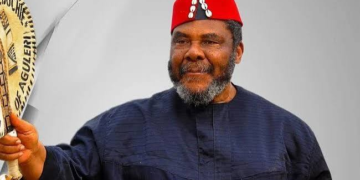
His appearance in traditional attire also became closely associated with roles involving kingship, community leadership and family relationships.
These qualities gave his performances a recognisable cultural character.
They also helped distinguish him during Nollywood’s expansion in the 1990s and early 2000s, when Nigerian films became increasingly popular across Africa.
Through television, home videos and later digital platforms, Edochie’s performances reached audiences beyond Nigeria.
His memorable dialogue and philosophical expressions continued circulating on social media, introducing younger viewers to an actor whose career began long before the digital entertainment era.
Pete Edochie’s Awards and National Recognition
Edochie’s contributions to Nigerian entertainment earned him several honours.
In 2003, President Olusegun Obasanjo conferred on him the national honour of Member of the Order of the Niger (MON).
He also received the Industry Merit Award from Africa Magic and a Lifetime Achievement Award from the Africa Film Academy.
The honours recognised both his individual performances and his broader contribution to Nigerian film and television.
His significance extended beyond the number of productions in which he appeared.
He belonged to a generation of performers whose work helped establish professional standards and public recognition for Nigerian screen acting.
His longevity also made him a familiar figure across generations of viewers.
Pete Edochie Death Comes After Earlier False Rumours
The confirmed death of Pete Edochie follows several previous occasions when false reports about his death circulated online.
In February 2026, rumours claiming that the actor had died attracted public attention.
His family rejected those reports, confirming that he was alive at the time.
The latest announcement is different because it came through a statement signed by his son, Leo, on behalf of the family.
Major Nigerian news organisations, including Channels Television, The PUNCH, TheCable and the News Agency of Nigeria, have subsequently reported the announcement.
The episode highlights the importance of confirming sensitive information about public figures through credible sources before publication.
For an actor whose name had repeatedly appeared in false death reports, the family’s direct announcement provides the basis for the current reporting.
Pete Edochie’s Final Interview and Personal Reflections
The actor’s death came on the same day that a previously recorded interview with Ugo Nwokolo TV was scheduled for release.
An excerpt shared before his death featured Edochie discussing personal and family matters, including controversies involving his son, actor Yul Edochie.
The timing of the interview has attracted attention because it offered a recent public appearance by the veteran performer.
However, the interview was recorded before his death and should not be interpreted as a farewell message unless independently established.
Throughout his later years, Edochie continued to attract public interest through interviews, film appearances and commentary on family and social issues.
His views sometimes generated disagreement, but his influence as a veteran actor remained widely recognised.
Family, Wife and Children Left Behind
Pete Edochie was married to Josephine Edochie, and the couple had children, including actor Yul Edochie.
While Yul became a prominent figure in Nollywood, his father’s career had already established the Edochie name in Nigerian entertainment.
The veteran actor’s family life occasionally attracted public attention, particularly as members of the younger generation developed their own careers.
Nevertheless, the family announcement placed emphasis on his roles as a husband, father, brother and member of the wider Edochie family.
For his relatives, his death represents a personal loss beyond his public reputation.
Nollywood Mourns a Veteran Performer
The Actors Guild of Nigeria has joined those mourning Edochie, describing him as an important figure in the country’s entertainment industry.
His death has renewed attention to the contributions of early Nigerian television performers who helped provide a foundation for modern Nollywood.
Edochie belonged to a generation whose careers connected established broadcasting institutions with the emerging commercial film industry.
His work demonstrated how African stories, languages, traditions and social conflicts could reach wide audiences through television and cinema.
Younger actors studying his performances can observe his use of timing, restraint, dialogue and physical presence.
For filmmakers, his career also offers an example of how a distinctive acting style can remain recognisable across decades of changing production technologies and audience preferences.
The Legacy Pete Edochie Leaves Behind
The death of Pete Edochie at 79 marks the end of a remarkable chapter in Nigerian entertainment.
From his early years in broadcasting to his acclaimed portrayal of Okonkwo and decades of Nollywood performances, he helped establish a recognisable style of African screen acting.
His portrayal of traditional figures made him familiar to millions, but his deeper contribution lay in the authority and cultural detail he brought to his characters.
Edochie’s work will remain available through television archives, films and digital platforms, providing future generations with an opportunity to encounter his performances.
The family has yet to announce funeral arrangements.
As Nigeria remembers the veteran performer, his career stands as a reminder of the role that storytelling plays in preserving culture, exploring human behaviour and connecting generations.
Pete Edochie may have taken his final bow, but his voice, performances and contribution to African cinema remain part of Nollywood’s enduring history.
https://nannews.ng/veteran-nollywood-actor-pete-edochie-dies-at-79/?utm_source=chatgpt.com
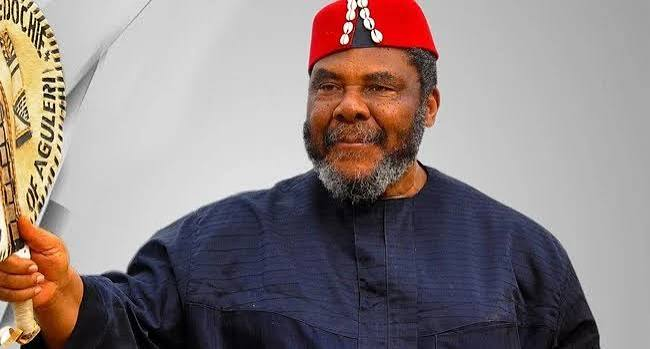
Ogele News will continue to follow official family announcements, funeral arrangements and tributes to the late actor.