














FRSC UN road safety meeting
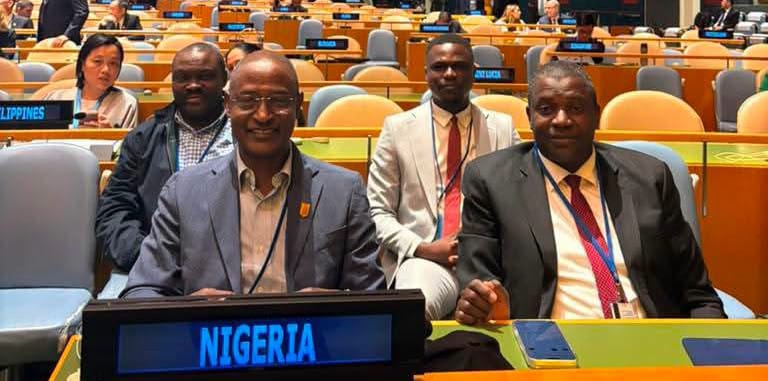
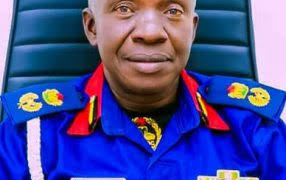
Nigeria has renewed its commitment to reducing road traffic deaths and injuries through stronger international cooperation, with the Corps Marshal of the Federal Road Safety Corps (FRSC), Shehu Mohammed, calling for deeper global partnerships at the United Nations High-Level Meeting on Improving Global Road Safety in New York.
Representing President Bola Ahmed Tinubu, the FRSC Corps Marshal urged governments, development partners, international organisations and private-sector stakeholders to strengthen collaboration in addressing one of the world’s most pressing public health and development challenges.
The appeal came during the UN High-Level Meeting on Improving Global Road Safety, jointly convened by the President of the United Nations General Assembly and the World Health Organization (WHO) under the theme: “Scaling Up and Accelerating Implementation of Commitments to Halving Road Traffic Deaths and Injuries by 2030.”
The FRSC UN road safety meeting represents one of the most significant international gatherings dedicated to reducing road traffic fatalities and advancing the objectives of the United Nations Decade of Action for Road Safety 2021–2030.
Nigeria reiterates commitment to global road safety
Delivering Nigeria’s national statement during the plenary session, Mohammed reaffirmed the Federal Government’s commitment to strengthening road safety governance through sustained political will, improved institutional capacity, technological innovation and enhanced international cooperation.
He said Nigeria recognises that road safety is no longer merely a transport issue but a public health, economic and sustainable development concern requiring coordinated action across governments and international institutions.
According to him, the Federal Government has continued to implement reforms aimed at reducing crashes while improving emergency response, enforcement, public education and institutional efficiency.
Speaking at the FRSC UN road safety meeting, Mohammed stressed that no country could successfully reduce road traffic fatalities without cooperation among governments, multilateral organisations, development partners, research institutions and the private sector.
Road crashes remain a global crisis
The United Nations estimates that nearly 1.2 million people die every year from road traffic crashes worldwide, while millions more suffer life-changing injuries.
Road traffic injuries remain the leading cause of death among children and young adults aged between five and twenty-nine years, making road safety one of the world’s most urgent public health priorities.
The UN High-Level Meeting seeks to accelerate implementation of commitments already adopted by member states under the Sustainable Development Goals and the Decade of Action for Road Safety.
Delegates are expected to review progress made since the adoption of the Political Declaration on Global Road Safety in 2022 and identify practical measures capable of achieving the target of reducing road traffic deaths and serious injuries by 50 per cent before 2030.
Against this backdrop, the FRSC UN road safety meeting provides Nigeria with an opportunity to showcase ongoing reforms while learning from successful international practices.
FRSC highlights reforms under Tinubu administration
Mohammed told participants that Nigeria has continued strengthening road safety institutions through reforms aligned with President Tinubu’s Renewed Hope Agenda.
According to the Corps Marshal, the FRSC has prioritised digital innovation, improved enforcement strategies, better crash data management and stronger stakeholder engagement.
He also highlighted increased investments in public enlightenment campaigns, rescue operations and institutional partnerships designed to improve road safety outcomes across Nigeria.
The FRSC UN road safety meeting also allowed Nigeria to share experiences regarding technology-driven traffic management and evidence-based policymaking.
The Corps Marshal noted that improving road safety requires sustained investment in data collection, safer road infrastructure, driver education and stronger legal frameworks.
He maintained that collaboration with international partners would enable Nigeria to adopt global best practices while adapting them to local realities.
Global cooperation essential to achieving SDGs
The UN High-Level Meeting brings together Heads of State, ministers, senior government officials, road safety experts, civil society organisations, development institutions and private-sector leaders.
Participants are discussing financing, institutional reforms, road engineering, enforcement strategies, emergency medical response, technological innovation and capacity building.
The objective is to transform political commitments into measurable reductions in fatalities and injuries.
The FRSC UN road safety meeting reflects growing recognition that road safety contributes directly to economic growth, poverty reduction, healthcare outcomes and sustainable development.
Every preventable road crash imposes enormous human and financial costs through lost productivity, medical expenses, disability and reduced economic activity.
For developing countries, these losses consume significant national resources that could otherwise support education, healthcare and infrastructure.
Consequently, stronger international partnerships are increasingly viewed as essential for achieving the Sustainable Development Goals.
https://ogelenews.ng/frsc-un-road-safety-meeting
Nigeria seeks expanded technical partnerships
Mohammed encouraged donor agencies, international organisations and development partners to expand technical assistance for developing countries.
He said many African nations require additional support in areas such as intelligent transport systems, crash investigation, digital enforcement technologies, driver licensing systems, emergency medical response and road engineering.
According to him, knowledge sharing remains one of the most effective ways of reducing global road traffic deaths.
Nigeria has already strengthened cooperation with several regional and international partners, including recently signing a five-year Memorandum of Understanding with the Sierra Leone Road Safety Authority to deepen collaboration on research, enforcement, training and road safety management.
The FRSC UN road safety meeting therefore builds upon Nigeria’s broader strategy of expanding both regional and international partnerships.
Technology driving modern road safety
Modern road safety increasingly depends on technology.
The FRSC has introduced several digital initiatives aimed at improving traffic management, driver’s licence administration, enforcement and crash data collection.
The Corps Marshal said innovation would remain central to future reforms as Nigeria works toward reducing fatalities on its highways.
He argued that digital systems improve transparency, enhance operational efficiency and support evidence-based decision-making.
Technology also allows authorities to identify crash hotspots, improve emergency response and allocate resources more effectively.
Such innovations featured prominently during discussions at the FRSC UN road safety meeting, where several countries shared experiences using artificial intelligence, intelligent transport systems and data analytics to improve road safety.
Road safety requires shared responsibility
Experts at the UN meeting emphasised that governments alone cannot eliminate road traffic deaths.
Vehicle manufacturers, transport operators, insurers, educational institutions, healthcare providers, engineering professionals and individual road users all have responsibilities.
Safer vehicles, improved roads, responsible driving, effective enforcement and quality emergency medical services must work together.
The FRSC UN road safety meeting reinforced the “Safe System Approach,” which recognises that human error cannot be completely eliminated but that transport systems should be designed to minimise fatalities when mistakes occur.
Nigeria’s participation demonstrates the country’s willingness to align national policies with internationally recognised road safety principles.
Turning commitments into measurable results
The UN meeting is expected to conclude with renewed commitments aimed at accelerating implementation of existing global road safety agreements.
For Nigeria, participation extends beyond diplomatic representation.
The success of the FRSC UN road safety meeting will ultimately be measured by improvements on Nigerian roads.
Reducing speeding, enforcing seat belt and helmet laws, combating impaired driving, improving vehicle standards and strengthening emergency response remain critical priorities.
Government agencies, state authorities, transport unions and road users must translate international commitments into practical actions.
A defining opportunity for Nigeria
Nigeria’s presence at the United Nations comes at a time when many developing countries are seeking stronger international cooperation to address transport safety challenges.
The Corps Marshal’s call for deeper partnerships reflects the understanding that road safety is a shared global responsibility requiring coordinated investment, innovation and political commitment.
The FRSC UN road safety meeting has provided Nigeria with an opportunity to contribute to global discussions while reaffirming its determination to save lives on the nation’s highways.
As governments work toward halving global road traffic deaths by 2030, Nigeria’s continued engagement with international partners could help strengthen institutional capacity, improve road safety governance and accelerate reforms capable of protecting thousands of lives every year.
The challenge now is to transform international declarations into practical policies that make Nigerian roads safer for every motorist, passenger and pedestrian.
https://indico.un.org/event/1024726