













R. Kelly seeks clemency from Trump
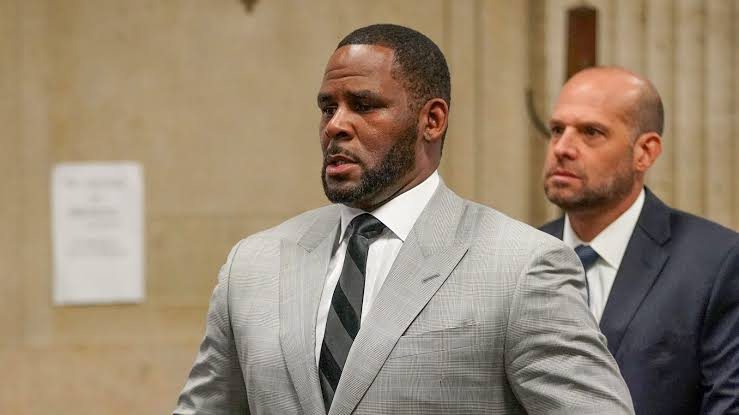
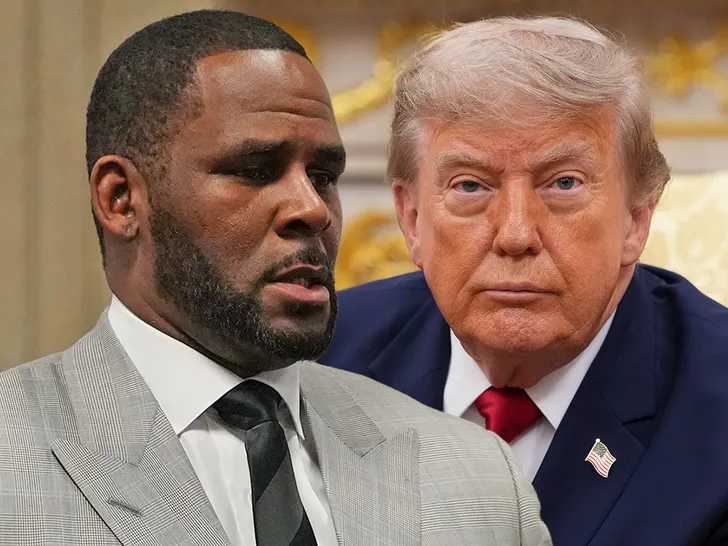
American R&B singer Robert Sylvester Kelly, professionally known as R. Kelly, has formally asked United States President Donald Trump to commute his federal prison sentence, opening a new chapter in his long-running legal battle.
The 59-year-old musician is serving an effective 31-year term arising from separate convictions in New York and Chicago. His clemency application has been filed through the US Department of Justice and is listed as pending before the Office of the Pardon Attorney.
The development captured by the focus phrase R. Kelly seeks clemency from Trump does not mean that the President has approved his release or agreed to shorten the sentence.
It means Kelly has formally entered the executive clemency process and is asking Trump to exercise the constitutional power to reduce the punishment imposed by the federal courts.
Kelly’s lawyer, Beau Brindley, has confirmed that the application seeks a sentence commutation rather than a full presidential pardon. A commutation could reduce the remaining prison term while leaving the convictions legally intact.
Clemency request formally listed as pending
The singer’s application became public after his name appeared in records connected to the Office of the Pardon Attorney.
A pending classification means the petition has been opened and remains under consideration. It does not indicate that the Justice Department has recommended clemency or that the White House is preparing to grant the request.
The case in which R. Kelly seeks clemency from Trump could pass through a review process involving Kelly’s convictions, conduct in prison, legal history, arguments presented by his lawyers and possible submissions from prosecutors or other interested parties.
The Office of the Pardon Attorney reviews federal clemency applications and may provide recommendations to the President. The final decision, however, belongs to the President.
Trump may accept or reject a recommendation, impose conditions or take no action on the petition.
As of the latest reports, the White House had not publicly announced a decision on Kelly’s request.
Why the combined sentence is 31 years
Kelly’s total sentence comes from two separate federal prosecutions.
In September 2021, a federal jury in Brooklyn convicted him on nine counts, including racketeering and violations of the Mann Act. Prosecutors said he used his fame and a network of associates to facilitate criminal conduct involving women and underage girls.
US District Judge Ann Donnelly sentenced him to 30 years in prison in June 2022. The United States Attorney’s Office for the Eastern District of New York described the sentence as the result of a six-week trial and a conviction on all nine counts.
A separate federal jury in Chicago later convicted Kelly on offences involving unlawful images of minors and enticement.
In February 2023, US District Judge Harry Leinenweber sentenced him to 20 years. Nineteen years were ordered to run concurrently with the New York sentence, while one additional year was ordered to run consecutively.
That structure is why reports that R. Kelly seeks clemency from Trump refer to a combined 31-year prison term, even though some headlines describe the application as a request to reduce a 30-year sentence.
Kelly is not seeking to erase convictions
A presidential pardon and a sentence commutation are related forms of executive clemency, but they have different legal consequences.
A pardon represents presidential forgiveness for a federal offence. It does not necessarily declare that the person was innocent, but it can restore certain legal rights and reduce some consequences associated with the conviction.
A commutation changes the punishment. It may shorten a prison term, allow immediate release or replace the sentence with another form of punishment.
Kelly’s reported application seeks a commutation. It does not ask Trump to overturn the jury verdicts or declare him innocent.
The distinction matters when reporting that R. Kelly seeks clemency from Trump because a presidential decision would not function like a successful appeal.
Federal courts have already reviewed important parts of Kelly’s cases. In February 2025, the Second US Circuit Court of Appeals upheld his New York convictions and 30-year sentence.
Lawyer has campaigned for presidential intervention
Brindley has publicly sought presidential intervention for more than a year.
In 2025, Kelly’s legal team asked a federal court to release him temporarily or transfer him to home detention, alleging that his safety and health were at risk in custody.
The lawyers made serious allegations concerning the conduct of some prison officials and claimed another inmate had been encouraged to harm Kelly.
Federal prosecutors disputed the defence team’s account, and the emergency request for release was denied. The allegations have not been established through a final judicial finding.
The renewed move in which R. Kelly seeks clemency from Trump relies partly on the defence’s argument that the singer cannot be adequately protected in federal custody.
Kelly is being held at a federal correctional facility in North Carolina. Available records indicate that, without clemency or another successful legal intervention, he is not expected to become eligible for release until around late 2045 or January 2046.
Convictions remain in force
Kelly has repeatedly denied wrongdoing and challenged his convictions through the courts.
However, the convictions remain valid, and his legal team’s continued denial does not alter the jury verdicts or the sentences imposed by the federal judges.
The New York prosecution established that Kelly operated a criminal enterprise involving employees and associates who helped facilitate his conduct over many years.
The Chicago case produced separate convictions. The court’s decision to make most of the second sentence concurrent prevented the combined term from extending to 50 years.
The fact that R. Kelly seeks clemency from Trump should therefore not be presented as evidence that the original cases have collapsed or that prosecutors withdrew their allegations.
The petition is an appeal for executive mercy after conviction, not a finding that the proceedings were invalid.
Any article covering the application should also remember the people affected by Kelly’s offences. A clemency debate involves the prisoner’s rights and circumstances, but it also carries consequences for survivors whose testimony contributed to the convictions.
https://ogelenews.ng/r-kelly-seeks-trumps-clemency-asks-for-reduction-of…
Trump holds broad federal clemency power
The US Constitution gives the President broad authority to grant reprieves and pardons for federal offences, except in impeachment cases.
That authority includes the power to commute prison sentences without obtaining approval from Congress or the sentencing judge.
The formal review by the Office of the Pardon Attorney can provide the President with legal and factual guidance, but it does not limit the constitutional power to grant or deny relief.
In deciding whether to act when R. Kelly seeks clemency from Trump, the administration may consider the seriousness of the offences, Kelly’s age, the amount of time served, his conduct in prison, medical claims, public safety concerns and the views of prosecutors.
Political considerations and public reaction may also surround the case because Kelly remains an internationally recognised musician whose convictions attracted extensive media attention.
Nevertheless, celebrity status does not create a legal entitlement to clemency.
Thousands of federal prisoners seek sentence reductions and pardons, and many applications remain pending for long periods or are closed without relief.
Public debate likely to intensify
Kelly’s application is likely to divide public opinion.
Supporters may argue that the combined 31-year punishment is excessive, that his prison conditions should receive greater scrutiny or that his age means he could spend most of his remaining life in custody.
Others will point to the seriousness of the convictions, the lengthy period covered by the evidence and the effect of the crimes on victims.
The announcement that R. Kelly seeks clemency from Trump may also renew arguments about whether famous or wealthy applicants have better access to political decision-makers than ordinary prisoners.
A fair clemency system should apply consistent principles regardless of an applicant’s fame, political relationships or ability to generate media attention.
Kelly’s musical achievements do not erase the convictions. Equally, the seriousness of the offences does not remove his legal right to apply for executive clemency.
The President must decide whether the sentence should remain unchanged, be reduced or end through a commutation.
No presidential decision announced
For now, Kelly remains in federal custody and continues to serve the combined term.
The application’s pending status is the most important confirmed development. There is no reliable public evidence that Trump has agreed to grant Kelly clemency or instructed officials to prepare his release.
The headline that R. Kelly seeks clemency from Trump should therefore be reported as a request rather than an imminent presidential action.
If Trump grants the application, the official document should state the form of relief, the effective date and any conditions attached to the commutation.
If the President rejects the request or leaves office without acting on it, Kelly’s sentence will remain in force unless he succeeds through another legal process.
The case now moves away from the courtroom, at least temporarily, and into the sphere of presidential discretion.
Kelly has exhausted important appellate options, but executive clemency offers a separate route through which a sentence can be shortened without disturbing the underlying convictions.
Whether Trump will use that power remains unknown.
Until an official announcement is made, the accurate position is simple: Kelly has asked for mercy, his request is under review, and his 31-year federal prison term remains unchanged.