













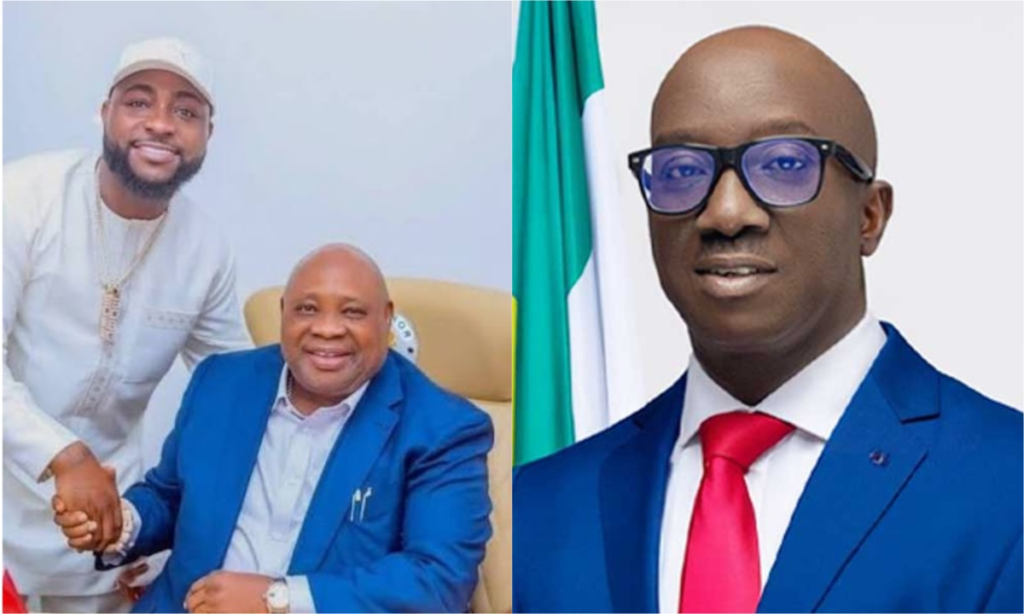
Davido Edo governor WAEC row
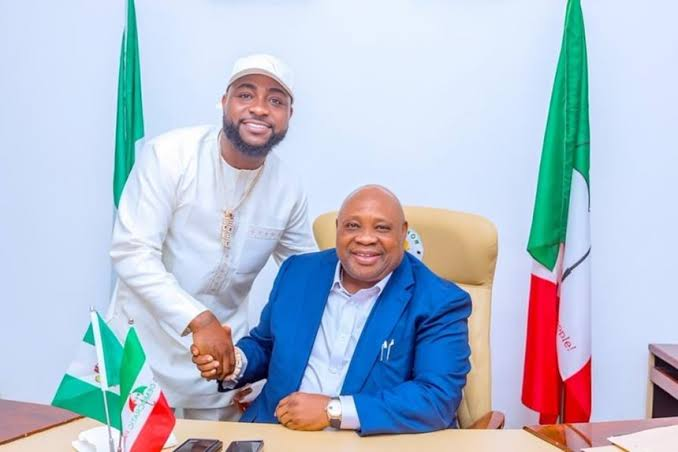
Afrobeats star David Adeleke, popularly known as Davido, has entered the increasingly heated political exchanges surrounding the Osun governorship election after sharing an image that appeared to show the West African Senior School Certificate Examination result of Edo State Governor Monday Okpebholo.
The Davido Edo governor WAEC row erupted on Friday, a day after Okpebholo publicly mocked Osun State Governor Ademola Adeleke over his well-known love for dancing while campaigning for the All Progressives Congress in Osun State.
Davido, who is a nephew of Governor Adeleke and has openly supported his re-election campaign, posted the image on his Instagram Stories without adding any caption.
The timing of the post, however, led to widespread interpretation that the singer was responding directly to Okpebholo’s comments about Adeleke.
The development adds a celebrity dimension to an already intense political contest ahead of the Osun governorship election.
Davido Edo governor WAEC row follows campaign attack
The Davido Edo governor WAEC row can be traced to comments made by Okpebholo during an APC campaign rally for the party’s governorship candidate, Bola Oyebamiji, popularly known as AMBO.
Speaking at the rally, which was also attended by Kogi State Governor Ahmed Usman Ododo, Okpebholo criticised Adeleke’s leadership style and repeatedly referred to the governor’s habit of dancing at public functions.
The Edo governor suggested that Adeleke had spent too much time dancing rather than concentrating on governance.
His comments were clearly designed as a political attack on the Osun governor as the APC intensifies its campaign to unseat him.
Political rallies in Nigeria have traditionally provided platforms for candidates and party leaders to contrast their records with those of their opponents.
But the exchange involving Okpebholo and Davido quickly moved beyond competing records of governance into the personal backgrounds and public images of the politicians involved.
Davido responds without words
Davido did not issue a formal statement.
Instead, he uploaded what appeared to be Okpebholo’s WAEC result to his Instagram Stories.
He offered no explanation and did not directly mention the governor in a written response.
That silence was itself enough to fuel online discussion.
Given that the post came shortly after Okpebholo’s remarks about Adeleke, many social media users interpreted it as a pointed counterattack.
The Davido Edo governor WAEC row therefore demonstrates how political communication increasingly operates outside conventional campaign rallies and press conferences.
A single social media post by a celebrity with millions of followers can rapidly become part of the national political conversation.
Davido’s involvement is particularly significant because he is not simply an entertainer commenting from the sidelines.
He is Adeleke’s nephew and has actively participated in the governor’s campaign activities.
Singer has openly backed Adeleke
Davido has repeatedly declared his support for Adeleke in the build-up to the election.
The Grammy-nominated singer has participated in rallies and used his large social-media following to mobilise attention around the Osun governor’s campaign.
He has also appealed for a peaceful, free and fair election.
That political visibility provides important context for the Davido Edo governor WAEC row.
His post should therefore be understood not merely as celebrity banter but as part of a broader campaign environment in which political figures, relatives, entertainers and supporters are increasingly using digital platforms to influence voters.
Davido’s ability to command attention online means his interventions can travel far beyond traditional party structures.
That influence can be politically valuable, particularly among younger voters who consume much of their political information through social media platforms.
Okpebholo tells voters to back APC
During the rally, Okpebholo urged Osun voters to support the APC candidate in the governorship election.
He also controversially advised voters to accept money offered by political opponents while still voting for the APC.
Such comments are significant because Nigerian electoral laws prohibit vote buying and other forms of inducement.
Political leaders have repeatedly been urged to avoid statements that could appear to normalise electoral malpractice.
Although campaign rhetoric is often colourful, election periods demand particular caution from public officials because their words can influence supporters and shape political behaviour.
The Davido Edo governor WAEC row, however, has largely overshadowed that part of the rally, with online attention shifting instead to the personal exchange involving Adeleke, Okpebholo and Davido.
That shift demonstrates one of the challenges of modern political communication.
Serious questions about governance, public policy and election integrity can easily be displaced by personality-driven controversies.
WAEC image should be treated cautiously
One important point must not be lost in reporting the controversy.
Davido’s social media post does not, by itself, establish the authenticity, context or complete academic record of the Edo governor.
A professional newsroom must therefore distinguish between what was posted and what has been independently verified.
The image shared by Davido appeared to represent an examination result associated with Okpebholo, but the singer did not provide accompanying documentation or an explanation of its source.
For that reason, the Davido Edo governor WAEC row should not be presented as proof of any allegation concerning the governor’s qualifications.
Any definitive claim about a public official’s academic record should be based on verifiable records from the relevant examination body, electoral authorities or other competent institutions.
This distinction is particularly important during election campaigns, when political actors and their supporters often circulate documents, screenshots and historical claims intended to damage opponents.
News organisations have a responsibility to report such material without adopting campaign claims as established fact.
Personal politics overshadows policy debate
The exchange also raises a wider question about the direction of political campaigning.
Okpebholo’s criticism focused heavily on Adeleke’s dancing, while Davido’s apparent response shifted attention towards the Edo governor’s educational record.
Neither subject directly addresses the major issues confronting Osun voters.
Residents are more likely to be concerned about jobs, infrastructure, education, healthcare, security, salaries, pensions and the management of public resources.
Yet personality attacks often receive more attention than policy because they are easier to package for social media and more likely to generate immediate reactions.
The Davido Edo governor WAEC row illustrates that tendency clearly.
A dancing governor, a WAEC screenshot and a celebrity response can dominate public discussion much faster than detailed comparisons of economic performance or development plans.
That may be politically effective, but it does little to help voters make informed decisions based on policy.
https://ogelenews.ng/davido-edo-governor-waec-row-adeleke
Celebrity influence shapes election conversation
Davido’s intervention also highlights the growing role of celebrities in Nigerian politics.
Musicians, actors, comedians and social-media personalities increasingly use their platforms to endorse candidates, criticise politicians and encourage political participation.
Their involvement can attract younger audiences who might otherwise pay limited attention to conventional political communication.
However, celebrity involvement also comes with responsibility.
Large audiences can amplify information instantly, including material whose authenticity or context may not yet have been independently established.
The Davido Edo governor WAEC row is a good example.
Whatever Davido intended by sharing the image, its political meaning was quickly constructed by the public because of the timing and his relationship with Adeleke.
That is the power of modern digital politics.
Meaning is often created not only through what public figures say but through what they post, when they post it and the political circumstances surrounding the post.
Osun contest enters crucial stage
The latest controversy comes as campaigns intensify ahead of the Osun governorship election.
Adeleke is seeking to retain control of the state, while the APC is campaigning to return to Government House through Oyebamiji.
As the contest enters its final stages, political attacks are likely to become sharper.
The challenge for candidates will be ensuring that personal exchanges do not completely overwhelm substantive discussions about their plans for the state.
For voters, the more important questions remain straightforward.
What has the incumbent achieved? What is the opposition offering differently? Which candidate presents a credible plan for jobs, education, healthcare, infrastructure and security?
Those are questions that cannot be answered by dancing jokes or social-media screenshots.
Davido Edo governor WAEC row fuels online debate
For now, however, the Davido Edo governor WAEC row has become another talking point in the Osun election campaign.
Okpebholo’s attack on Adeleke produced a response from one of Nigeria’s biggest music stars, ensuring that an otherwise routine campaign speech quickly gained national attention.
Whether the exchange has any meaningful impact on voting intentions remains uncertain.
Political campaigns often generate viral moments that dominate social media for a day or two without necessarily changing electoral outcomes.
What is clear is that Davido remains willing to publicly defend his uncle and participate actively in the political conversation surrounding the Osun election.
The Davido Edo governor WAEC row has therefore become more than an exchange between an entertainer and a governor.
It reflects the increasingly blurred boundaries between entertainment, social media and Nigerian electoral politics.
As campaigning intensifies, both politicians and their celebrity supporters would do well to remember that voters ultimately deserve more than personal attacks.
Elections should provide an opportunity to compare records, policies and visions for government.
The personalities may generate the headlines, but governance must remain the real issue.
https://www.waecnigeria.org/?utm_source=chatgpt.com