















Sambisa Forest security operations
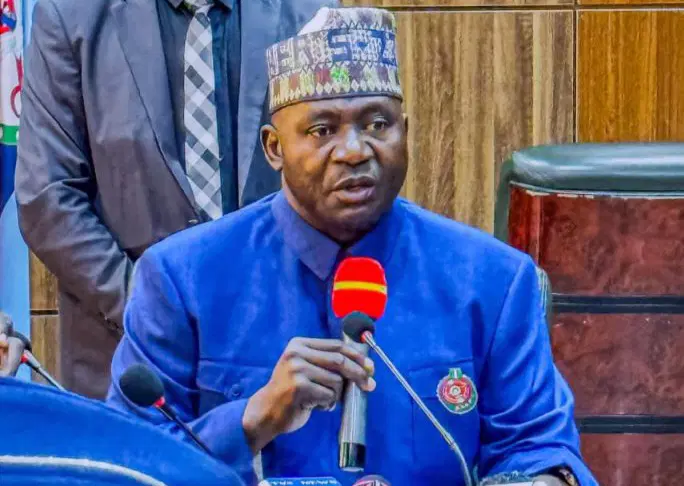
Nigeria’s Minister of Defence, General Christopher Musa (retd.), has defended the country’s security forces against criticism over persistent terrorism and kidnapping, arguing that the enormous size of Sambisa Forest security operations and other difficult terrains makes tracking armed groups far more complicated than many Nigerians realise.
Musa, a former Chief of Defence Staff, said Sambisa Forest was comparable in size to Belgium, insisting that the notorious forest should not be imagined as a small area where terrorists can easily be located and eliminated.
Speaking on Channels Television’s Politics Today on Thursday, the Defence Minister said Nigerian security forces were rescuing abducted citizens regularly but faced the challenge of criminals disappearing into vast forests before troops could locate them.
His comments have renewed debate over Sambisa Forest security operations, Nigeria’s counter-terrorism strategy and whether the country’s security forces have sufficient manpower, surveillance capability and technology to effectively control vast areas used by terrorists and other armed groups.
Sambisa Forest not a football field, Musa says
Musa sought to illustrate the scale of the challenge by comparing Sambisa Forest with an entire European country.
According to the minister, Nigerians sometimes discuss military operations in Sambisa as though troops were dealing with a confined space where insurgents could simply be surrounded and captured.
“Sambisa Forest is as big as Belgium, as a country,” Musa said.
He argued that people sometimes speak about the forest as though it were a small football field and security forces were simply refusing to act.
The comparison was intended to underline the geographical difficulty confronting troops.
However, estimates of Sambisa Forest’s precise size differ depending on the boundaries and geographical definitions being used. The comparison with Belgium should therefore be understood as Musa’s description of the scale of the security challenge rather than a settled geographical measurement.
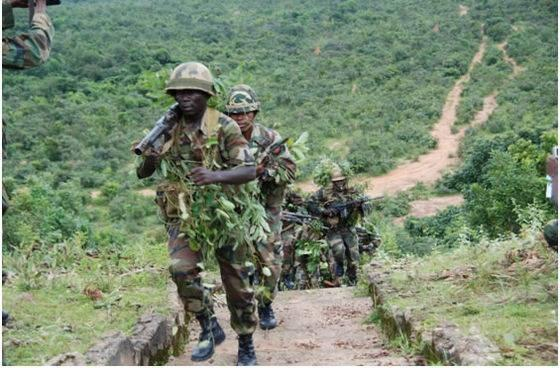
What is not disputed is that the terrain has presented a serious challenge to Sambisa Forest security operations during Nigeria’s long campaign against Boko Haram and other extremist groups.
Why terrorists are difficult to track
The minister explained that terrorists and kidnappers exploit large and difficult terrain to evade security forces.
Once intelligence reveals their location, armed groups can move, disperse or abandon their positions before troops arrive.
This creates a particular difficulty when kidnapped civilians are being held.
Security forces cannot simply bombard every suspected location because innocent hostages may be present.
According to Musa, operations must therefore combine intelligence, surveillance and careful movement on the ground.
That makes Sambisa Forest security operations considerably more complicated than simply identifying an area on a map and deploying soldiers.
The minister said troops often have to track criminals over considerable distances before establishing their location.
Troops rescuing kidnapped Nigerians
Musa also defended the government’s record on the rescue of kidnapped citizens.
He said security agencies were increasingly recovering abducted Nigerians, although many of the operations did not receive extensive publicity.
The minister explained that troops sometimes deliberately avoid direct confrontation when doing so could place hostages in greater danger.
In some operations, security forces locate the kidnappers, restrict their movement and cut access to essential supplies.
The pressure can force the criminals to flee, leaving their captives behind.
Musa cited a recent operation in Kwara State as an example of this strategy.
Security forces, he said, restricted the terrorists’ movement and effectively denied them the space and supplies required to continue holding their victims.
The approach illustrates a central dilemma confronting counter-terrorism and hostage-rescue operations: killing or capturing terrorists is important, but protecting abducted civilians may require restraint.
Technology becoming central to security operations
Musa’s comments on Sambisa Forest security operations come as he pushes for greater use of technology in Nigeria’s defence architecture.
At a defence policy colloquium in Abuja on Thursday, the minister identified artificial intelligence, unmanned systems, surveillance, reconnaissance and cyber capabilities as increasingly important elements of modern warfare.
He argued that Nigeria’s security architecture must continually adapt because the threats facing the country are also changing.
The implications for areas such as Sambisa are significant.
Vast forests are difficult to secure using soldiers alone.
Persistent aerial surveillance, drones, satellite imagery, intelligence gathering, communications interception and other technologies can help security agencies detect movements without requiring personnel to physically occupy every part of the terrain.
That technological dimension could become increasingly important to future Sambisa Forest security operations.
https://ogelenews.ng/sambisa-forest-as-big-as-belgium-terror-fight-enorm…
Nigeria’s security challenge extends beyond Sambisa
Sambisa remains one of the most recognisable names associated with Nigeria’s insurgency, particularly because of its historical connection with Boko Haram.
But the country’s present security challenge extends far beyond one forest.
Armed groups have operated across forests and rural corridors in the North-East, North-West and North-Central regions.
Kidnapping for ransom has also forced security agencies to conduct operations across areas where communities are scattered and road networks are limited.
This geographical reality means Nigeria’s security problem cannot be solved merely by concentrating troops in Sambisa.
Intelligence sharing, border security, local policing, aerial surveillance and cooperation between communities and security agencies remain essential.
The country’s defence challenge is therefore simultaneously about territory, manpower, technology and intelligence.
Is size enough to explain the problem?
Musa’s argument provides important operational context, but the scale of Sambisa alone cannot answer every question about Nigeria’s long-running security crisis.
Large terrain undoubtedly complicates military operations.
But Nigerians are also entitled to ask whether the country’s security institutions possess enough intelligence capability, equipment, trained personnel and inter-agency coordination to respond effectively.
Those questions have become particularly important as Nigeria continues to commit substantial public resources to defence and security.
President Bola Tinubu recently directed the preparation of a comprehensive National Threat Assessment and a rolling five-year Strategic Defence Operations Plan.
The plan is expected to identify major security threats, establish operational priorities, determine capability gaps and guide future defence expenditure and procurement.
That initiative could directly affect the future of Sambisa Forest security operations and campaigns against armed groups elsewhere.
Defence Minister says attacks have declined
Despite continuing incidents of terrorism and kidnapping, Musa maintains that Nigeria has made progress.
The Defence Minister said terrorist attacks were no longer occurring with the frequency and intensity seen during some earlier periods of the insurgency.
He argued that security forces had pushed deeper into terrorist enclaves and continued to rescue abducted citizens.
That assessment will inevitably be judged against the experiences of Nigerians living in affected communities.
For families that have lost relatives to terrorist attacks or kidnapping, national statistics may provide little comfort.
For government and military planners, however, reductions in the frequency, scale and territorial reach of attacks are important measures of whether counter-terrorism strategies are working.
Both perspectives matter.
Sambisa remains symbol of Nigeria’s insurgency
For more than a decade, Sambisa Forest has occupied a unique place in Nigeria’s security consciousness.
Its name became internationally associated with Boko Haram following the insurgency’s expansion across the North-East and the abduction of schoolgirls from Chibok in 2014.
Successive military operations have targeted insurgent positions across the wider region.
Yet armed extremist groups have repeatedly demonstrated their ability to adapt, disperse and exploit difficult terrain.
That history explains why Sambisa Forest security operations cannot be assessed simply by asking whether soldiers have entered or captured particular locations.
Modern insurgencies rarely depend permanently on one fixed base.
Armed groups can disperse into smaller units, move between rural communities and exploit poorly monitored routes.
The challenge is therefore not merely taking territory. It is preventing terrorists from returning, reorganising or establishing alternative safe havens.
From manpower to intelligence
Musa’s remarks ultimately raise a larger question about Nigeria’s approach to national security.
If the country’s forests and ungoverned spaces are too extensive to be permanently covered by conventional troops, Nigeria will increasingly need to rely on intelligence and technology.
That means better surveillance.
It means more effective use of drones and other unmanned systems.
It also means cooperation with communities that can provide information about suspicious movements.
And it requires coordination among the Armed Forces, police, intelligence agencies and other security institutions.
The Defence Minister himself acknowledged this technological reality when he called this week for greater adoption of artificial intelligence, unmanned systems and surveillance capabilities.
A vast battlefield, but Nigerians expect results
Musa is right to remind Nigerians that counter-terrorism is not conducted on a football field.
The country’s forests are vast, armed groups are mobile and hostage situations require operations that minimise the danger to innocent civilians.
Those are genuine operational constraints.
But they do not eliminate the government’s responsibility to protect citizens.
The challenge for the Defence Ministry is therefore to convert its understanding of the terrain into better security outcomes.
If Sambisa Forest security operations require more surveillance, government must build that capacity. If security forces need better intelligence, coordination or equipment, those gaps must be addressed. If criminals exploit poorly governed spaces, authorities must find ways of denying them those sanctuaries.
Nigeria’s security forces cannot physically stand on every kilometre of forest.
They should, however, possess the intelligence, technology and operational capability to make those forests increasingly dangerous places for terrorists to hide.
That is ultimately the standard by which the government’s security strategy will be judged.